Full-Time Faculty
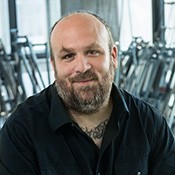
Mike Essl A'96 was a partner at the award-winning design firm The Chopping Block, Inc., which he cofounded in 1996 with a fellow graduate of the Cooper Union. During his six years with the firm, Essl's clients included Sony, Nickelodeon, National Geographic, MTV, Intel, Microsoft, Roadrunner Records, the band They Might Be Giants, and the rapper Warren G. After receiving his MFA from Cranbrook Academy of Art, Essl went on to work for Columbia University, Chronicle Books, and DC Comics.
Essl has taught at Parsons School of Design, School of the Visual Arts, and is now an Associate Professor at the Cooper Union. Essl's work has been recognized in numerous publications and by the AIGA and the Art Directors Club. In 2003 his work with the Chopping Block was featured in the National Design Triennial. Essl was recently a juror for PDN Pix magazine as well as ID magazine's Media Design review. He also loves Mr. T.
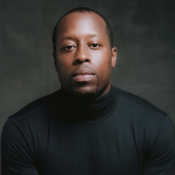
Victor Peterson II is an assistant professor of the Humanities and Social Sciences. Hailing from Philadelphia, Pennsylvania, Peterson's work in Black Cultural studies develops articulation theory: how relations of dominance and subordination emerge and evolve through and against the networks of norms and institutions that structure sociocultural and political movements. Currently, Peterson's working on a book project positing a relation between sound and movement that utilizes mosh pits as a model to analyze socio-cultural formations as complex adaptive systems in alignment with Black scholars' theorizing these movements as collective improvisations.
Peterson has published through Routledge's Africa and African Diaspora series, the CLR James Journal, the Journal of Black Studies, Philosophia Africana, the Journal of World Philosophy, and with RACE.ED at the Institute for Advanced Study in the Humanities. He has held fellowships at Institutes for Advanced Study in Johannesburg, Amsterdam, and Edinburgh and was a fellow at the Institute for the Study of Global Racial Justice, Rutgers University.
He received his Ph.D. from King's College London and holds a degree in arts politics from New York University.
Web
http://vpii.us
Recent Publications
“Collective Improvisations,” Eidos: A Journal for Philosophy and Culture.
“Future Perfect: Imagination and Ideology,” Rhizomes: Cultural Studies in Emerging Knowledge 39.
“Pessimism and Assumptive Logics,” Journal of World Philosophies 7 (2).
“Value and Culture,” Philosophia Africana: Analysis of Philosophy and Issues in Africa and the Black Diaspora 21 (2).
“Forms of Life and Cultural Endowments,” The Pluralist: The Journal of the Society for the Advancement of American Philosophy 18 (2).
“Articulation: Individuals to Collectives,” The International Academic Forum: Journal of Cultural Studies 7 (1).
For more, see CV.
Books/Tracts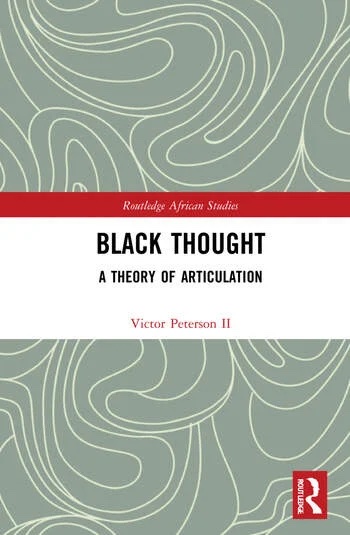
Black Thought: A Theory of Articulation, Routledge: Africa and African Diaspora Series, 2022. 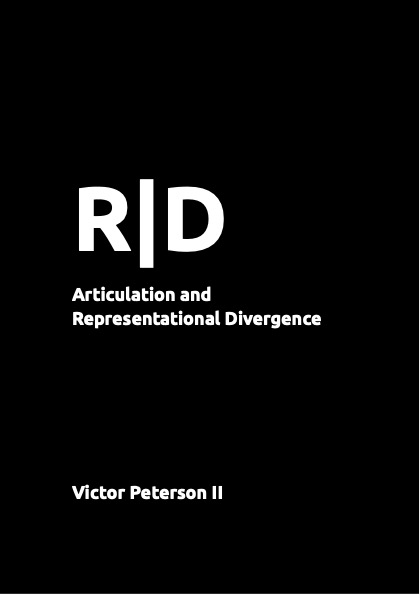
R|D: Articulation and Representational Divergence, Institute for Advanced Studies in the Humanities: Occasional Papers Series, 2022.
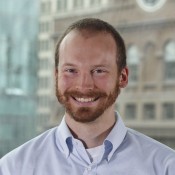
Professor Davis is an expert in sustainable chemical process design - the study of how to model and create safe, efficient, and environmentally-friendly manufacturing facilities. He has published on identifying performance limits for networks of batch-wise (time-dependent) chemical reactors and on modeling and assessing the sustainability of corporations.
His research work is currently focused on sustainability assessment, sustainable process design (the economic, environmental, and social impacts of manufacturing or energy generation facilities), bioprocess design, biofuels, and operations research. He teaches three required courses for chemical engineering undergraduate students regularly: Material and Energy Balances, Process Simulation and Mathematical Techniques for ChEs, and Process Evaluation and Design II. Based on his research experience, he has offered elective courses on Advanced Chemical Reaction Engineering, Convex Optimization Techniques, and Sustainability and Pollution Prevention.
Professor Davis has been an active member of the American Institute of Chemical Engineers (AIChE) since 2004 and has given many presentations at their Annual Meetings. He has been a member of the Education Division of AIChE since it began and has served as Secretary/Treasurer, 2nd Vice-Chair, Vice-Chair, and Chair of the division.
Professor Davis has been at Cooper Union since his graduation from UCLA in 2009 with his Ph.D. in Chemical and Biomolecular Engineering. He is originally from Grand Island, NY and received his B.S. in Chemical and Biomolecular Engineering from Cornell University. His hobbies include board games, brewing beer, and ultimate frisbee.
See Professor Davis's faculty page here.
See Professor Davis's full CV here.
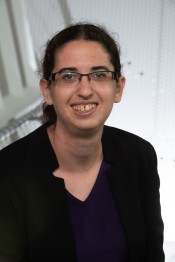
Dr. Abigail Raz earned her B.A. from Wellesley College in 2014 and her Ph.D. in mathematics from Rutgers University in 2019 under the direction of Jeff Kahn. Her research is focused in extremal and probabilistic combinatorics. Much of her work has dealt with analyzing thresholds for various classical properties in two different random graph models.
In 2019 she became an Edith T. Hitz Postdoctoral Faculty Fellow at the University of Nebraska, Lincoln. During this time in addition to research and teaching she also served on the undergraduate activities committee, helping to organize, and run events for the UNL math club as well as the Association for Women in Mathematics chapter. She is also a member of the 2020 class of Project NExT (New Experiences in Teaching) fellows. Project NExT is a professional development program run by the Mathematical Association for America focusing on improving the teaching and learning of mathematics. Specifically, she is involved in the mastery based grading cohort and has been implementing this grading style into her courses for the past three semesters.
“I am thrilled to be joining the Albert Nerken School of Engineering at The Cooper Union. I strongly believe in the commitment to quality education for all and am excited to enact that commitment through the department of mathematics. I am passionate about encouraging a growth mindset in all my students so that they leave my classes not only with greater mathematical knowledge but also an enriched confidence to pursue their goals. I look forward to working with the students to explore not only the use but also the beauty of modern mathematics.”