Full-Time Faculty
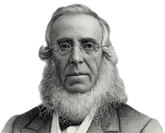
Professor Philip Yecko's main area of interest is fluid dynamics. Phil has worked on astrophysical, biological, geophysical, magnetic and multi-phase fluid dynamics, studying flows of accretion disks, atomization and sprays, bubbles, droplets, coherent structures, mixing and vortices in the ocean, convection, pulsation and turbulence in stars, magnetic drug delivery, ferrofluids, suspension rheology and pattern-forming instabilities. Students interested in this sort of research are encouraged to get involved.
Prof. Yecko's research benefits from a three-fold approach: combining mathematical and theoretical methods, such as asymptotic models and stability theory, together with computational models, including direct numerical simulations, and laboratory experiments. Phil has an ongoing experimental program at the Advanced Photon Source, Argonne National Lab, and is a regular participant in the Geophysical Fluid Dynamics summer program at the Woods Hole Oceanographic Institute (GFD). Phil also has active collaborations with researchers in Italy, France and at several U.S. universities.
Phil enjoys teaching a wide variety of courses in fluids, physics, astrophysics, nonlinear dynamics and numerical modeling and simulation, and has previously taught at Trinity College Dublin, Columbia, M.I.T., Montclair State and Università Napoli Federico II, Italy, primarily undergraduate but also graduate and PhD level courses. Most recently, Phil has developed and taught a hybrid-online course in advanced computational modeling and, at Cooper, is teaching Physics Lab and Modern Physics.
Prof. Philip Yecko earned his Ph.D. from Columbia University and his S.B. in physics from M.I.T.
Tommy George holds a Ph.D. in materials science from Harvard University, specializing in electrochemistry. Electrochemistry enables the precise control of chemical reactions using electric current and voltage, making it possible to store and release renewable energy in batteries, to electrify and decarbonize the chemical industry, and to design sensors and analytical methods with exceptional sensitivity.
Dr. George's graduate research has focused on aqueous redox flow batteries that can charge and discharge reliably for years, as well as other electrochemical technologies designed for a more sustainable future. They were also a Pedagogy Fellow with Harvard's Derek Bok Center for Teaching and Learning, where they served as a peer mentor for graduate students in teaching positions and engaged in research on science and engineering education.
Dr. George received a B.S. in chemical engineering from Tufts University, where they began undergraduate research on the electrochemistry of hydrogen fuel cells. While in college, they also designed and taught weekly hands-on engineering lessons for local public elementary schools.
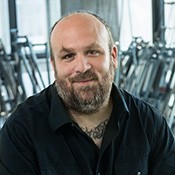
Mike Essl A'96 was a partner at the award-winning design firm The Chopping Block, Inc., which he cofounded in 1996 with a fellow graduate of the Cooper Union. During his six years with the firm, Essl's clients included Sony, Nickelodeon, National Geographic, MTV, Intel, Microsoft, Roadrunner Records, the band They Might Be Giants, and the rapper Warren G. After receiving his MFA from Cranbrook Academy of Art, Essl went on to work for Columbia University, Chronicle Books, and DC Comics.
Essl has taught at Parsons School of Design, School of the Visual Arts, and is now an Associate Professor at the Cooper Union. Essl's work has been recognized in numerous publications and by the AIGA and the Art Directors Club. In 2003 his work with the Chopping Block was featured in the National Design Triennial. Essl was recently a juror for PDN Pix magazine as well as ID magazine's Media Design review. He also loves Mr. T.
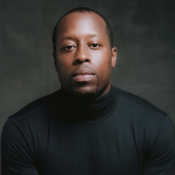
Victor Peterson II is an assistant professor of the Humanities and Social Sciences. Hailing from Philadelphia, Pennsylvania, Peterson's work in Black Cultural studies develops articulation theory: how relations of dominance and subordination emerge and evolve through and against the networks of norms and institutions that structure sociocultural and political movements. Currently, Peterson's working on a book project positing a relation between sound and movement that utilizes mosh pits as a model to analyze socio-cultural formations as complex adaptive systems in alignment with Black scholars' theorizing these movements as collective improvisations.
Peterson has published through Routledge's Africa and African Diaspora series, the CLR James Journal, the Journal of Black Studies, Philosophia Africana, the Journal of World Philosophy, and with RACE.ED at the Institute for Advanced Study in the Humanities. He has held fellowships at Institutes for Advanced Study in Johannesburg, Amsterdam, and Edinburgh and was a fellow at the Institute for the Study of Global Racial Justice, Rutgers University.
He received his Ph.D. from King's College London and holds a degree in arts politics from New York University.
Web
http://vpii.us
Recent Publications
“Collective Improvisations,” Eidos: A Journal for Philosophy and Culture.
“Future Perfect: Imagination and Ideology,” Rhizomes: Cultural Studies in Emerging Knowledge 39.
“Pessimism and Assumptive Logics,” Journal of World Philosophies 7 (2).
“Value and Culture,” Philosophia Africana: Analysis of Philosophy and Issues in Africa and the Black Diaspora 21 (2).
“Forms of Life and Cultural Endowments,” The Pluralist: The Journal of the Society for the Advancement of American Philosophy 18 (2).
“Articulation: Individuals to Collectives,” The International Academic Forum: Journal of Cultural Studies 7 (1).
For more, see CV.
Books/Tracts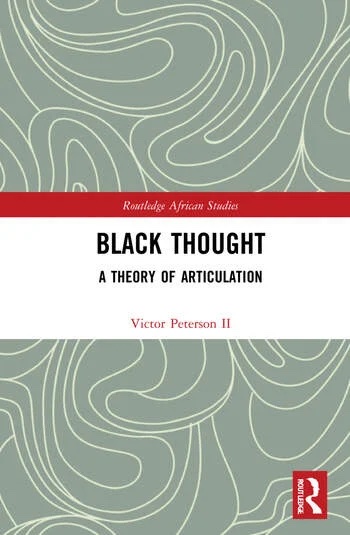
Black Thought: A Theory of Articulation, Routledge: Africa and African Diaspora Series, 2022. 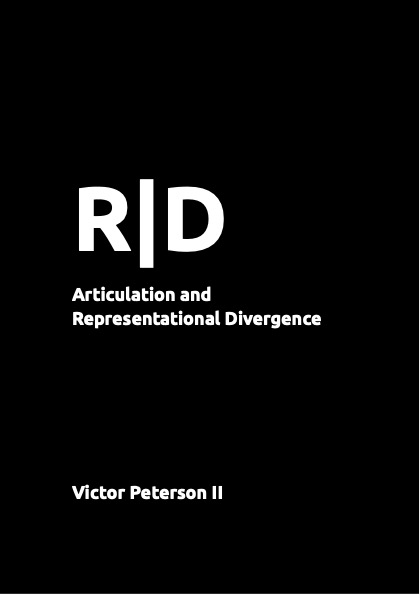
R|D: Articulation and Representational Divergence, Institute for Advanced Studies in the Humanities: Occasional Papers Series, 2022.