Full-Time Faculty
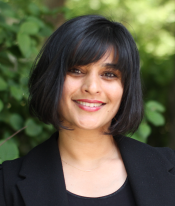
Mili Shah received her PhD from the Computational and Applied Mathematics Department at Rice University. Prior to arriving at The Cooper Union in 2018 she was an associate professor at Loyola University Maryland. She has received external grants from the National Science Foundation and the National Institute of Standards and Technology (NIST). She currently is working with NIST on calibration and registration problems which have applications in computer vision, manufacturing, and robotics.
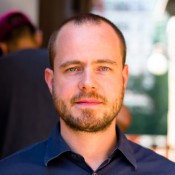
Dirk M. Luchtenburg is associate professor in the Department of Mechanical Engineering at The Cooper Union. His research interests include dynamics and control. He leads the Dynamics and Control Lab at Cooper Union, where undergraduate students develop model-based controllers for smart vehicles, such as quadcopters and ground robots.
Luchtenburg received his MS degree in Aerospace Engineering from the Delft University of Technology located in Delft, Netherlands. Subsequently, he received his PhD degree in Fluid Mechanics from the Berlin Institute of Technology (TU Berlin) where he studied under Bernd Noack and Rudibert King. After spending three years as a post-doc and lecturer at Princeton University under Clancy Rowley, he joined the Cooper Union as a research fellow in 2013, followed by a visiting assistant professorship. He was appointed full-time faculty member in Mechanical Engineering in 2015. His interests span the fields of fluid mechanics, dynamics, and control.
He has a broad range of specializations including fluid flows, dynamics, and feedback control. He has applied these interests to a range of applications including active flow control of fluids, nonlinear aerodynamic stall models, model reduction and identification of fluid flows, and control of smart vehicles.
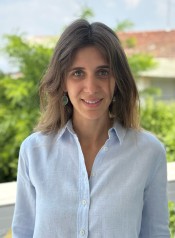
Dr. Stella Banou received her Ph.D. in electrical and computer engineering from Northeastern University in 2022. Her research in intra-body communications for wearable and implantable devices sparked an interest in neural applications, which she pursued as a postdoctoral researcher at NYU’s Center for Neural Science. There, she investigated multi-sensory neural circuits and designed neural, behavioral, and physiological data collection systems for animal experiments with rodents and non-human primates. Her work focuses on developing low-power wireless biosensing systems for health applications, including wearable devices and neural data recording technologies.
As an educator and mentor, Dr. Banou is committed to engaging students in active, project-based learning that emphasizes teamwork and creativity. She aims to get students excited and involved in creating healthcare solutions that make a real-world impact, encouraging them to see engineering as a way to improve lives locally and globally. At Cooper Union, she teaches core electrical engineering courses and works to introduce new offerings that bridge engineering and the biosciences, helping students grow as engineers, innovators, and socially conscious researchers.

William Germano received his B.A. from Columbia and his Ph.D. in English from Indiana University. He has taught at Cooper Union since 2006 and was Dean of the Faculty of Humanities and Social Sciences from 2006 until 2017.
He teaches the freshman core, as well as electives on Shakespeare, opera, the history of the book, and an elective on puppets and robots. His newest course is “The Polar Imagination,” which looks at the ways we think and write about the earth’s extreme places at a critical moment of climate change.
In 2015 Professor Germano gave "How Shakespeare Works," a free ten-lecture night course in Cooper Union's Great Hall.
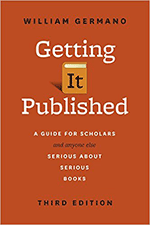
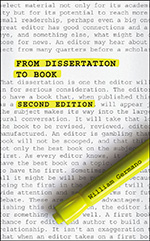
His scholarly work considers literature and the allied arts, the material culture of the book, and the problems of intellectual production. He is particularly interested in the writing life of scholars, a subject he has written on in Getting It Published: A Guide for Scholars and Anyone Else Serious about Serious Books (University of Chicago Press, 3rd ed. 2016), which has been translated into Japanese and Korean, and From Dissertation to Book (University of Chicago Press, 2nd ed. 2013), which has been translated into five languages.
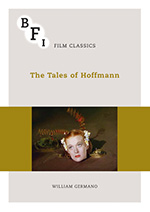
He has also written on Powell and Pressburger's 1951 film "The Tales of Hoffmann" (2013) in the British Film Institute Film Classics series. His essays have appeared in PMLA, minnesota review, Scholarly Publishing, SPAN, Publishing Research Quarterly, PNR and other publications. His scholarly essays have appeared in Opera Quarterly, University of Toronto Quarterly, The Critical Pulse: Thirty-Two Conversations with Contemporary Critics (Columbia UP, 2012), and The Humanities and Public Life (Fordham UP, 2014). He is a contributor to the two-volume Cambridge Guide to the Worlds of Shakespeare (2016), the Oxford Companion to Shakespearean Tragedy (2016), and the Oxford Handbook of Shakespeare and Music (2022).
For over twenty years he directed programs in scholarly publishing, first as editor-in-chief at Columbia University Press and then as vice-president and publishing director at Routledge; during his publishing career he developed wide experience with disciplines in both the humanities and social sciences, working with many extraordinary scholars, among them Peter Galison, Jacques Derrida, Cornel West, Gayatri Chakravorty Spivak, Gilles Deleuze, bell hooks, Herbert Gans, Stephen Orgel, Michael Taussig, Dario Fo, Sander Gilman, Stephen Greenblatt, Arthur Danto, Raymond Williams, Paul Willis, Stanley Aronowitz, David Bordwell, Julia Kristeva, Wayne Koestenbaum, James Elkins, Marjorie Garber, Peter Stallybrass, Fredric Jameson, Diana Fuss, and Martin Jay.
He has taught in the graduate program in publishing at NYU, is a frequent speaker at academic conferences, and has given workshops and seminars on professional scholarly writing across North America and in Europe, the Middle East, and New Zealand.
A trustee emeritus of The English Institute, he has served on the advisory council of the Princeton University department of English, the advisory boards of Johns Hopkins University Press and of Goldsmiths Press (UK), and the board of the Chicago Manual of Style. He has also been a frequent contributor to the Chronicle of Higher Education.

Eye Chart (Bloomsbury, 2017), a volume in the Object Lessons series, considers the history of one of the most familiar of graphic designs--the common eye chart--and examines its cultural life from the seventeenth century to the present day.
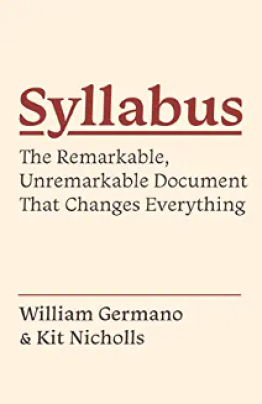
With Kit Nicholls, Director of Cooper Union’s Center for Writing, he has cowritten Syllabus: The Remarkable, Unremarkable Document That Changes Everything (Princeton, 2020, paperback 2022), about which Hua Hsu writes in The New Yorker, that "The authors come across like fantastic and committed teachers."

His most recent book is On Revision: The Only Writing That Counts (Chicago, 2021), which offers a practical philosophy of revising academic writing and other forms of non-fiction, and strategies for getting the job done.
His next project is Shakespeare and Opera, planned for the series “Oxford Shakespeare Topics,” published by Oxford University Press.