Full-Time Faculty
Professor Jennifer Weiser joined the Chemical Engineering Department of Cooper Union in September 2017. Her background is in drug delivery, wound healing, and developing polymeric biomaterials for medical applications.
After receiving her B.S. in Chemical Engineering from Rensselaer Polytechnic Institute in 2006, Professor Weiser earned her M.S. in 2010 and her Ph.D. in 2012 in Biomedical Engineering from Cornell University. At Cornell, she bridged her Chemical Engineering background with her experience working as an organic chemist in the Exploratory Medicinal Chemistry Department at Wyeth Pharmaceuticals to create polymeric biomaterials for long-term controlled release and wound healing. Professor Weiser also took part in the inaugural year of Cornell University’s NSF GK-12 program, partnering with a local high school to teach STEM classes as “scientist-in-residence.”
Professor Weiser then joined the startup iFyber through a National Institutes of Health (NIH) STTR grant to explore proprietary polymeric materials developed in her graduate lab. There she built a lab and started the process of scale-up and in vivo testing for applications in post-surgical complications and hemostasis.
In 2014, Professor Weiser began a NIH Ruth L. Kirschstein NRSA postdoctoral training fellowship in the Biomedical Engineering Department of Yale University to study electrospinning polymer scaffolds for wound healing applications. This work led to a collaboration with the Department of Otolaryngology in the Yale School of Medicine, helping to develop a device for post-surgical complications following total laryngectomy. From 2017-2018, she was appointed a Visiting Assistant Professor in the Department of Surgery at the Yale School of Medicine.
Since joining the faculty of The Cooper Union, Professor Weiser has had research collaborations with several medically oriented departments in NYC. Past projects include work with the Department of Cardiology at the Columbia University Medical Center at Columbia University, where she was appointed an Assistant Professor of Clinical Medical Sciences (In Medicine) from 2018-2019, and the Department of Neural Science at NYU. Currently, Professor Weiser has collaborative research projects with the Department of Orthopaedics at the Icahn School of Medicine at Mount Sinai and the Department of Orthopaedic Surgery at the Albert Einstein College of Medicine at Montefiore.
Professor Weiser is a member of the American Institute of Chemical Engineers, American Society of Engineering Education, and Orthopaedic Research Society. Previously, she has been an Adjunct Professor at Pace University in NYC teaching General Chemistry and Organic Chemistry. She is originally from Westchester, NY and currently resides in Manhattan.
See Professor Weiser’s faculty page here.
Cristóbal Lehyt is a Chilean born New York based artist that works in different media. He studied at Universidad Católica de Chile, Hunter College and the Whitney Independent Study Program. His work has been shown at the Carpenter Center, Künstlerhaus Stuttgart, Fundación Telefonica Chile, Or Gallery, Kunsthaus Dresden, Artists Space, The Shanghai Biennale, The Mercosul Biennial, The Whitney Museum of American Art and Queens Museum among others. In addition, he has produced works responding to specific contexts, in cities that include Bogotá, Caracas, Mexico City, Berlin, Vienna, Barcelona, Madrid, Beijing, São Paulo, Buenos Aires, and Rio de Janeiro. He has been awarded the John Simon Guggenheim Memorial Foundation Fellowship and the Art Forum Fellowship, Harvard University. His work is in numerous collections including the Museum of Contemporary Art Santiago, and the Museum of Modern Art, New York.
Lehyt began his Bachelor of Arts degree at the Pontifical Catholic University of Chile and subsequently completed his studies at Hunter College and the Whitney Independent Study Program in New York.

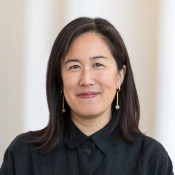
Irene Cheng is an associate professor in Architecture at the Cooper Union. An architectural historian and critic, her research explores the entanglements of architecture, culture, environment, and politics in the nineteenth and early twentieth centuries. Cheng is author of The Shape of Utopia: The Architecture of Radical Reform in Nineteenth-Century America, and co-editor of Race and Modern Architecture: A Critical History from the Enlightenment to the Present (with Charles L. Davis II and Mabel O. Wilson) and The State of Architecture at the Beginning of the 21st Century (with Bernard Tschumi). Her book The Shape of Utopia received the On the Brinck Award in 2024. She is currently working on a book that explores the political ecology of Arts and Crafts architecture, as well as a related collaborative project called the Materialities of Empire.
Cheng received a B.A. in Social Studies from Harvard University, and M.Arch and Ph.D degrees from Columbia University. She previously taught at Columbia University, UCLA, and the California College of the Arts, where she served as chair of the Graduate Architecture program and as a founding co-director of History Theory Experiments, a platform for advanced interdisciplinary research and critical engagement in architecture.
Cheng is the recipient of a Diversity Achievement Award from the Association of Collegiate Schools of Architecture and an AIA SF Community Alliance Award. Her work has been supported by fellowships from the Graham Foundation, Whiting Foundation, McNeil Center for Early American Studies, MacDowell Colony, and National Endowment for the Humanities.
Previously Cheng worked as an architectural designer for Bernard Tschumi Architects before launching her own firm, Cheng + Snyder, with Brett Snyder. Cheng + Snyder’s project Museum of the Phantom City was exhibited at the Venice and Chicago biennials. The firm’s work has been published in Metropolis, Architectural Record, The Architect’s Newspaper, The New York Times, and in numerous books and blogs.
Cheng's CV is available here.
Doug Ashford A'81 is an artist and has taught at Cooper Union since 1989. He is also a visiting Associate Professor for the MFA Program in Painting at The Yale School of Art. Ashford’s principal art practice from 1983 until 1996 was Group Material, a collaborative project that used exhibition design and social practice in museums and other public spaces to imagine new political forms. Prominent in this history are the exhibitions: The Castle (dOCUMENTA 8, Kassel, Germany, 1987), Democracy (The Dia Art Foundation, New York, 1988) and AIDS Timeline (The Berkeley Art Museum 1989, Wadsworth Atheneum, 1990, The Whitney Museum, 1991). Group Material’s work in exhibition production, public cultural display, and the mobilization of politics continue to affect many disciplines in and around the production of contemporary art. The sixteen-year history of the group is documented in the book Show and Tell: A Chronicle of Group Material, (Julie Ault, ed. Four Corners Books, 2010). After 1996, Ashford went on to make paintings, produce exhibitions and publish articles independently and in other collaborations. Who Cares (Creative Time, 2006), is a book project built from a series of conversations between Ashford and an assembly of other cultural practitioners on public expression, beauty, and ethics. His painting installations have been shown recently at dOCUMENTA 13, Kassel (2012), The Henie Onstad Center, Norway (2013) and the 11th Gwangju Biennale (2016). Ashford’s book, Writings and Conversations, (Mousse Publishing, 2013), was published on the occasion of a retrospective exhibition of his work at the Grazer Kunstverein, (AU). His work is represented by Wilfried Lentz Rotterdam.