Yoona Hur
Assistant Professor Adjunct
Yoona Hur is a Seoul-born, New York-based artist, architect, and educator. Her practice explores cultural identity, spirituality, and materiality through ceramics and painting. Drawing from Korean traditional arts, nature, meditation, and eastern philosophies of timelessness and impermanence, her work evokes the contemplative spaces between presence and change.
Her projects have been exhibited and acquired internationally, including in the United Kingdom, Italy, France, Finland, Norway, Switzerland, South Korea, Japan, Taiwan, and Hong Kong. Her works have been featured in leading publications, including Rizzoli, Wall Street Journal Magazine, The Architect’s Newspaper, Architectural Digest Italia, Elle Decoration France, The New York Times: T Magazine, Cereal, Dezeen, Maison Korea, Milk Decoration, Design Anthology, Surface, and Cultured Magazine.
As an architect, she worked at Matthew Baird Architects, Diller Scofidio + Renfro, and Agrest and Gandelsonas Architects in New York City. Her works include several institutional and cultural projects at various scales, phases and locations: Museum of Image and Sound (Brazil), Columbia University Medical Tower, South Amboy Community Center, Louis Armstrong Museum Visitor Center, Glendale Library Renovation, Spring Island Art Center and Woodmere Art Museum (U.S.A).
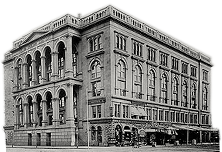
Hur holds a Bachelor of Fine Arts from The School of the Art Institute of Chicago (2006) and a Bachelor of Architecture from The Cooper Union, The Irwin S. Chanin School of Architecture (2010). She has been a guest lecturer and critic at The Cooper Union, SCAD and The School of Art Institute of Chicago.
Hur's CV is available here.