Earl Kwofie
Instructor Adjunct
Earl Kwofie is a designer currently practicing at Anik Pearson Architect. His professional experience also includes roles at offices such as Knippers Helbig, Steinberg Hart, and Reform Architecture.
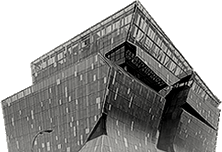
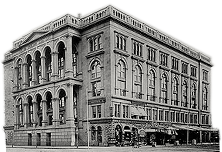
Earl received his B.Arch from The Cooper Union. While there, he played a key role in academic development, contributing to the curriculum for three courses, including: Housing Epistemologies (with Ife Vanable and Daisy Ames) and Machine Learning for Architecture (with Ben Aranda and Sam Keene). He also served as a Teaching Assistant for Robotic Fabrication (with Zach Cohen and Harrison Tyler).
Independently, Earl's work bridges game development and architectural language through a variety of projects centered on Afrofuturism and historical commentary. His achievements have been recognized with several awards and grants, including the Center for Architecture Design Scholarship and The Benjamin Menschel Fellowship. Most recently, he was a finalist in the International Architecture Competition for the Temporary Pavilion at CARIFESTA XV.
Earl's CV is available here.
Projects
The Courtyard House
The Courtyard House (2025–)
Taking stage in Kumasi, Ghana, this project is a speculative project exploring how the motifs in precolonial Asante Traditional Buildings can be translated with not only contemporary architectural language, but the socioeconomic pressures of Ghana today. Taking cues from the shrine homes of the Asante nobility, this project explores the ways in which the precolonial courtyard house typology can transform to support the growing population density, without compromising the programmatic necessities of the typical Ashanti family.
The Flying Pavilion
The Flying Pavilion (2025)
In response to the demolition of the Lord Nelson statue and the construction of the new National Heroes Square, this project seeks to celebrate the Barbadian and Caribbean people at large— while also honoring the Barbadian soldiers who lost their lives in World War I.
The design of the pavilion draws inspiration from a conceptual inversion of the WWI military trench. Rather than the heavy, opaque earth-retaining walls typical of trenches, the pavilion features a light, elevated wooden structure that is porous and open. Its form also evokes the wings of the flying fish, with an undulating roof canopy that pays tribute to the local fishing heritage and a fish emblematic of the region.
Most significantly, the pavilion reinforces the spatial and symbolic connection between the WWI memorial on the eastern side of the square and the Monument to the Barbadian Family on the western side. It frames the Cenotaph between its two walls, creating a visual and commemorative link across the square.
The Studio
The Studio (2023)
This project is a fleshed out vertical slice of a larger project that I worked on in the Cooper Union Remission. This project was a response to the omnipresent residue of a volatile tech industry within the Bay Area and the world at large.
The Studio is a videogame environment that showcases an abandoned office space that has been completely reclaimed and converted into a studio for artists throughout San Francisco and the Bay Area at large. Inspired by the The Apocryphal Gospel of Oakland, a speculative project by Brandi Summers and Olalekan Jeyifous, this project uses the vacant office space as a way to explore ways to address the housing crisis caused by the ubiquitous tech industry.