Primers for a Handmade Utopia
Thu, Oct 8, 5pm - Thu, Oct 29, 2026 7pm
Add to Calendar
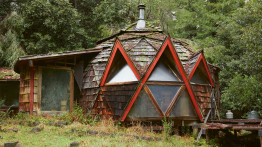
Photo by Michael Schmelling
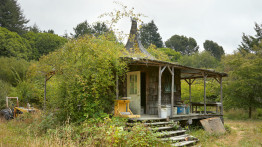
Photo by Michael Schmelling
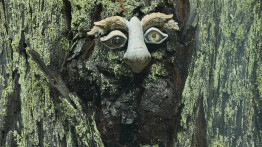
Photo by Michael Schmelling (detail)
Half a century ago, a legion of young idealists—disillusioned with the governance and exploding consumer culture of 1960s America—dropped out of society and went “back to the land,” in what proved to be the greatest urban-to-rural exodus in American history. The backwoods of Northern California became the movement’s epicenter, where a patchwork of utopian communes sprouted, together with a distinctly radical mode of hand-built architecture.
Most back-to-the-landers did not call themselves architects. Their experimental structures evolved according to need and available resources, their means of construction reflecting the aspirations and dissensions of the owner-builders. But each offered a reappraisal of what a home could and should be—and how it might inform the lives of its inhabitants.
Primers for a Handmade Utopia: Back-to-the-Land Architecture in Northern California explores the ingenious, ad-hoc construction methods and solutions evident in these unique buildings, from salvaged materials and geodesic domes to shakes and shingles and privy systems. Drawing on their new book, Handmade Utopia: Back-to-the-Land Architecture in Northern California (D.A.P./Edition Patrick Frey), author David Jacob Kramer and photographer Michael Schmelling celebrate these extraordinary—and under-documented—residences and the stories of how they came to be. Their photos and oral histories are presented alongside a selection of handmade tools, archival materials, and a reading library of influential publications from the period.
Only a fraction of these DIY pioneers stuck it out following the Summer of Love. For decades they have kept their homes hidden, fearful of building inspectors and drug squads. They are now in their seventies and eighties as the question arises of what they will leave behind, literally and figuratively. Kramer and Schmelling honor their remarkable designs as artworks in their own rights, at a moment when they risk being lost forever.
The exhibition is accompanied by a panel discussion featuring the authors in conversation with Cooper Union associate professor Irene Cheng and design critic Alexandra Lange on Tuesday, October 13.
__________________________
Held in the Foundation Building’s Third Floor Hallway Gallery.
Open to the general public
Monday – Friday, 12 pm – 7 pm
Saturday & Sunday, 12 pm – 6 pm
Located at 7 East 7th Street, between Third and Fourth Avenues