
The School

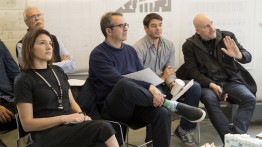
The School of Architecture offers a five-year program leading to the bachelor of architecture, a first professional degree accredited by the NAAB. The architecture curriculum is designed to prepare students for a rich array of opportunities in the profession, offering a broad cultural and intellectual foundation in the liberal arts as they relate to the design of the environment at all scales. The discipline of architecture interpreted in the widest possible sense as a cultural practice is seen as a basis for a fully rounded education at the undergraduate level. Students develop their knowledge and design skillswithin a framework of studios and courses that stimulate research and debate into the nature and role of architecture as a cultural practice with profound social and environmental implications. The content of the curriculum, based on awide cultural view of architecture, reflects broad ethical values. Faculty-student interaction is conducted on an intensive basis in the design studio and other classes. Within this framework faculty members encourage students to develop their individual interests and strengths, with a constant stress on fundamentals and a basic commitment intended to equip the graduate with a lasting ability to produce an architecture that is a meaningful synthesis of the social, aesthetic and technological. The relationship between architecture and other creative disciplines is stressed through the five years. Students are encouraged to express themselves both verbally and visually.

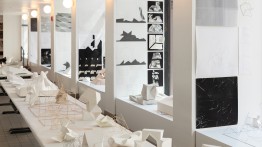
In a moment where the nature, role and scope of the architect is rapidly assuming new directions and dimensions in both the social and technological domains, the school emphasizes the principles of design and their underlying human values, while preparing students to respond positively to change. The program seeks to engender a strong sense of the responsibilities of service and leadership, teamwork and individual creativity essential to the development of principled professionals dedicated to interpreting and constructing the spatial needs of the community. The five-year design sequence is carefully structured to introduce the student to the principles of architectonics, the investigation of program and site, structures and environmental and building technologies, in a comprehensive and integrated curriculum. The studios comprise an introduction to the basic elements of form, space and structure; complex institutional design problems in their urban context; and a year-long thesis that demonstrates the student’s ability to synthesize a comprehensive understanding of architecture in society. The traditional and essential skills of drawing, model-making and design development are complemented by a full investigation of the analytical and critical uses of digital technologies. The study of world architecture and urbanism is deepened by the understanding of individual cultures, environmental, and technological issues at every scale. The theory of the discipline, past and present, is investigated through the close analysis of critical texts and related to the theory and practice of other arts, such as public art, film and video. The position of the School of Architecture, togetherwith the Schools of Art and Engineering and the Faculty of Humanities and Social Sciences, offers a unique opportunity for interaction and interdisciplinary research and experience.

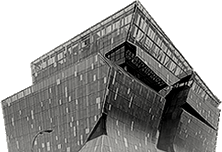
The Cooper Union’s location in New York City in the heart of downtown Manhattan provides a stimulating professional, social and cultural context for the education of an architect and an urban laboratory for the study of design in society.The numerous cultural institutions of the city provide an inexhaustible resource for research and experience outside the studio and classroom. The school’s faculty includes nationally and internationally recognized architects; the school’s diverse student body consists of highly talented and motivated individuals and its distinguished alumni are leaders in architecture and related fields.

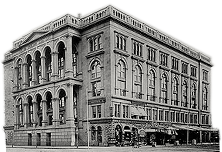
  • Founded by inventor, industrialist and philanthropist Peter Cooper in 1859, The Cooper Union for the Advancement of Science and Art offers education in art, architecture and engineering, as well as courses in the humanities and social sciences.

  • “My feelings, my desires, my hopes, embrace humanity throughout the world,” Peter Cooper proclaimed in a speech in 1853. He looked forward to a time when, “knowledge shall cover the earth as waters cover the great deep.”

  • From its beginnings, Cooper Union was a unique institution, dedicated to founder Peter Cooper's proposition that education is the key not only to personal prosperity but to civic virtue and harmony.

  • Peter Cooper wanted his graduates to acquire the technical mastery and entrepreneurial skills, enrich their intellects and spark their creativity, and develop a sense of social justice that would translate into action.