Class Schedule

Core Curriculum and Elective Courses, Fall 2012

The core curriculum of Cooper Union is a required four-semester sequence from HSS1: Literary Forms and Expressions through HSS4:  The Modern Context.  The core curriculum requirement is satisfied by completing these four semesters in order.  HSS1 and HSS3 are offered in fall semesters; HSS2 and HSS4 are offered in spring semesters.

HSS 1: The Freshman Seminar

A literature course concentrating on poetry and drama. Selected texts from antiquity and the Renaissance are common to all sections.

Section ASayresM 10-12, W 11-12
Section BTBDM 10-12, W 11-12 
Section CStangeM 10-12, W 11-12
Section DTBDM 10-12, W 11-12
Section ETBDM 10-12, W 11-12
Section FTBDM 10-12, W 11-12
Section GSayresT 9-11, Th 11-12
Section HStieberT 9-11, Th 11-12
Section IStangeT 9-11,  Th 11-12 
Section JSwannT 9-11,  Th 11-12
Section KTBDW 12-1,  F 10-12
Section LStieberW 12-1,  F 10-12


HSS 3: The Making of Modern Society

A study of the key political, social and intellectual developments of modern Europe in global context.  This course is organized chronologically, beginning with the Industrial and French Revolutions. Monday 11-12 lecture in LL117 (Rose Auditorium).  All students enrolled in HSS3 must attend the Monday 11-12 lecture in addition to one of the below sections.

Section 3L1GrossmannM 11-12
Section AGriffinW 9-11
Section BTBDW 9-11
Section CGrossmannT   2-4
Section DBuckleyM 6-8
Section ETBDW 9-11
Section FTBDW 9-11
Section GBuckleyT 2-4
Section HTBDTh 9-11
Section IGriffinT   2-4
Section JTBDW 6-8
Section KTBDTh 9-11


Art History (HTA 101, 102)

While contributing to the required curriculum of students enrolled in the School of Art, both the Art History Core and art history electives are also available to students in the other Schools.

HTA 101, 102 Modern to Contemporary: An Introduction to Art History

This two-semester art history core course, developed as part of the the Foundation year for students in the School of Art but open to all students, is organized around a set of themes running through the history of modernity from the 18th century to the present. Within specific themes, significant works, figures, and movements in art/design will be presented chronologically. Students will be able to identify and critical evaluate significant works, figures, and movements in art/design in the modern period; be able to describe the main social and political contexts for the changes in art/design over the last two hundred years; and engage, in writing and class discussion, with theoretical perspectives on art/design production. The course will involve museum visits. Grading will be based on class participation, papers, and exams.

The following courses fulfill Humanities, Free Elective, and Non-technical Elective requirements for students in Engineering; they fulfill General Studies requirements for students of Architecture; and they fulfill General Studies and Free Elective requirements for students of Art.  In addition, courses with the prefix “HTA” fulfill the distributional requirements for Art students in Art History. Electives marked “G” satisfy a “global” art history distribution requirement; electives marked “P” satisfy a “pre-1700” art history distribution requirement. Some courses may satisfy either requirement, but may not be used to satisfy both.

Prerequisites

The prerequisites for all courses with the prefixes “H” and “S” are HSS1,2,3,4.  Except with special permission, HTA101A and HTA102B, are pre-requisites for Art History courses.  Certain courses have additional pre-requisites.

Credits

Courses with the prefix “H” and “S” carry three credits.  Courses with prefix “HTA” carry two credits. 312 Islamic Aesthetics (3 credits), open to all students, may also satisfy an  history distribution requirement (either G or P)

Electives: Fall 2012

Humanities

H306Native AmericaSwannW 9-12
H312Islamic AestheticsTBDW 9-12
H323Presence of PoetrySwannT 11-12, Th 9-11
H328History of CinemaHobermanW 6-9, Th 6-8
H331Eros in Antiquity: Sacred & Profane LoveStieberW 2-5
H357Philosophy of ScienceTBDTh 6-9
H363World TheatreTBDM 2-5
H383OperaGermanoM 2-5, W 1-2
H394World ReligionsTBDTh 9-12
 

Social Sciences

S318ASeminar in Social Sciences: Cooper Union World ForumBharuchaM 9-12
S323Politics & Collective MemoryGriffinT 9-12
S334MicroeconomicsTBDW 6-9
S342AnthropologyTBDF 10-1
S345Ray Brown SeminarSayresTh 6-9
S391Introduction to Mind & BrainTBDF 2-5
S430Environmentalism in the Urban CenterBuckleyT 9-12
 

Art History

HTA101BModern to ContemporaryTBDF 10-12
HTA101DModern to ContemporaryTBDW 3-5
HTA101CModern to ContemporaryTBDTh 3-5
HTA101AModern to ContemporaryTBDT 3-5
HTA275AMoments in 20th Century ArtAshtonM 9-11
HTA275BMoments in 20th Century ArtAshtonT 9-11
HTA296SynartetisAshtonM 11-1
HTA231History of Industrial DesignTBDTh 10-12
HTA264Black Artists of the AmericasTBDW 6-8 (G)
HTA313ASeminar: Russian ArtTBDM 1-3 (G)
HTA315Mysteries of Northern Renaissance ArtTBDW 4-6 (P)
HTA317Art & Architecture of Ancient PeruTBDT 6-8 (G, P)
HTA329Nineteenth Century PrintmakingSimpsonF 2-4


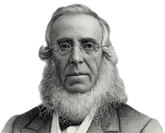
  • Founded by inventor, industrialist and philanthropist Peter Cooper in 1859, The Cooper Union for the Advancement of Science and Art offers education in art, architecture and engineering, as well as courses in the humanities and social sciences.

  • “My feelings, my desires, my hopes, embrace humanity throughout the world,” Peter Cooper proclaimed in a speech in 1853. He looked forward to a time when, “knowledge shall cover the earth as waters cover the great deep.”

  • From its beginnings, Cooper Union was a unique institution, dedicated to founder Peter Cooper's proposition that education is the key not only to personal prosperity but to civic virtue and harmony.

  • Peter Cooper wanted his graduates to acquire the technical mastery and entrepreneurial skills, enrich their intellects and spark their creativity, and develop a sense of social justice that would translate into action.