Deans

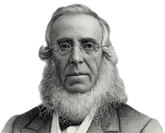
Michael Young is an architect and educator practicing in New York City where he is a founding partner of the architectural design studio Young & Ayata. Young & Ayata have received the Progressive Architecture award, the Design Vanguard Award, the Young Architects Prize, and a first-place prize for the design of the Bauhaus Museum in Dessau, Germany. Their work has been exhibited at the Museum of Modern Art-New York, the Istanbul Modern, the Graham Foundation, SCI-Arc and Princeton University. Michael has published numerous essays and the books The Estranged Object (Graham Foundation, 2015) and Reality Modeled After Images (Routledge, 2021). He was the 2019-20 Rome Prize Fellow at the American Academy in Rome.
Michael earned his MArch II degree from Princeton University and his BArch from Cal Poly San Luis Obispo. He is a registered architect in the State of New York.
View Michael Young's CV here.
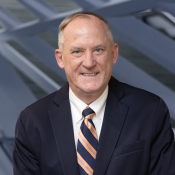
Barry L. Shoop, Ph.D., P.E., is Dean of Engineering at the Albert Nerken School of Engineering at the Cooper Union for the Advancement of Science and Engineering in Manhattan, NY.
Barry assumed his role at The Cooper Union on January 1, 2019. In this capacity, he leads the largest of The Cooper Union’s schools which is comprised of seven academic departments supporting an average enrollment of roughly 480 undergraduate and another 70 graduate students. Under his leadership, the School of Engineering has flourished. In the last four-years, the school has introduced four new minors including Computer Science, Bioengineering, Chemistry, and Humanities and Social Sciences; introduced a new type of course structure known as Vertically Integrated Projects (VIP) that engage students in a project-based experience over multiple semesters to apply disciplinary knowledge and gain important professional skills; hired 10 new tenure-track faculty increasing the number of women tenured and tenure-track faculty from 6.2% in 2013 to 42% in 2023; launched partnerships with the Memorial Sloan Kettering Cancer Center, the Simons Foundation’s Flatiron Institute Center for Computational Astrophysics, Nokia Bell Laboratories, and NEC Laboratories America. Additionally, the School of Engineering has expanded the summer study abroad program to include Singapore, Italy, Bosnia in conjunction with La Trope University in Australia, and Santa Cruz del Quiche in Guatemala.
Prior to his current position, he retired as a Brigadier General after a 39-year career in the U.S. Army, with the last 25 years at the U.S. Military Academy at West Point. While at West Point, he served in a number of key leadership roles including Director of the Photonics Research Center, Director of the Electrical Engineering Program and his last position was Professor and Head of the Department of Electrical Engineering and Computer Science.
Earlier in his career, he was a satellite communication engineer responsible for the design and installation of a high-capacity, global digital communication network, and also the Chief Technology Officer for a US$4.5B organization addressing the Improvised Explosive Device (IED) challenge worldwide.
Dr. Shoop received a B.S. degree from the Pennsylvania State University and Ph.D. from Stanford University, both in Electrical Engineering. His research interests include optical information processing, neural networks, image processing, disruptive innovations and educational pedagogy. He is a Fellow of the Institute of Electrical and Electronic Engineers (IEEE), the Optical Society of America (OSA), and the International Society for Optical Engineering (SPIE). In addition, he is a member of Phi Kappa Phi, Eta Kappa Nu, and Sigma Xi. Dr. Shoop has served on the Board of Directors of OSA, ABET, and IEEE. In 2016, Dr. Shoop served as the IEEE President and CEO. In 2008, OSA recognized him with their Robert E. Hopkins Leadership Award and, in 2013, he received both the SPIE Educator Award and the IEEE Haraden Pratt Award. Dr. Shoop holds a patent on photonic analog-to-digital conversion and has authored over 150 archival publications as well as 8 books and book chapters. He is a licensed Professional Engineer in the Commonwealth of Virginia. In 2019, he was elected to the National Academy of Engineering.
- About
-
Ph.D., Chemistry 2005
Yale University
Research Advisors: Prof. David J. Austin and Prof. Donald M. Crothers
Dissertation: “Synthetic and Biophysical Efforts Toward an Understanding of RNA Structure”M.S., Chemistry 2000
Yale UniversityB.E., Chemical Engineering 1998
The Cooper Union
Summa Cum Laude Graduate - Courses
-
Accordion content.
- Publication / Research
-
Accordion content.
- Service
-
Accordion content.

Mersiha Veledar is a practicing architect and an educator. She has lived in New York since she was fourteen years old, where she found refuge through ‘The United Nations Educational, Scientific and Cultural Organization’, UNESCO following her survival of war-inflicted injuries from the 1991-1995 genocide in Mostar, Bosnia and Herzegovina. Graduate of The Cooper Union [B.ARCH ‘03] and Princeton University [M.ARCH II ‘05], Veledar has been teaching and coordinating a range of innovative studios and seminars since 2005 at The Cooper Union, from 1st year ”Archi-Tectonics” studios [coordinator], 3rd year “Building Integrated” studios [coordinator], 4th year “Architecture of the City” urbanism studios, as well as undergraduate and graduate M. Arch II Thesis studios [coordinator], while committed to the practice and construction of architecture.
The genesis of her work and studio pedagogy originate in her ‘Architecture could Heal: Towards a Universal Architecture’ thesis [advised by Lebbeus Woods], where she developed a tectonic framework of experimental universal scale elements [walls, columns, windows, doors and stairs] while testing active programmatic environments as novel architectural standards that are common to all cultures and architectures. Having witnessed the fall of civic institutions and infrastructures through the effects of war and prejudice, she has focused her professional career on an array of public and private programs ranging in scales from schools, museums and residences where she tests the boundaries of transformation and concrete actualization of built form.
In her recent teaching accomplishments, the ‘Animate Archi-Tectonics’ studio Veledar coordinated, received the prestigious ‘2018 Studio Prize’ by ARCHITECT Magazine and was the only first year undergraduate studio to be awarded amongst the six winning anonymous entries in North America [Canada and US]. Juror Eric Owen Moss, FAIA stated “I think the work is beautiful,” who was also impressed with the studio’s unconventional approach to introducing basic architectural concepts. “It does seem to suggest that there is another way to see, study, and speculate form.” Additionally, the thesis project she advised in 2017 received the coveted Royal Institute of British Architects ‘RIBA Silver Medal Award for World’s Best Projects,’ a first for The Cooper Union.
Veledar is currently coordinating a 3rd year building integrated studio titled ‘Housing New York: Integrating ‘Living’ Configurations Towards A Novel Urban Domesticity’ in collaboration with the HelpUSA organization whose humanitarian efforts continue to make a tremendous impact on affordable housing challenges across the US. This project is part of the 2019 NYC School ‘Housing Inter-Consortium’ alongside Dean Nader Tehrani and the co-teaching team where students are learning how to innovate housing to create a greater social good.
Her recent research paper titled 'Healing the City: Elemental Constructions and the Universal Language of Architecture' was accepted for publication by the 2018 New Instrumentalities, ACSA. Additionally, she was invited as a panelist to the 'Open Cities: 2018 ACSA/COAM International Conference’ in Madrid and recently gave a lecture on the effects of “Universal Resiliency and Architecture' with Anne Romme at The Royal Danish Academy of Fine Arts and Architecture in Copenhagen in addition to being a panelist on ‘Productive Hybrids, Design III, Urban Housing in San Juan: Symposium at The Cooper Union.
Veledar has developed an extensive range of architecturally experimental and socially conscientious projects in her built work including High School of Art and Design and PS 59 [SCA] in New York; Elizabeth Academic High School in Elizabeth [SCA] in New Jersey and countless residential projects. Veledar has built work both in New York City and overseas.
Veledar's CV is available here.