Adjunct Faculty

Jessica Ngan is an architectural historian whose research is on environment, postcolonialism, and agricultural space. Her current research project situates countercultural practices of the 1960s and 70s within a wider context of agricultural production and labor. She was trained as an architect in Sydney, Australia. She holds a M.S. in Critical, Curatorial and Conceptual Practices from Columbia University as well as a PhD in the History and Theory of Architecture from Princeton University. She has taught at SUNY Buffalo, New York Institute of Technology, and Cornell University. She was an exhibition designer at Studio-X and a curatorial fellow at the Storefront for Art and Architecture.
Ngan's CV is available here.

David L. Johnson is an artist and educator based in New York City. Johnson makes work attuned to the streets of the city, pinpointing moments of slippage between public and private property. His practice utilizes photography, video, found and stolen objects, and installation to consider the politics, histories, aesthetics, and forms of use that define contemporary urban space. His work has been exhibited in solo exhibitions at The Shop at Sadie Coles HQ, London (2024); Galerie Thomas Schulte, Berlin; Galerie Noah Klink, Berlin; Art Lot, Brooklyn (2023); and Theta, New York (2021). Recent group exhibitions have been held at the Columbus Museum of Art, Columbus, OH; Salzburger Kunstverein, Salzburg, AT (both 2024); Palais de Tokyo, Paris; Chicago Architecture Biennial, Chicago; MoMA PS1, New York (all 2023); and Artists Space, New York (2022).
Johnson received a BFA from the Cooper Union in 2015 and an MFA from the University of Pennsylvania in 2020. He is an alumnus of the Whitney Independent Study Program. Johnson is an adjunct instructor at The Cooper Union and a part-time faculty member in the MFA program at the Parsons School of Design. Johnson’s work is held in the public collection of The Studio Museum in Harlem and The Columbus Museum of Art.
Johnson's CV is available here.
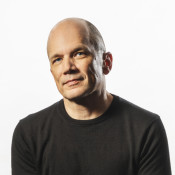
Michael Maltzan founded Michael Maltzan Architecture, Inc. in 1995. His projects cross a wide range of typologies, from cultural institutions to city infrastructure. Michael’s notable projects include the Moody Center for the Arts at Rice University, MoMA QNS, Star Apartments, the Pittman Dowell Residence, the new Sixth Street Viaduct, MIT Vassar Street Residential Hall, the UCLA Hammer Museum, and the Winnipeg Art Gallery Inuit Art Centre.
Michael received an M.Arch from the Graduate School of Design, Harvard University, and BFA and B.Arch degrees from the Rhode Island School of Design. He is a Fellow of the American Institute of Architects and received the 2016 AIA Los Angeles Gold Medal. He is a recipient of a 2012 American Academy of Arts and Letters Architecture Award and was inducted as a member of the Academy in 2023. He was elected to the National Academy of Design in 2020, and currently serves on the Deans leadership council at the Harvard Graduate School of Design and the Visiting Committee to the GSD. He was featured in the Canadian Centre for Architecture’s 2019 film, What It Takes to Make a Home, delivered the 20th Annual John T. Dunlop Lecture for the Joint Center for Housing Studies of Harvard University, and his work was named One of the 25 Best Inventions of 2015 by Time Magazine.
Michael’s work has gained international acclaim for innovation in both design and construction. It has been recognized with five Progressive Architecture awards, 52 citations from local, state and national chapters of the American Institute of Architects, the Rudy Bruner Foundation’s Gold Medal for Urban Excellence, the Zumtobel Group Award for Innovations for Sustainability & Humanity in the Built Environment, a 2020 Best of the Millennium AIA LA Honor Award, the 2025 AIA California Maybeck Award, and the 2025 Cooper Hewitt National Design Award in Architecture.
The firm and its projects have been widely featured in national and international publications and have been exhibited in museums worldwide, including the Museum of Contemporary Art Los Angeles, Museum of Modern Art New York, the Heinz Architectural Center, the Canadian Center for Architecture, and the Carnegie Museum of Art. The firm’s work was selected for the 2006, 2018, and 2020 La Biennale di Venezia and is included in the permanent collections of Carnegie Museum of Art, Museum of Modern Art, Los Angeles County Museum of Art, and the Art Institute of Chicago.
Michael's CV is available here.
Portrait photo by Ron Eshel.