How to Change Your Mind
POSTED ON: May 15, 2026

Photo by Kathryn Gamble
This article appears in the Spring 2026 issue of At Cooper magazine.
Last fall’s entering class faced a deceptively simple question: What can stories do? Cooper students are perhaps more likely to see themselves as makers than storytellers. They make plans, solutions, components, paintings, models, sketches. Yet bringing something into being—poiesis in Ancient Greek, a word that shares its root with poetry—is to tell a story about what kind of world is possible.
Members of the Faculty of Humanities and Social Sciences (HSS) are helping students consider the stories they want to tell from the outset of their undergraduate education. The approach is part of a multiyear initiative, funded by the Teagle Foundation, to reimagine the HSS core curriculum, a four-semester sequence of courses that provides all Cooper students with a shared foundation in reading a variety of literary forms, writing, history, social and political theory, information literacy, and research methods.
EMBRACING REVISION
It begins with one of the world’s oldest surviving stories of poiesis. The new syllabus piloted for HSS-1: The Freshman Seminar assigns students the Eridu Genesis, also known as the Sumerian Flood Story, which dates to 1600 BCE and recounts the creation of humanity by the gods. Students examine issues surrounding translation, interpretation, and the geography of ancient Mesopotamia before turning to the biblical flood narrative in the Book of Genesis. By the end of the term, they leap into an unspecified future in Kazuo Ishiguro’s Klara and the Sun. It’s a novel told through the eyes of an “artificial friend”—a solar-powered android companion for children—who, peering through the shop window where she is for sale, develops her own cosmology around the nourishment of the sun.
“The idea is to start with ancient myth and move to contemporary fiction to ask how these forms of invention and genesis function,” says Kit Nicholls, director of Cooper’s Center for Writing and Learning and the HSS faculty member leading the Teagle initiative. He notes that the selection of texts provides thematic footholds for students to discuss current issues, from sea-level rise to automation to renewable energy. “Sifting through the process of storytelling, moving between the old and the new, is also directly linked with how we communicate the story of HSS to students.”
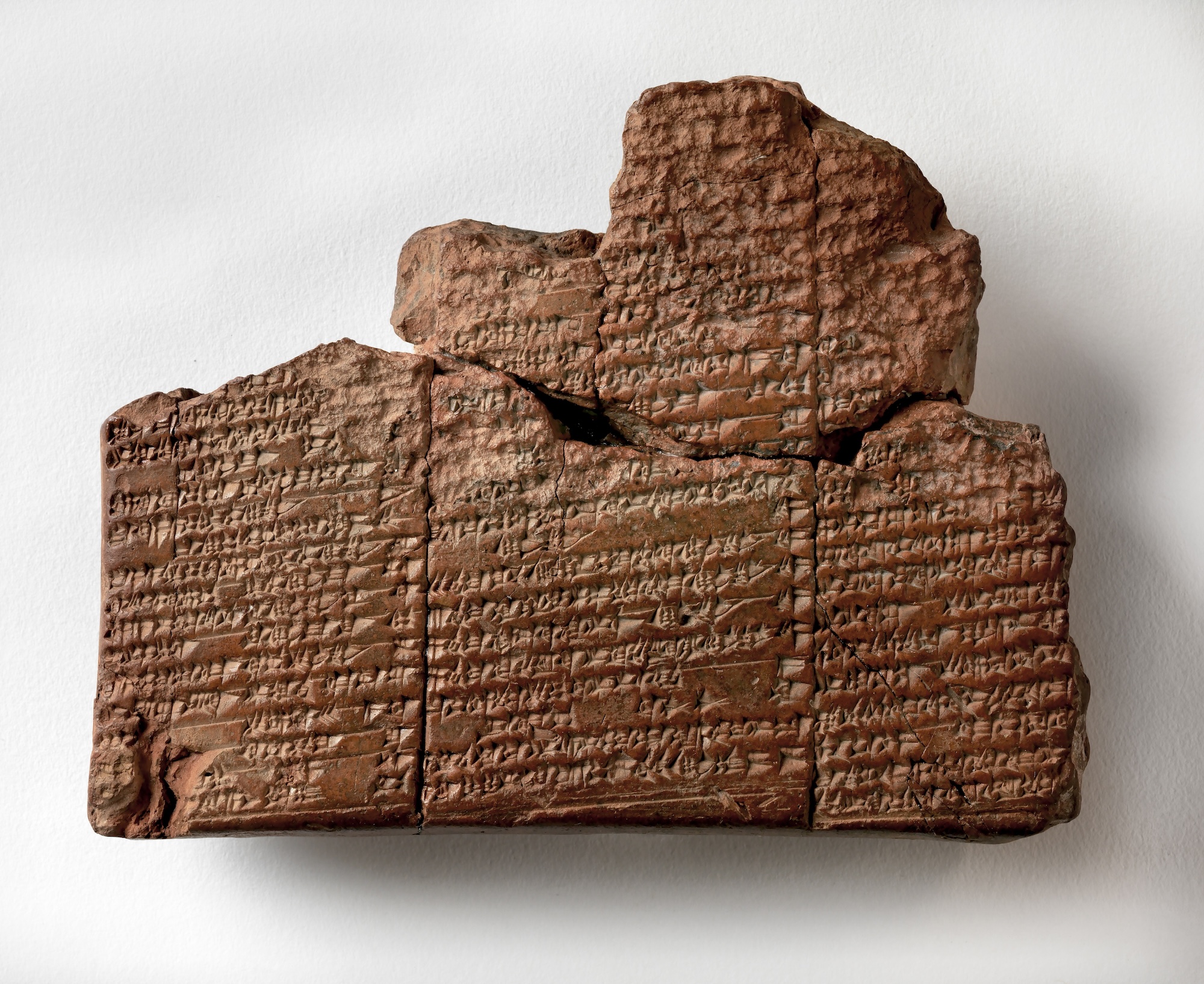
Anchoring HSS-1 in a common set of readings is itself a departure from past practices, where the content varied across course sections. The issue, as Nicholls explains it, has been a lack of cohesion. “We haven’t been considering the classes and the entire core structure together as a whole, so students are often unable to explain the overarching narrative of what they’re being taught.”
Much has changed in higher education since the core last underwent comprehensive revision in 1998. Nada Ayad, acting dean of HSS, wants to bring renewed attention to the humanities classroom as a source of energizing ideas, divergent perspectives, and texts that inform students’ practices. “Within each of their disciplines, HSS faculty work to forge ways to define new words and worlds,” she says. “They help create the conditions for all of us to collectively reach for new constructs that could encompass the intellectual and social energies, interests, and problems of our day. They work to craft culturally and historically expansive foundations, while insisting on criticality and commitment to the exchange of knowledges. They help us find ways to thrive in this murky and often polluted atmosphere.”
Nicholls, along with faculty members Ninad Pandit, assistant professor of history, and William Germano, professor of English literature, wrote the curriculum planning grant in 2024, securing $25,000 through a Teagle Foundation initiative aimed at revitalizing the role of the humanities in general education. During the summer of 2025, Teagle awarded HSS an additional $300,000 to fund implementation of the new curriculum over three years. This year, faculty have focused on the first two courses of the HSS-1 through HSS-4 sequence: The Freshman Seminar last fall and the spring offering of Texts and Contexts: Old Worlds and New.
“I want us to arrive at a place where we know the story students are experiencing through the core,” says Nicholls. “Regardless of wherever the disciplinary focus leads, we need to conceptualize these courses as having a familiar story structure: the students are the heroes, they encounter problems, and they discover new ways to approach those problems. Then, after four semesters, they come out of that hero’s journey transformed.”
TEACHING AS A COMMUNITY
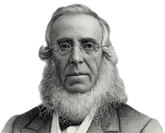
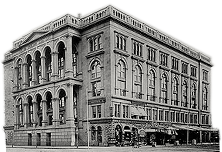
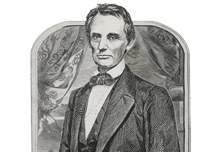
Rethinking the core invites broader discussion about the position of humanistic study within the institution. Classes in civics, economics, history, and related topics date to the time of Peter Cooper and his close friend John C. Zachos, who taught literature and served as The Cooper Union’s first Library Curator. In the 1863 Deed of Trust, Peter Cooper gave preference above all discretionary expenditures to “the course of instruction on social and political science.” But it wasn’t until 1939 that the School of Engineering formally established a Department of Humanities, making it one of the first schools of its kind in the nation to do so. In 1941, the School of Art and Architecture (then combined) followed suit, introducing required humanities courses taught by its own faculty members.
For several decades, faculty teaching in these areas remained scattered across Cooper. A 1974 article in the alumni magazine chronicles internal disputes over the relevance of the humanities to professional education, lamenting its lot as “a step-child without a fully defined place at Cooper Union.” That changed in 1984, when the academic unit was reformed as the Faculty of Humanities and Social Sciences: an autonomous, distinct entity nonetheless integral to the degree-granting programs.
Within that panorama of Cooper history, the notion of revision relates to academic culture as much as reading lists. “It was the most sustained conversation I’ve seen in all my years at Cooper about the core and what it is doing for our students,” says Nicholls, describing a recent daylong faculty retreat. Organized by Nina Ebner, an assistant professor of social geography who joined Cooper last fall, the meeting brought together full-time and part-time instructors from across the core to share insights from the classroom. Nicholls says that kind of collegial engagement helps clarify the trajectory of the student experience: “We want them to complete the core with a sense that their next few years at Cooper are the start of a new chapter. By the time they arrive in their fourth semester, they can choose electives that help them advance in their field of study or pursue an HSS minor that allows them to dig deeper into a specific interest.”
HSS minors have already been steadily increasing thanks in part to a coordinated effort across programs to afford greater flexibility in taking elective credits. According to Pandit, who serves as the academic advisor for HSS, the upward trend in students pursuing HSS minors has been consistent across architecture, art, and engineering in proportion to the size of each school. Some students, including a few preparing to graduate this year, are pursuing double HSS minors, no easy feat at a school with notoriously demanding workloads.
The goal of closely integrating HSS with students’ other academic pursuits builds directly on the recommendations of a committee of external scholars who were convened by Cooper in Fall 2021. Tasked with a comprehensive review of the HSS curriculum, the visiting committee authored a report that portrays social and humanistic inquiry as central to Cooper’s educational mission, especially in a climate of increased scrutiny toward the value of a college degree: “The ability to affordably educate well-rounded, technically literate, and culturally astute students for professional careers, citizenship responsibilities, and life journeys will undoubtedly give Cooper a winning edge.”
More immediately, HSS provides the space for critical dialogue that can only emerge from carefully reading and discussing a text in a room full of people who hold differing views. As Nicholls sees it: “Students today are confronted by new forms of alienation and loneliness, from the effects of social media to living through climate breakdown, war, political divides. Humanistic education is uniquely equipped to help us all think about and respond to those challenges. Building HSS into a real academic community—with students as its most important members—is how we fortify that kind of learning at Cooper.”
THINKING IN THE FIELD
Students, too, see what’s at stake. “We’re the last class to remember at least part of our college education without ChatGPT,” a senior recently observed in a group discussion. “I think students’ abilities to read and write have gotten worse. Attention spans are shorter.” Many nodded in agreement.
Reading stories of genesis offers one provocation for thinking about poiesis in a time when writing an essay can be automated by generative machines. Another approach is to ask what distinguishes human learning from machine learning. “We live in a moment where people are bad at changing their minds,” says Nicholls. Through the multivalence of literary forms, the first-semester curriculum follows this philosophical problem against the grain of reinforcing algorithms and statistical models: “How do we change our minds? What does it mean to be open-minded? How does persuasion work?”
Nicholls and the other faculty want to open an expanded field of opportunities that pull students away from the screen and into New York City as a laboratory for diverse ideas. That effort is partly supported by the Dale Harris Fund, named in memory of a distinguished lecturer who taught in HSS for over 20 years. The fund covers expenses for field trips that bring students into direct contact with the arts. According to Dean Ayad, faculty have made far more use of the fund this year than in the past. Field trips in Spring 2026 alone have included visits to the Frick Collection, the Whitney Museum of American Art, the Museum of Modern Art, the Shigeko Kubota Video Art Foundation, Poster House, and Cooper Hewitt, Smithsonian Design Museum’s Research Library.
The Teagle grant is also funding an additional approach to engagement with the city by establishing a Core Community Engagement Fellow as a permanent feature of the core structure. The fellow is charged with facilitating institutional collaborations, coordinating field trips, and bringing outside expertise to Cooper. This semester, adjunct assistant professor Marie Hubbard, the first to hold the role, is organizing a student public speaking workshop led by Minna Taylor, founder of Energize Your Voice, a communication coaching firm. Reviving public speaking, a staple of the curriculum until the 1960s, would meet a growing demand among students for stronger communication and persuasion skills, which many say are waning in contemporary life.
Navigating the digital academic environment, on the other hand, means learning how to identify bias, conduct independent research, evaluate sources, and recognize misinformation. “We’ve been working closely with HSS to clearly define the relationship between the core and what we can teach in terms of information literacy,” says Lisa Norberg, director of The Cooper Union Library.
Information literacy is already being incorporated in one HSS-4 class taught this semester by Eilin Pérez, a visiting assistant professor of history. Students in Pérez’s class were assigned a box of archival materials and tasked with assessing the contents, creating a collection guide, and choosing materials to digitize. They scanned the materials using a new student digitization station installed in the library, the result of a collaboration between The Cooper Union Archives and Special Collections, the Herb Lubalin Center, and the Architecture Archive. The assignment spurred discussion around archival decision-making and labor, permissions, and ethical concerns about digitization and training proprietary data models.
“What can HSS help our students see and do?” That’s the question Nicholls and the other faculty collaborators will continue asking as they look ahead to next year, when their attention turns to the final two semesters of the core. Ultimately, they hope to give students the time and space to discover their own motivations for reading, writing, and thinking. What students do with those practices remains open.