Marget Long
Director, Web Development and Design
Adjunct Instructor, School of Art
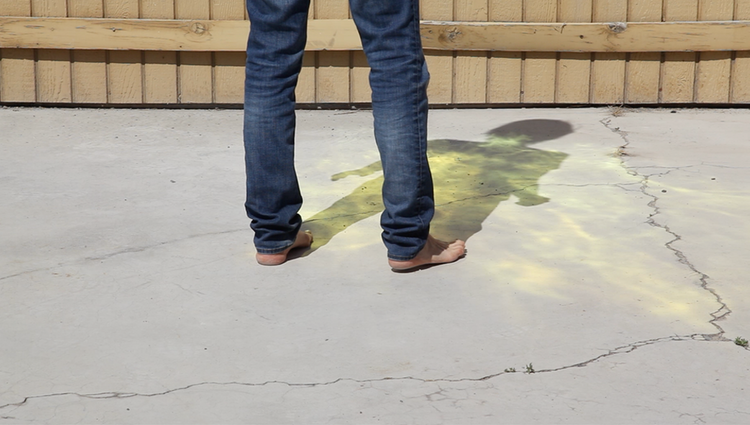
Marget Long is a New York–based visual artist whose work focuses on the bodily impacts and sensory politics of imaging technologies, past and present. Working across photography, moving image, installation, and text, Long explores how technologies of capture, projection, and illumination shape physical experience—how images touch the body, structure perception, and mediate desire.
Archives play a central role in Long’s practice, serving as both material and method. They approach the archive as a sensory field—an embodied record of power, memory, and visual regimes—where histories of vision are felt as much as seen.
Long’s work has been exhibited and screened at The Art Institute of Chicago, The Brooklyn Museum, the British Film Institute, Exit Art, Anthology Film Archives, Kunsthaus Bregenz, and the American Cinémathèque, The Center for Land Use Interpretation, among others. They have lectured widely on photography, archives, and visual culture, including University College London (with Carolyn Dinshaw), the International Center of Photography, Yale University’s Photographic Memory Workshop, and the Center for Visual Cultures at the University of Wisconsin–Madison. Their work has been published in Afterimage, Social Text, Conveyor Magazine, Art F City, and the Visual Studies Workshop. They are the author of Flash + Cube (1965–1975) (Punctum Books, 2012) and When I Was a Mirage (forthcoming, 2026).
Long holds a BA from Harvard University and an MFA in Photography from the Rhode Island School of Design, where they received the T.C. Colley Award. They have taught archival practice and theory at New York University and digital techniques at The Cooper Union, where they currently serve as Director of Web Development and Design.