Adjunct Faculty
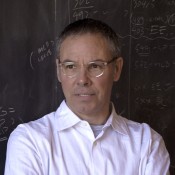
Stan Allen is an architect and George Dutton ’27 Professor of Architecture at Princeton University. His practice Stan Allen Architect has realized buildings and urban projects in the United States, South America and Asia. Responding to the contemporary city in creative ways, Allen has developed an extensive catalogue of innovative design strategies, in particular looking at field theory, landscape architecture and ecology as models to revitalize design practice. Parallel to this large-scale work he has recently completed a number of private houses and artist’s studios on rural sites in the Hudson River Valley. His architectural work is published in Points + Lines: Diagrams and Projects for the City and his essays in Practice: Architecture, Technique and Representation. The edited volume Landform Building: Architecture’s New Terrain was published by Lars Müller in 2011, and his most recent book is Situated Objects, published by Park Books in 2020. In 2009 he received the John Q. Hejduk Award, and in 2002, a President’s Citation for Exceptional Contributions to Architecture from the Cooper Union.
His CV is available here.

Gjergji Shkurti is an architect who works in Business Development and is a founding partner of Figure Ground. Fostering a background in architecture, design technology, fabrication, and literature; he wields an uncanny ability to liaison the poetics and magic of design, the automation of technology, the tectonics of construction, and functionality of fabrication. His background includes design and consulting for New York firms such as Brand Bureau, HOK, SOM, Perkins Eastman, WATG, Robert Stern Architects, REX, and The Switzer Group. While at the forefront of technology and construction with reiSource, he designs architectural spaces and furniture at Figure Ground. Gjergji holds a Bachelor of Architecture from The Cooper Union. He is a Certified Revit trainer and Design Technology speaker. He holds certificates in Tableau and Data Analytics from the NYU Tandon School, and Artificial Intelligence from MIT. He is the author of On the Rocks (Montez Press, 2016).
Shkurti's CV is available here.

Dr. Chloé Roberts was born and raised in Houston, Texas. She received her BA with honors in European History from Fort Lewis College and her MA with honors in British and French History from Boston College. She was a Franco-American Fulbright Scholar in 2021where she completed research in France for her dissertation titled "The Demonological Republic of Letters: Judges, Lawyers, and Demonologists in Early Modern Europe”. She received her PhD with honors from the University of California Santa Barbara in 2024. She is the recipient of the Neil McHugh Outstanding Historian Award (2013), The Borchard Fellowship (2019, 2021), and the Esme Frost Fellowship. She has presented her work at conferences across the world including the EHESS Witchcraft Studies Conference and the SCSC in St. Louis. She currently lives in New York City with her two cats, Fred and George, and continues her research on judicial history, magic, witchcraft, and ghosts in the Early Modern World.

Jon Penvose is an architectural technologist and co-founder of OKIE5, where he serves as Special Projects Lead. His work connects virtual production, artificial intelligence, and architectural computation to produce commercial products, interactive systems, and design platforms. Early experiments included AI R&D work at Scissor Films, where he developed custom software and hardware components for virtual production shoots and contributed to major game-industry cinematics such as Tekken 8: The Story So Far featuring Brian Cox and Persona 3: Seal Your Fate featuring Aidan Gallagher. During this time he also served as an AI developer and integrations engineer for Lifeforms.io’s Planet Garden project, where he designed and implemented an AI-driven swarm of agents named GAIA. With OKIE5 he has led the development of OTTO, WebCTRL, OBBO, OKIE5-AI (a Food4Rhino plugin), and a range of experimental and commercial tools.
Jon has also developed AI-integration systems and computational design workflows for organizations such as POA, PARTISANS, Cumulus, and numerous artists and research groups. His work has been exhibited at the A+D Museum, SCI-Arc, the Venice Biennale CITYX Virtual Exhibition, and Pacific Standard Time Museum.
He currently teaches computational design and algorithmic methods at the University of Pennsylvania’s Weitzman School of Design in the MSD-RAS program and at The Cooper Union, where his courses explore emerging integrations between architecture, fabrication, and machine intelligence. He has taught at Kent State University, Houdini School, the Pontifícia Universidade Católica do Paraná (PUCPR) in Brazil, and UT Austin (Honorarium), and has hosted AI-focused workshops at SCI-Arc, UCLA, WashU, Kent State, and UT Austin.
Jon holds postgraduate degrees from SCI-Arc, where he developed “Pro-Futures,” an AI-driven multimodal story-generation platform that integrated text, image, audio, and video generation into a single real-time system. His work earned the Hsinming Fung + Craig Hodgetts Postgraduate Award and the A+D Museum’s AI & Generative Art Award.
Jon's CV is available here.