Adjunct Faculty
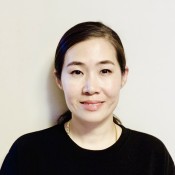
Yoonjai Choi is a graphic designer and partner at Common Name. She currently teaches typography at Columbia GSAPP and The Cooper Union, and has taught or spoken at Harvard GSD, Yale School of Art, Parsons, Pratt, Rutgers, Syracuse Architecture and CCNY. Prior to Common Name, Yoonjai held an art director position at New York design studio 2 x 4. She received her BFA in visual communications from Hongik University in Seoul and an MFA in graphic design from Yale University.
Yoonjai's CV is available here.

Nicole is an architect committed to promoting equity in the built environment and public realm. As a Principal of Shakespeare Gordon Vlado Architects, she led the firm’s work in affordable housing, resulting in the design of homes for over 3,500 families, seniors, and formerly unhoused New Yorkers. She has also dedicated her career to improving the practice of architecture through active roles with the AIANY’s Housing Committee, nycoba NOMA Professional Development Committee, and as a professional mentor for ARCscholars, an architectural and urban design program for teen and young adult NYCHA residents. Nicole is currently working to facilitate public-private partnerships to improve NYCHA’s open spaces as a Policy and Planning Fellow at the Design Trust for Public Space, and to help solve the NYC housing crisis as an Urban Design Forum Big Swings fellowship.
Nicole's CV is available here.
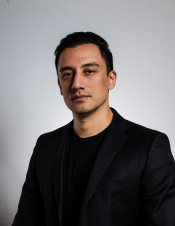
Eduardo A. Escobar is a historian of knowledge specializing in instruction manuals and the transmission of material and technical knowledge within cuneiform scholarly cultures of the ancient Middle East. His current book project, The Scribal Craft: Cuneiform Procedural Knowledge and the Material World, offers an intellectual history of procedural knowledge, examining how craft, materials, and expertise shaped scribal scholarship in the late second and early first millennia BCE. As part of the ERC-funded AlchemEast project, he investigated Akkadian recipes for making glass, perfume, and dyeing wool, tracing scribal notions of material purity, transformation, and the transmission of specialized knowledge. He is also co-editor of Scribal Worlds: Scholarship and Classification in Cuneiform Cultures (UCL Press, 2026), a volume that explores how ancient scholars structured and systematized knowledge through writing.
Dr. Escobar has held research and teaching appointments at the University of Chicago and the University of Bologna, where he taught courses on Babylonian knowledge, historiography, and natural philosophy in the pre-modern world, alongside broader surveys in the global history of science. He earned his Ph.D. in Near Eastern Studies and Science & Technology Studies at the University of California, Berkeley, and holds degrees from Columbia University and The Cooper Union for the Advancement of Science and Art.