Adjunct Faculty
Iliatova grew up in Leningrad (former Soviet Union) before immigrating to Brooklyn at sixteen. She received a BA from Brandeis University and an MFA in Painting/Printmaking from Yale University, with further study at the Skowhegan School of Art and a residency at Marie Walsh Sharpe Foundation. Iliatova was awarded a New York Foundation for the Arts Fellowship in Painting and Cafe Royal Cultural Foundation Grant.
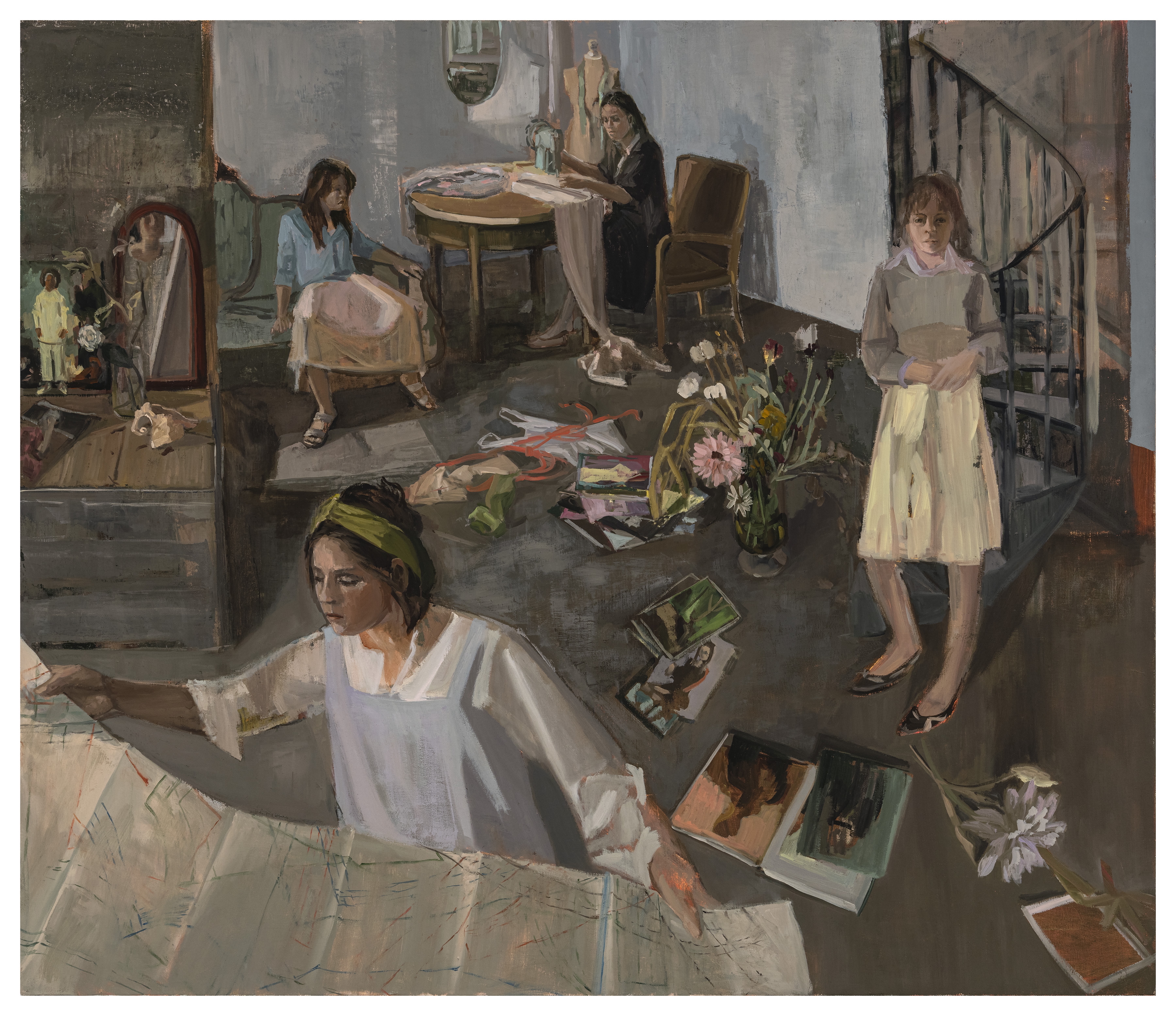
As she moves through memory and time, Iliatova’s self-portraiture method anchors the dreamlike imagery of her paintings. She describes the vicissitudes of her younger self as “ciphers, stand-ins, imposters, and actresses”. The hybrid environments they inhabit mirror the changes in modern spaces; whether postindustrial cities, cryptic boarding schools, or suburban landscapes. Iliatova’s employment of naturism and deeply emotive color schemes aid in an oscillation between the observational and, in the artist’s words “an anxious frenzied fête galante.” She intertwines elements of hyperrealism with fantastical narratives, weaving a tapestry that delves into the depths of memory, identity, and the subconscious.
Iliatova’s work is represented by Nathalie Karg Gallery, NYC. She has exhibited across the US as well in Spain, Italy, Germany, Denmark, and Great Britain. Iliatova’s work was included in exhibitions at the Warehouse Dallas, Fahrenheit Madrid, Monya Rowe Gallery, Katonah Museum, the Contemporary Jewish Museum in San Francisco and in the upcoming exhibition at the Musee Granet, France. Her work has been reviewed in Art Forum, Art in America, ARTnews, The New York Times, The Houston Chronicle, The Boston Globe, Time Out New York, and other publications.
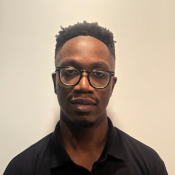
Earl Kwofie is a designer currently practicing at Anik Pearson Architect. His professional experience also includes roles at offices such as Knippers Helbig, Steinberg Hart, and Reform Architecture.
Earl received his B.Arch from The Cooper Union. While there, he played a key role in academic development, contributing to the curriculum for three courses, including: Housing Epistemologies (with Ife Vanable and Daisy Ames) and Machine Learning for Architecture (with Ben Aranda and Sam Keene). He also served as a Teaching Assistant for Robotic Fabrication (with Zach Cohen and Harrison Tyler).
Independently, Earl's work bridges game development and architectural language through a variety of projects centered on Afrofuturism and historical commentary. His achievements have been recognized with several awards and grants, including the Center for Architecture Design Scholarship and The Benjamin Menschel Fellowship. Most recently, he was a finalist in the International Architecture Competition for the Temporary Pavilion at CARIFESTA XV.
Earl's CV is available here.
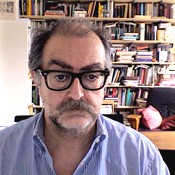
Guido Zuliani is an architect and an educator. He graduated 'summa cum laude' from the Università IUAV di Venezia in the summer of 1980. In 1982, after the license exam, he became a registered architect. After graduation Mr. Zuliani began his academic activity as researcher at the Dipartimento di Progettazione Edilizia of the Università IUAV di Venezia until 1985. In the summers of '94 and '95 Mr. Zuliani co-founded and directed the International Workshop for Architecture and Urbanism in Venezia that had seen the participation of students from USA, Italy, Germany and Denmark. In 1996 Mr. Zuliani was shortlisted for the position of Resident Artist and Director of the Architecture Department at the Cranbrook Academy of Art and since 1998 Mr. Zuliani is an elected member of the Accademia degli Sventati in Udine, Italy, an Academy of Science, Letters and Arts founded in 1606. Mr. Zuliani is also Affiliated Faculty at the Doctoral Program in Architecture, City and Design of the School of Doctorate Studies of the Università IUAV di Venezia. He has been teaching at the Irwin S. Chanin School of Architecture of the Cooper Union since the fall of 1985.
Mr. Zuliani has lectured extensively in Europe and in the United States and has been invited to participate to numerous international symposia such as Becoming Architect in the XXI Century - Università La Sapienza in Rome, 2005; The Possible City as Didactic Project – Politecnico di Milano, 2006 - The Critical Legacy of Manfredo Tafuri - Columbia University and Cooper Union in New York, 2006; The Clinic of Dissection of the Arts - Doctoral School of Università di Venezia, 2010; Education of an Architect 40 Years Later - Universitade de Puerto Rico in San Juan; Tours & Tourism: Toward an Other Reality - Las Palmas de Gran Canaria, 2011.
As an architect he has collaborated with the architect Raimund Abraham to the design and realization of the Traviata Gasse subsudised residential complex in Wien (1991) and to prize-winner project for the New Acropolis Museum in Athen(1991), and, as Project Architect, with the architect Peter Eisenman, to the design of, among others, the prize-winner project for the Musèe Anthropologicque du Quai Branly in Paris (1999), the competition project for the Musèe des Confluence in Lyon (2001), the competition project for the High-Speed Line Railway Station of Napoli Afragola (2003).
In 2003 Mr. Zuliani has founded AZstudio, and as principal he has collaborated with different firma in the United States and Italy. His recent projects include finalist design for the New Judicial Complex for the City of Trento (2005), the commission for the design of the New Railway Station of Pompei-Santuario in Pompei (2007 - in progress), the master plan for the costal line of the city of Pozzuoli and regeneration of the former industrial area of Pirelli-Sofer (2007 - 2009), the prize-winner project for New Typologies of Social Housing for the city of Mestre (2009), a 150.000 sq. ft. residential building in Milan, currently under construction and already features in the architectural guide Milan Architecture 1945-2015.
His recent publications include: La Città Implicita (2008 and 2015); End Games: Notes about John Hejduk’s Architecture (2014); One, No-one, One Hundred Thousand: The Cooper Union of John Hejduk, Raimund Abraham, Peter Eisenman … and many Others (2012); Evidence of Things Unseen (2006).
See Guido Zuliani's CV here.