Adjunct Faculty

Hana Kassem, is a Principal at Kohn Pedersen Fox Associates, with nearly three decades of experience, leading the design of projects globally and in the United States. She examines how we affect our environment and how in turn our built environment impacts us. Her architectural approach centers on human-centric, and sustainable design, aiming to elevate well-being and meet societal needs, fostering enriching and equitable spaces.
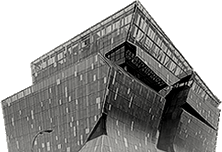
Her portfolio spans academic, research, cultural, hospitality, residential, and mixed-use projects in Brazil, the USA, France, the Philippines, and China. Kassem's work has earned awards and recognition in projects like the Red Hook Houses Resiliency and Recovery for NYCHA and the CUNY Advanced Science Research Center in NYC.
Kassem serves as VP for Design Excellence on the AIANY Board of Trustees and is founding chair of the AIANY annual Leaning Out | Women in Architecture panel. She also serves on the Van Alen Institute Executive Board of Trustees, where she spearheaded the initiation of the Neighborhoods Now project, mobilizing architects during the COVID-19 pandemic to aid communities. Kassem was tapped to join the Mayor's Advisory Council for NYC's post-COVID-19 reopening.
Kassem has taught at Yale School of Architecture and Parsons School of Constructed Environments, emphasizing experiential engagement with the environment, particularly in marginalized communities. She co-edited the book "Architect d.b.a | On Re-defining the Roles of the Architect Today," reflecting her passion for reshaping the architectural landscape.
Kassem's CV is available here.
Kate Minniti holds a PhD in Classical Archaeology from the Department of Ancient Mediterranean and Near Eastern Studies at the University of British Columbia in Vancouver, BC. She has a Master’s Degree in Egyptian Archaeology from UCL and one in History of Art and Archaeology from the Institute of Fine Arts at NYU. She has been working as a field archaeologist for more than a decade, and she is a senior member of the NYU-UniMi archaeological expedition in Selinunte, Italy, which is currently exploring the main urban sanctuary of the ancient city. Her main research interests are Iron Age connectivity and local responses to globalization in the Mediterranean, and in particular the study of Egyptian and Egyptian-inspired objects in Sicily during the Archaic Period.
She has also been a gamer for more than two decades, and since 2013 has been exploring how video games can represent and mis-represent both archaeology as a field and antiquity itself. From 2020 she has been participating in panels and conferences on archaeogaming and reception of antiquity in video games and has been focusing (and publishing!) on the topic of Egyptian mummies and ‘monsters’.
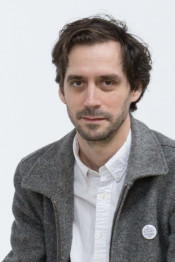
Yuri Masnyj was born in Washington D.C. in 1976. He graduated with a BFA from Cooper Union School for the Advancement of Science and Art in 1998, and has taught drawing at Cooper Union since 2007. Masnyj lives and works in New York City.
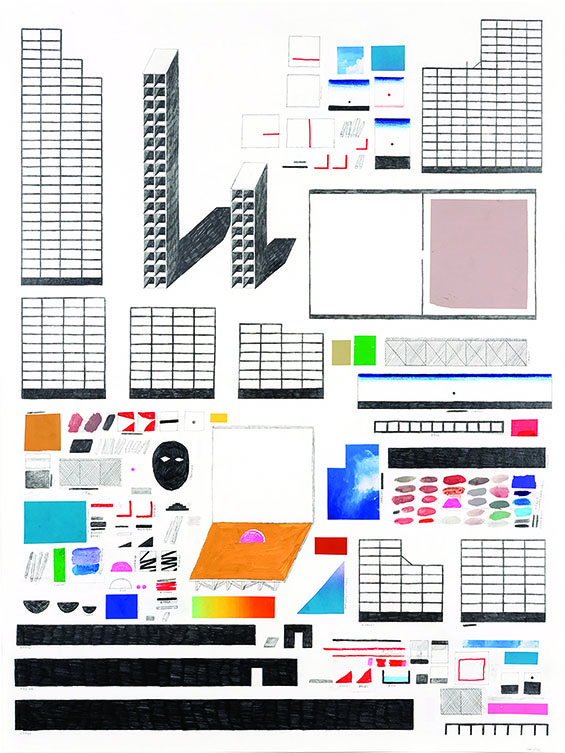
Masnyj makes drawings, sculptures, and sculptural installations that depict austere architectural spaces populated by a personal iconography of objects and symbols. His recent work is composed as inventories of architectural fragments, everyday objects, and abstract forms. Masnyj is interested ways architectural space, can serve as a stage or platform for human experience, and how that experience can be articulated through the placement and arrangement of objects.
Masnyj's work has been shown throughout the United States and Europe in solo and group exhibitions including "In Practice: Material Deviance" (w. Lauren Bakst), The Sculpture Center, New York 2017; “Name it by Trying to Name It” and “Open Sessions 5,” The Drawing Center, New York, 2015; “Living Room Index & Pool” (w. Lauren Bakst), Pioneer Works, New York, 2015; “X” (solo exhibition), Travesia Cuatro, Madrid, 2012; “The Night's Still Young” (solo exhibition), Metro Pictures, New York, 2007; “Whitney Biennial 2006,” Whitney Museum of American Art, New York, 2006, and “Greater New York,” P.S. 1 Contemporary Art Center, Long Island City, NY, 2005. Masnyj's work was included in Vitamin D: New Perspectives in Drawing published by Phaidon Press. Masnyj’s work is in the collections of the Museum of Modern Art in New York, The Whitney Museum in New York, The Hammer Museum in Los Angeles, and the Contemporary Museum in Honolulu.