Faculty Emeriti
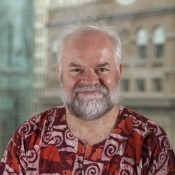
Toby Cumberbatch was educated at The University of Manchester Institute of Science and Technology, in Manchester, England. His first job was with GEC Telecommunications in Coventry developing software-controlled telephone exchanges. After gaining his doctorate he started work on the development of novel coating methods for II-VI thin film solar cells at the Thorn-EMI Central Research Laboratories in 1980. He extended this work at the University of Cambridge and then moved to the Interdisciplinary Research Center in Superconductivity to work on the deposition of superconducting oxide films.
Dr. Cumberbatch emigrated to the USA in 1991 to join Quadic Systems Inc., a small integrated circuit design company in Southern Maine. He joined the faculty of the Electrical Engineering Department at The Cooper Union in 1994 where he established the Electronic Materials Laboratory in 1999. In 2001, he was appointed a Visiting Professor at The Kwame Nkrumah University of Science and Technology in Kumasi, Ghana and returns regularly to East and West Africa.
To bring together students from the three schools to develop sustainable solutions to the problems facing humankind, Dr. Cumberbatch founded the Center for Sustainable Engineering, Art and Architecture – Materials, Manufacturing and Minimalism (SEA2M3) in 2005. With grants from the National Science Foundation, the Environmental Protection Agency, the National Collegiate Inventors and Innovators Alliance, and generous donations from private benefactors and small companies, students from all three schools in the Cooper Union continue to work on a range of projects that address energy, water and shelter in remote, rural regions in the less industrialized world. Dr. Cumberbatch has strong links with universities and communities in Ghana, Rwanda, Kenya and Burundi, is a Visiting Professor at the National University of Rwanda, an external examiner at The Kwame Nkrumah University of Science and Technology, a member of several international conference advisory panels and lectures regularly on Sustainable Design and Development.
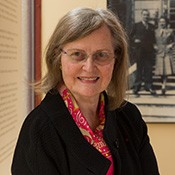
Anne Griffin teaches both the core curriculum and advanced electives in political science. Her current work deals with the interfaces of public policy and collective memory and specifically with the memory of resistance in Belgium during World War II. She is the author of a documentary installation, Resistance and Memory in Belgium, 1940-1945: Multiple Narratives, which has been exhibited at several venues, including the Dutch Resistance Museum in Amsterdam in 2008, and most recently at the Queens College Art Center. Dr. Griffin is also completing a book on the same subject.
Earlier work includes: Quebec: The Challenge of Independence, which examines the roots of the Independence movement in Quebec during the 1960s and '70s, and Forging a Women's Health Research Agenda: Policy Issues for the 1990s.
She has also had experience in New York City politics, having served for five years on Community Planning Board Eight, and as Chair of its committee on revision of the City Charter for two.
Dr. Griffin's work has been supported by the Fulbright Foundation, of which she has served on the National Screening Committee for Belgium, Luxembourg and The Netherlands; the Righteous Persons Foundation; the New York Council for the Humanities; and by several grants from the National Endowment for the Humanities. In 2011 she was awarded the rank of Officer, Order of the Crown (Belgium). She holds an A.B. from Wellesley College and M.A. and Ph.D. degrees from New York University, where she taught before coming to Cooper Union.
Recent Books:
Quebec: The Challenge of Independence
Women and Mental Health
Forging a Women's Health Research Agenda: Issues for the 1990s
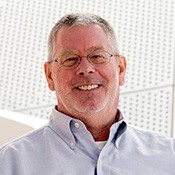
Professor Stock graduated in 1974 from the University of Nottingham in England with a B.Sc. (Hons) in Chemical Engineering. The program in Nottingham was (and is), unusually for the UK, a four-year program. This allowed students to choose a sequence of elective courses beyond the required chemical engineering curriculum – effectively a minor. Professor Stock studied economics, accounting and industrial relations as his electives.
Upon graduation Professor Stock joined Price Waterhouse, Ltd., a major accounting firm and gained valuable experience in how companies work from the board room to the post room. His work included audits, financial analyses and investigations and his clients included Shell Oil, Gulf Oil and Stone and Webster. In 1976 Professor Stock joined Constructors John Brown, a leading plant construction and consulting company, and worked as a Cost Engineer on one of their projects. Later that year he joined British Petroleum as a Development Engineer at their Sunbury Research and Development Center on the outskirts of London. There he worked primarily on development of BP’s molecular sieve and isomerization processes for enhancing gasoline performance. He also participated in rigorous HAZOP studies, was a member of a team performing critical studies of alternative energy sources and spent a year working as technical support at a BP refinery.
In 1980 Professor Stock returned to academia as a graduate student at West Virginia University. There he met Professor Gene Cilento (now Glen Hiner Dean of the College of Engineering and Mineral Resources) and became interested in the biomedical applications of chemical engineering. Advised by Professor Cilento, Professor Stock undertook research studying the distribution of blood plasma within mammalian spleens and, later, the characteristics of macromolecular uptake by liver hepatocytes.
Upon graduating from WVU in 1987, Professor Stock joined the Tumor Microcirculation Laboratory at Carnegie Mellon University under the direction of Professor Rakesh Jain (currently the Andrew Werk Cook Professor of Tumor Biology at Massachusetts General Hospital in the Harvard Medical School). At Carnegie Mellon Professor Stock conducted research in tumor microcirculation as well as developing methods of automating measurements of parameters such as in vivo flow, diffusion and permeability. He also was the principle officer in a project to transfer this technology to the commercial field.
In 1994, Professor Stock joined the Department of Chemical Engineering at The Cooper Union. His experience as a design engineer in industry, his knowledge of economics and finances and his years as an experimentalist inform his teaching of Process Design and Evaluation, Chemical Reaction Engineering and Senior Chemical Engineering Laboratory. In addition, he occasionally teaches Biotransport Phenomena, normally as a one-on-one course outside the classroom.
Also in 1994, Professor Stock with a colleague, Dr. John Osburn, began experimenting with a program to help develop the communication skills of undergraduate engineers. Initially part of the chemical engineering laboratory sequence this effort expanded in 1997, funded by the Department of Education, to cover all the freshmen and sophomores in the engineering school as the CONNECT Program. The CONNECT Program continues today as part of a four semester sequence or Professional Development Seminars and Workshops directed by Professor Stock and also as an integral part of a number of courses throughout the engineering school.
Professor Stock has supervised Masters student research on a range of topics. On his bookshelves there are theses on process design, process simulation, biofermentation, the economics of NYC water systems, laboratory simulations and in vitro cellular reactions.