Faculty Emeriti
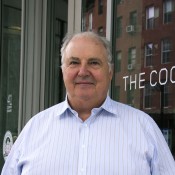
Peter Buckley was educated as Sussex University in England and S.U.N.Y. Stony Brook. Before arriving at The Cooper Union he taught history at Princeton University and Pratt Institute. He is interested in forms of urban commercial culture and has written on New York City's culture and politics in the first half of the 19th century and part of The Cambridge History of the American Theatre. He has become the unofficial historian of The Cooper Union and is at work on a book which surveys the history of education here. He also is a Fellow of the New York Institute for the Humanities at N.Y.U.
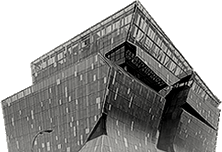
Dr. Simon Ben-Avi first came to The Cooper Union for the Advancement of Science and Art in 1984, having previously served in positions at the Universities of Manchester, Kingston-upon-Hull and London, and at the Institute for Semantic and Cognitive Studies in Switzerland. He was appointed as a Professor in Electrical Engineering, but became Associate Dean in 1997, and Acting Dean in 2009, commissioning and moving The School of Engineering into the 41 Cooper Square of that year.
Following a first career as a self-taught church organist, which began at the age of fourteen, Dr. Ben-Avi studied first Electrical Engineering, then Computer Engineering at U.M.I.S.T., and finally Computer Science and Artificial Intelligence at the University of Manchester. His research centered upon automatic translation of natural languages, targeted at the European Union’s efforts in this area. To avoid the exponential increase in the number of translation engines needed as the E.U. grew, he used the notion of a computer “bus” where a single intermediate representation of meaning bridged the gap between an input language and the target language.
Lately, Dr. Ben-Avi enjoys long-standing relationships with medical institutions, and performs clinical studies with physicians. He is particularly interested in the muscle, skeletal and neurological systems, publishing regularly with a research team at Lenox Hill Hospital. His designs of unique testing machinery led to the ASME admitting him as a member.
A Senior Member of the IEEE and a member of the Association for Computing Machinery, Dr. Ben-Avi is also a Chartered Engineer in the E.U., which translates to the American P.E., is a Tau Beta Pi Eminent Engineer and a member of Eta Kappa Nu. His personal favorite achievement remains the performances of Saint-Saëns’ Organ Symphony in Sheffield Cathedral with the touring London Symphony. He played the organ and piano parts.
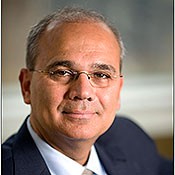
Jamshed Bharucha was the twelfth President of The Cooper Union for the Advancement of Science and Art. Prior to this position, which commenced on July 1, 2011 and concluded on June 30, 2015, he served in academic leadership positions at Dartmouth College and Tufts University.
A cognitive neuroscientist, he has published extensively on the cognitive and neural underpinnings of music (using a variety of methods including perceptual experiments, computational neural net models and MRI brain scanning), has been awarded grants from NSF and NIH for his work, and has served as Editor of the interdisciplinary journal Music Perception. More recently, he has written and lectured widely on the challenges facing higher education, emphasizing the need for bold innovations in learning and global engagement.
Speeches and announcements made during his four year tenure can be found here.