Sample Thinking Group Schedule
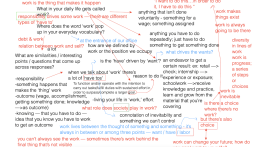
Sample Thinking Group Schedule (Six weeks)
see a sample Thinking Group session (2 hours) below
|
Week |
Topic |
Skills |
| 1 | Introductions & Questions |
|
| 2 | Inquiry |
|
| 3 | Field of Inquiry |
|
| 4 | Setting the Board |
|
| 5 | Inquiry and Research |
|
| 6 | Ideas and Audience |
|
Sample Thinking Group Session
Week IV (Course modality: Online)
6:00 - 6:15 Discussion
Question: Do you keep a journal or have a personal archive? If so, what do you write in the journal (if you want to share) or what do you archive? What are your tools or strategies to figure out what you’re thinking and feeling? Do you have a daily practice?
6:15 - 7:15 Synthesizing the patterns in your thinking and identifying your core questions
30 min Synthesize patterns and form questions as a class with DuChamp's The Fountain, The Bear, and Woolf's A Room of One’s Own
15 min - In your “journal”, identify patterns in your thinking across resources.
What are you noticing about work, what you like, and what questions are sticking out to you? And how can that help us reframe the question that we want to work on?
Outcome: finalize the question that you want to work on in your proposal
15 min - Class discussion: How do you know when you have a quesiton or a direction?
7:15 - 7:55 Working on your question: creating the space and building authority around your position
10 min- Journal through these questions
What’s at stake with the question you’re asking?
Why does your question matter?
20 min - Breakout Room Discussion: Discuss with each other your defense of your question:
Instructions: One student defends their question, and the other student connects them to resources to help with the defense of their question. You can add the suggestions to the resource bank you’ve been building. Then switch.
10 min - Students discuss their defense of their questions to the whole group, begin to brainstorm how their resource bank addresses their questions
7:55 - 8:00
Concluding thoughts
Next Steps