Meet Nina Ebner
POSTED ON: August 18, 2025
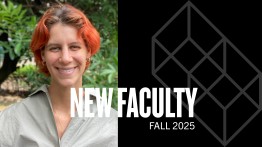
Nina Ebner joins the Faculty of Humanities and Social Sciences as an assistant professor in social geography. For the past three years, she has been an Urban Studies Foundation postdoctoral research fellow at the Colegio de México in Mexico City, in the Center for Demographic, Urban, and Environmental Studies. With a Ph.D. in geography from the University of British Columbia, Ebner previously taught at the University of Texas at Austin. She also holds degrees in community development and history from the University of California, Davis and Yale University, respectively.
Tell us about your research interests.
I am a feminist, economic, and urban geographer. In addition to a doctorate in geography, I also have degrees in community development and history, and so my research and writing emphasize interdisciplinarity, community-engagement, and collaboration. As a researcher, I use qualitative methodologies to explore the uneven socio-spatial relations that shape unjust urban political economies and ecologies. For the past eight years, I have been grounded in the transnational U.S.-Mexico borderlands, examining the relationship between industrialization and the politics of low-wage work, border militarization, and climate change. As a feminist geographer, I am attuned not only to how the geopolitical border shapes uneven development in the borderlands, but also how border communities experience, navigate, and contest economic and environmental inequalities.
What brought you to The Cooper Union?
As a Philadelphian with roots in NYC, I grew up with an awareness of Cooper Union’s institutional history and importance in educating working class communities. The politics of the institution—its commitment to tuition free education, its student-centered approach, and its emphasis on training all students in the humanities and social sciences—make me really excited to join the faculty in the coming fall as a teacher and researcher. I feel energized, and honored, to contribute to the Cooper Union community, and really look forward to collaborating with students and faculty across degree programs.
What aspects of teaching are you most excited about in the coming academic year at Cooper?
I’m really looking forward to bringing my perspectives as a geographer and experiences as a qualitative researcher in the U.S.-Mexico borderlands into the classroom. I will be teaching HSS3 in the fall and hope to teach on topics such as bordered imperialism and the global factory. More broadly, I am really excited about to have the opportunity to blend my interdisciplinary training and interests in community-engagement, urban geography, ethnographic research, and border studies, bringing them into the classroom. As a teacher, I also believe in the importance of linking classroom learning to the broader public good. At Cooper Union I plan to incorporate qualitative and collaborative research into classroom learning on pressing issues that range from climate change to carcerality to workers’ rights, and working with students on shared research projects in the borderlands and beyond.