Soft Skills Series
Soft Skills Series: Introduction
What are Soft Skills?
Strong job candidates demonstrate both hard skills and soft skills. While hard skills are your technical skills in engineering, soft skills are the broader set of characteristics needed to succeed in the workplace such as communication, collaboration, and the ability to adapt and learn quickly. Many people tend to emphasize hard skills in the application process, but soft skills are equally important to landing a job and being successful in it once you’re hired.
Why is it Important to Know about Soft Skills?
Soft skills are required in every job. Being able to identify the set of soft skills in a job ad can help you tailor your job documents to increase your odds of an interview. This step will also help you think more broadly about the skills you’ve developed in the past and how you might best present them. You can prepare examples of times in the past when you’ve utilized those skills, which will help you turn that interview into a job offer.
A Real Life Example
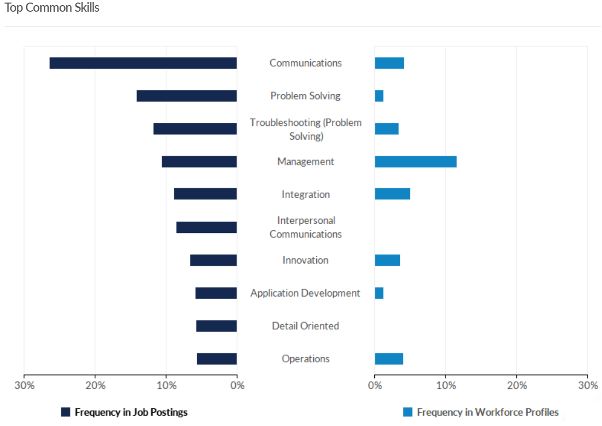
Despite the importance of soft skills, they are often overlooked by job applicants. The chart below, identifies the top 10 most commonly listed soft skills in job ads for Computer Programmers. On the left, you’ll see how often the skill appears in job ads. On the right, you’ll see how often the skill appears in the applications of people applying for those jobs. The chart shows that many job candidates aren’t including these keywords in their job materials!
Conclusion
Because many resumes are fed through a computer algorithm before making it into the hands of a hiring manager, not including these keywords might mean that your application is being disqualified before it even reaches a person! Even if a job ad doesn’t directly mention some of these skills, they are likely still traits that hiring managers are looking for. Identifying the most common soft skills in your field might be the key to landing your next job!
In our upcoming newsletters, we’ll be featuring a series that introduces eight of the most common soft skills for engineers. We’ll talk about what they are, why they’re so important in the workplace, and how you can both build these skills through RPIE and talk about them in your job documents and interviews. Stay tuned for our first post on communication!