RPIE Profile: Marina Kovalkova on Machine Learning
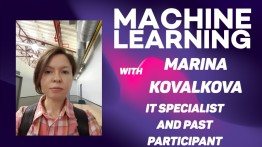
Machine Learning with Marina Kovalkova
This spring, RPIE’s June Professional Development Sequence is hosting several special workshops taught by past RPIE participants. Marina Kovalkova, an IT Specialist, will be leading a workshop on Machine Learning: Google Translate & ChatGPT. In this Q&A, Marina discusses her expertise, her advice for RPIE participants, and her thoughts on the future of Machine Learning.
Why is Machine Learning important for RPIE participants right now?
Right now, Machine Learning and Chat GPT are hot topics in technical fields. Before, they were only programming languages. Some of the algorithms that use data processing are machine learning, and so they are related. But they are many sides of the same thing.
What is important to know about AI moving forward?
AI is actually an old language processing technology, introduced thirty years ago. But there was no processing power. In general, as everything develops, so does the technology. It’s just the scale of it. It was not possible to process as much intel as we can now at this speed and in this quantity. And so that’s why it’s happening now. It’s not new, it’s just a matter of scale. Instead, we should view AI as a database: whatever is not put in cannot come out of it.
What is one piece of advice you have for RPIE participants?
RPIE gives you a great opportunity to meet people with different backgrounds, from different countries, who are just like you. And once you’re part of the community, you can find ways to stay involved. RPIE helped me build connections and network, offline and online. The most valuable thing you can get out of RPIE are the connections with the other people. That’s what it gave me.
About Marina: Marina Kovalkova is an IT Specialist originally from Russia. She studied Computer science at Moscow Polytechnic University, specializing in Artificial Intelligence and language processing. In 2020, Marina co-published an article on noise clearing algorithms in scanning technology. Marina also collaborated on a project with Amsterdam University processing data received from the ALICE reactor at CERN, the findings of which were later published. In her free time, Marina volunteers and actively participates in the RPIE community.