Class Gives Students New Tools for Exhibiting Art
POSTED ON: January 26, 2026
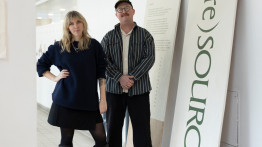
Jess Kuronen and Troy Zaretsky-Kreiner, School of Art instructors, at the opening of their students' first exhibtion. All photos by Natassia Kuronen.
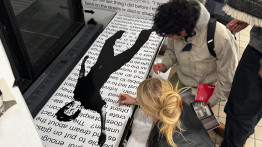
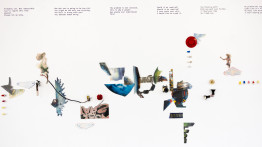
Last semester, instructors Jess Kuronen and Troy Zaretsky-Kreiner, both alumni of the School of Art, taught a course in exhibition design that led to multiple student-run shows on campus, including a mid-semester exhibition in the Foundation Building colonnade.
“Doug Ashford started the class,” said Zaretsky-Kreiner, “and Jess invited me to co-teach, so coming back to teach at Cooper was a dream.” He was excited to bring his considerable experience running his gallery Driveway 327 and working with institutions like the Guggenheim, Queens Museum, and Kemper Museum.
The two professors believe that offering a course in exhibition design is natural for an art school since it gives artists a framework for thinking about how they would like their own work presented. “Artists want to make art in their studio. That's their pursuit in life, but then where does it go? Exhibition design is that moment to figure out, ‘how do I communicate my art to the public?’ And if you don't figure it out as a student, a curator is going to figure it out for you or someone else is going to do it on your behalf.”
At the same time, Kuronen says, the course appeals to students looking for greater connections outside the studio. “I do think students are hungry for more of an experience of the real world and working with other people.”
Kuronen and Zaretsky-Kreiner have found that students are deeply interested in issues central to curating exhibitions, including questions of provenance, ownership, materials, and the legacies of colonialism and empire. Their class addressed those subjects through readings, lectures on the history of exhibition design, and many visits with curators and archivists. They’ve also created a wealth of documents for students to explore, such as a list of seminal exhibitions, which includes Fred Wilson’s Mining the Museum, in which the artist-curator juxtaposes objects from the Maryland Historical Society’s collections to reveal new associations and meanings.
 From the start, students were tasked with designing an exhibition. They selected what the professors call an anchor object that would be the starting point for their art installation. Students chose everything from a tax form to a 14th century Korean book, to a baroque pearl, and even the landscape of Concord, Massachusetts. From there, they developed a story or hypothesis around the object. As Zaretsky-Kreiner and Kuronen put it in their course documents, “This is about curating relationships and creating a narrative, argument, or affective atmosphere. You will move from the singular to the plural, from creating one object to curating an ecology.”
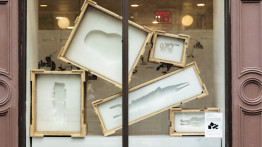
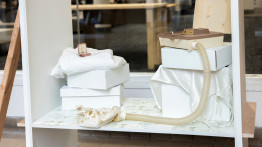
On November 4, students presented their first exhibitions in the Foundation Building colonnade, a notable feat considering the brief time available to pull the work together. Projects on view included student Lee Caufield’s Not for Human Eyes, which repurposed the visual language of the Metropolitan Museum of Art to examine the institution’s history of claiming ownership over looted artifacts. They built crates designed for repatriated grave goods no longer in the Met’s collection. The title calls into question issues of ownership and the ethics of mortuary archaeology.
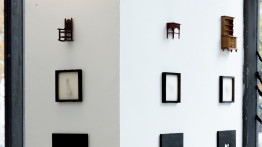
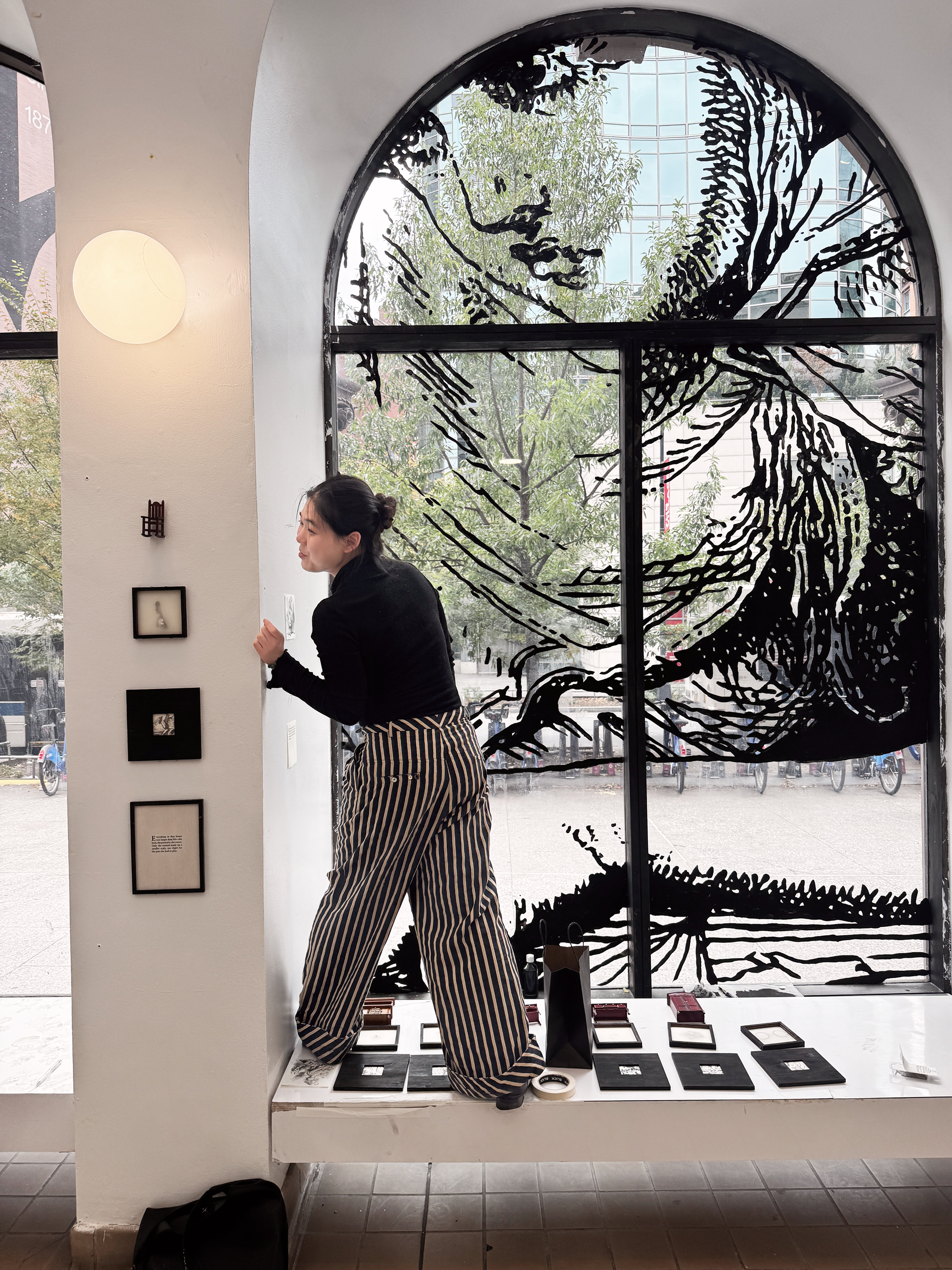
Another student, Annie Gao, presented Be•long, which explores the discomfort of not fitting in—literally and metaphorically. The work brings together found objects and images that seem ill-suited to their surroundings, including dollhouse furniture, lithography reproductions of original illustrations from Alice’s Adventure in Wonderland, and text excerpts from Eileen Chang’s The Rouge of the North.
Zaretsky-Kreiner said the fall class went incredibly well. “It's this amazing hybrid of fine art and design where students translate the work they make in their studios into public exhibitions. It's professionalization without being too stuffy—real-world application that students and artists actually get excited about.”