Adjunct Faculty

Elizabeth O’Donnell served as Associate Dean for the School of Architecture for eleven years. A member of the faculty since 1984, Professor O’Donnell has taught ARCH 132 Structures II (as part of the structures sequence with Professor Emeritus Ysrael Seinuk), the project based course ARCH 185 Crossings, ARCH 131 Design III as part of the studio team, and currently teaches ARCH 122 Structures I. She has recently presented at the 2012 Imagining America National Conference in New York, the 2012 World Energy Forum in Dubai, the 2012 Deans’ Roundtable at the Center for Architecture New York, was a panelist on the Town and Gown symposium “Next Steps for the City’s Design-Related Academic Institutions”, served as liaison for the New Museum’s Ideas City festivals in 2011 and 2013, and she was rapporteur for the 2010 Dubai Forum.
She produces and co-edits the school’s annual newsletter and was a member of the president’s Revenue Generating Task force in 2011. She frequently serves on design reviews, most recently at the School of Architecture at City College, Barnard College and Pratt Institute. In practice she has completed numerous projects in New York City including offices for non-profit foundations, schools, loft residences, and building additions, with an emphasis on the adaptive reuse of existing buildings and sites. She has served as consultant to artists including Yoko Ono and Tadashi Kawamata for site-specific projects. Her work has been published by Bauwelt, Interior Design Magazine, Conran’s Design Book, Occulus, the New York Times and the Architectural League. Recognition includes an award for Design Excellence from the NYC Chapter of the American Institute of Architects and an award for Design Distinction from International Design magazine.
O'Donnell is on the advisory board of the design and construction web venture “Sweeten”, and is a member of the Zoning Commission for the Town of Taghkanic, New York that is rewriting its Zoning Code to foster a rural economy and protect natural resources.
She graduated from The Irwin S. Chanin School of Architecture of The Cooper Union after studying at the University of Minnesota and Antioch College and will complete a Master of Education at the City University of New York in 2014.
View Elizabeth O'Donnell's CV here.

Corinne Jones (b.1972 Memphis, TN) has lived and worked in New York city since 1991. She earned an MFA from Columbia University in 2007 and a BFA from The School of Visual Arts in 1996. Jones has realized public art projects at Situations Gallery, New York; Elizabeth Street Garden, New York; Madison Park, Memphis; and Huling Street, Memphis. She has exhibited solo shows at Situations Chelsea, New York; Jackie Klempay, Brooklyn; Museum of America Books, Brooklyn; and Tops Gallery, Memphis. She has participated in various group shows including the Institute of Contemporary Arts, London; Tate Modern, London; and BWA Wroclaw Galleries of Contemporary Art, Warsaw. Her work is held in many private and public institutions including the permanent collections at the Museum of Art, Rhode Island School of Design; Memphis Brooks Museum of Art; Zimmerli Art Museum at Rutgers University; The Turchin Center for the Visual Arts; New York Presbyterian Hospital; and TD Bank. Her artwork has received critical praise from The New Yorker, Art News, Art Slant, Artcore Journal, Ravelin, The Brooklyn Rail and Cultured Magazine.
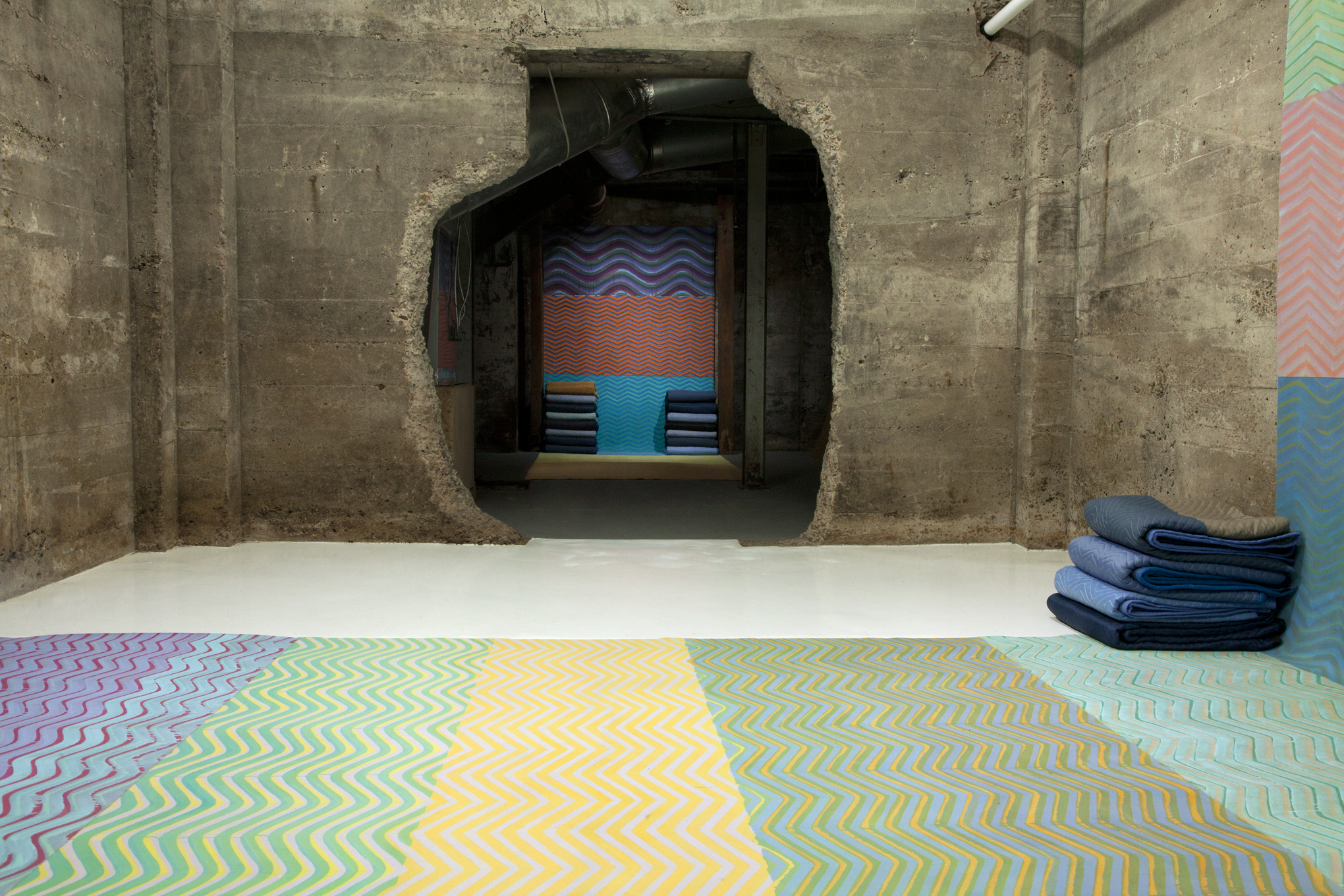
Installation view: "Allegory of the Unnamed Cave," 2020

Kayla Montes de Oca is a designer, researcher, and educator from Miami, Florida based in Brooklyn, New York. Her research examines how residents sustain tradition and build legacy while understanding how policy and design decisions impact communities over time. This work includes examining how the meaning of home is reconfigured in the changing city through the history of New York City Housing Authority complexes and exploring public memory through land use and zoning of New York City cemeteries. She has also conducted research at the Radcliffe Institute mapping genealogical connections of enslaved people in the North.
Kayla has worked in curation and programming through Artist Space and Storefront for Art and Architecture. She is also involved in bringing architectural education to younger audiences as a Design Educator at the Center for Architecture and a Teaching Artist through Young Audiences New York.
Kayla received her B.Arch from Cooper Union and has a Masters in Design Studies from Harvard University's Graduate School of Design.
Kayla's CV is available here.
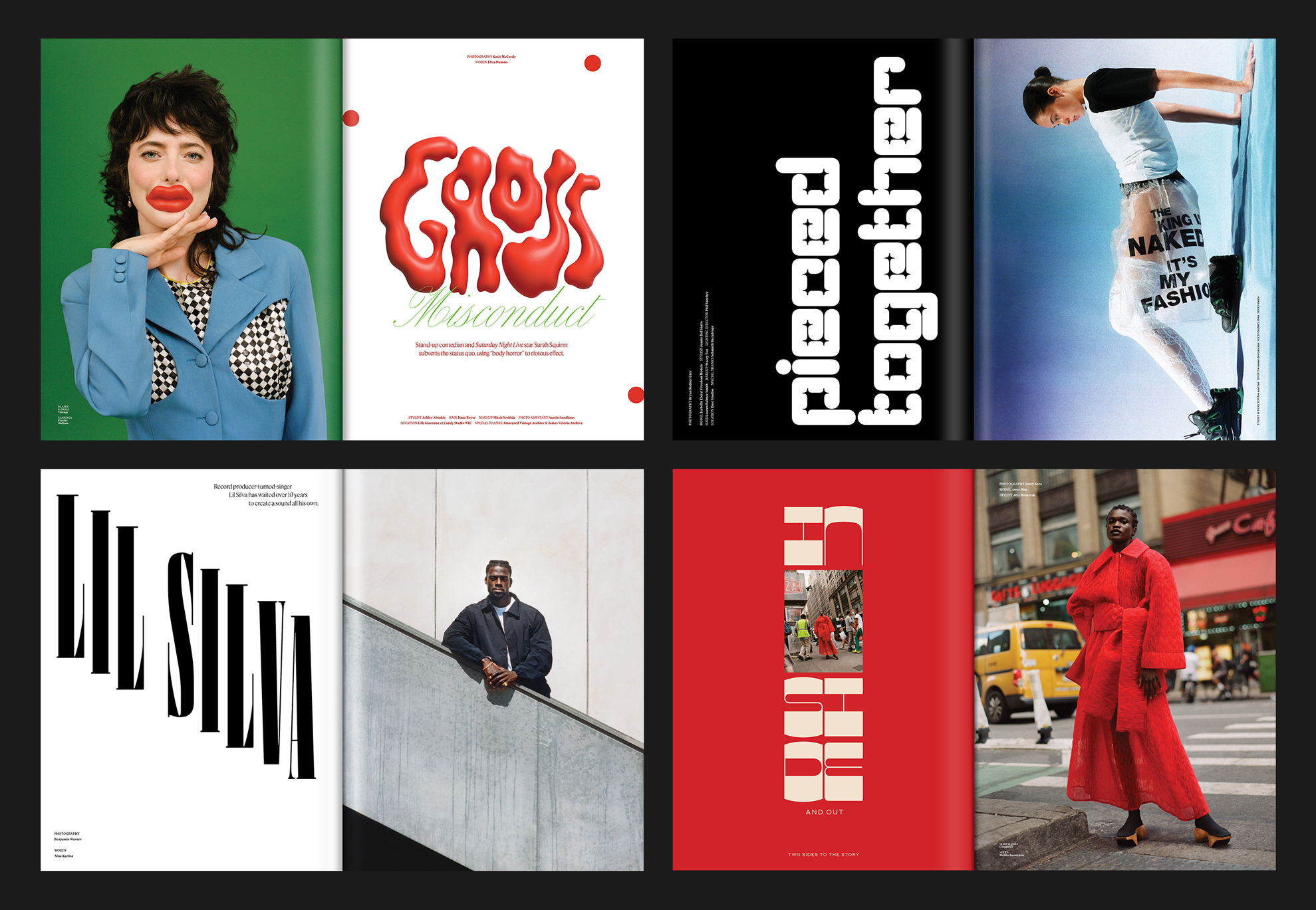
Tida Tep is an independent creative director and designer. She works at the intersection of design, art, film, fashion, and culture and has collaborated with clients including Apple, The New York Times, MoMA, Uniqlo, LVMH, and Google Creative Lab. She is also the creative director of Tidal magazine, an independent bi-annual fashion and pop culture magazine. She received her BFA in Graphic Design from Virginia Commonwealth University and a Postgraduate Certificate in Typeface Design from Type@Cooper.