Emergence of Social Norms and Conventions in Multiagent Systems

In this project, we study the importance and challenges of establishing cooperation among self-interested agents in multiagent systems (MAS). The hypothesis of this work is that equipping agents in networked MAS with “network thinking" capabilities and using this contextual knowledge to form social norms in an effective and efficient manner improves the performance of the MAS. We investigate the social norm emergence problem in conventional norms (where there is no conflict between individual and collective interests) and essential norms (where agents need to explicitly cooperate to achieve socially-efficient behavior) from a game-theoretic perspective.

Visit the project website here.

 

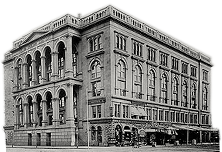
  • Founded by inventor, industrialist and philanthropist Peter Cooper in 1859, The Cooper Union for the Advancement of Science and Art offers education in art, architecture and engineering, as well as courses in the humanities and social sciences.

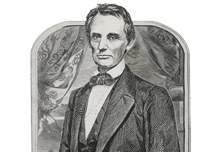
  • “My feelings, my desires, my hopes, embrace humanity throughout the world,” Peter Cooper proclaimed in a speech in 1853. He looked forward to a time when, “knowledge shall cover the earth as waters cover the great deep.”

  • From its beginnings, Cooper Union was a unique institution, dedicated to founder Peter Cooper's proposition that education is the key not only to personal prosperity but to civic virtue and harmony.

  • Peter Cooper wanted his graduates to acquire the technical mastery and entrepreneurial skills, enrich their intellects and spark their creativity, and develop a sense of social justice that would translate into action.