ACADIA 2010 Conference
ACADIA 2010 Conference
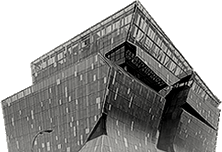
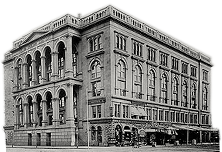
Life in:formation hosted at The School of Architecture of The Cooper Union
Life in:formation was co-chaired by Associate Professor Adjunct Pablo Lorenzo-Eiroa, of The Cooper Union, in conjunction with Assistant Professor Aaron Sprecher of McGill University and Assistant Professor Shai Yeshayahu of Southern Illinois University.
This conference also involved a satellite exhibition at Pratt Institute of work curated by the Exhibiton Chairs of ACADIA 2010: Chandler Ahrens of Morphosis, Axel Schmitzberger Assistant Professor at California State Polytechnic University, Pomona and Michael Wen Sen Su Visiting Assistant Professor at Pratt Institute.
The conference offered a space for the discussion of the problems involved in the way architects, engineers and artists collect, analyze, assemble, represent and implement information.
There is a growing interest in questioning the architecture implicit to the conformation of information. The architecture of information implies a critical intermediary abstract space relative to processing that has been producing a shift in the core of the discipline. These questions imply an overall ideological ambition of the conference. There is indeed a trajectory that intends to build up a critical alternative axis to the way digital information systems have been understood in architecture since 1990s, primarily based on a visual logic. Media has repressed digital architecture to a mere representational role, negating the potential relational logic of systems, a formal aesthetic fundament based on the structuring of mental relationships. It is becoming quite clear that if architects do not break or displace the given source codes of algorithms and create their own, their work is trapped by the predetermination of the set of ideas contained within those programs. What this concept questions is authorship, the necessity to displace and create structures that organize and process information; and the extent of an autonomy within the constitution of the logic of formal processes. This understanding is based on an ambition that may help a historical venture. Ultimately architecture may inform and be relevant to technology, as opposed to architecture being relative to technological actualization.
But why information at Cooper? The growing array of interfaces that striate digital architecture are layers where information is represented, crossed, manipulated and ultimately presented. If interfaces are spaces of representation, they are spaces of differentiation, and since there is no information without representation, these spaces activate a generative capacity, as architectural content is constituted in a responsive topological loop between form and content. The interface is the context within which the work is made possible, implying a topological relationship between the apparently formless flow of data that is seen extrinsic to form, structure, the interfaces involved and how information is constituted.
It seemed appropriate to question these problems to a school where the deep understanding of representation has activated different levels of self referential disciplinary thinking that propelled different structuralist and poststructuralist approaches. Such strategies enable a responsive generative capacity in interfaces where architectural problems are activated by the questioning of the frame through which they are constituted. Architecture is then possible at that moment, when the interface performs within the work, establishing an autonomy, a reality, and a metaphysics only possible within the discipline. An autonomy that has not yet entered the digital….
These premises were integrated through the curatorial work of the conference chairs, but were also challenged and expanded by the work and discussion of the many participants of such a complex international event. In order to draw certain interest towards to the immense body of work left in the publications, it is interesting to note certain themes that were able to grant certain strategies and attention against the linear use of information. The keynote lecturers included both theoreticians, historians and experimental practitioners, such as: Georges Teyssot derived from a foucaultian background the problem of curvature through a philosophical approach, critiquing linear information representation relative to the topological relationship intrinsic in Sausure’s algorithm Sign=S/s; Antoine Picon provided a critical historical reference to the digital project pointing the work of experimental practitioners; Karl Chu built up a genetic based morphogenesis based on cross relationships between the brain and organisms in an architecture autonomy implicit to computation in his Planet Automata series; Evan Douglis constructed morphing patterns that incorporate evolutionary movement; and Georges Legendre introduced a mathematical specificity from binary codes that layer information.
Overall, Life in:formation featured an impressive number of academic and experimental activities including: 10 groundbreaking 3 day long international workshops featured in 18 presentations and a round table discussion; 5 keynote lectures; 14 guest speakers sharing their work in progress; 36 peer reviewed paper presentations divided into three sessions selected by a 120 international expert peer reviewing committee; and included 16 moderated round table discussions.
ACADIA 2010 Conference Proceedings and Catalog publication includes critical essays and projects.
For more information and the upcoming video posts please visit www.acadia.org/acadia2010