Saturday Program Launches Creative Careers Mentorship
POSTED ON: November 17, 2026
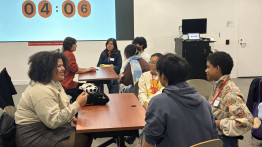
Last Saturday, high school students from The Cooper Union’s Saturday Program met in a 41 Cooper Square classroom for five-minute “speed conversations” with potential mentors. The event was the launch of a new Creative Careers mentoring project, giving current Saturday Program students the opportunity to meet with volunteer mentors, most of them SatPro alumni.
“Our students come here to learn skills, but they also want to know about attending art school, and what jobs they can expect to find after graduation,” said José Ortiz, director of the 58-year-old program that provides free classes for New York City public high school students. “There are a lot of challenges for working artists, and mentors help students understand what their options are both for attending school and finding jobs.”
 Ortiz along with Ciana Melchione A’21, assistant director, and program coordinator Itzell Berenice-Nava organized the event as a kind of “speed dating” opportunity for students to hear from mentors and then decide which three they’d most like to work with. One of the mentors, Kira Britt, described herself as a “Swiss army artist,” with experience in set design, painting, and theater tech. Currently on the communications team at Downtown Community Television Center, a non-profit media arts center in New York City, she stressed the importance of attending schools with a good track record for job and internship placements.
Students who chose to attend said they were interested in learning about undergraduate art and architecture education, graduate school, finding work in their fields, or keeping up their creative work while pursuing careers in other fields. Once students are placed with a mentor, they’ll meet four times during the Spring 2027 semester.
Arthur Lee, a 2025 graduate of The Irwin S. Chanin School of Architecture, described his work life after graduation. Lee, who taught in SatPro as an undergraduate, explained that he initially had to take two part-time jobs, working in a fabrication studio and an after-school program. But eventually, thanks to his social circle and attending design-related events, he met his future boss and was hired as a junior architect at Shakespeare Gordon Studio. “It’s very important to be active and to talk to the people you know.”
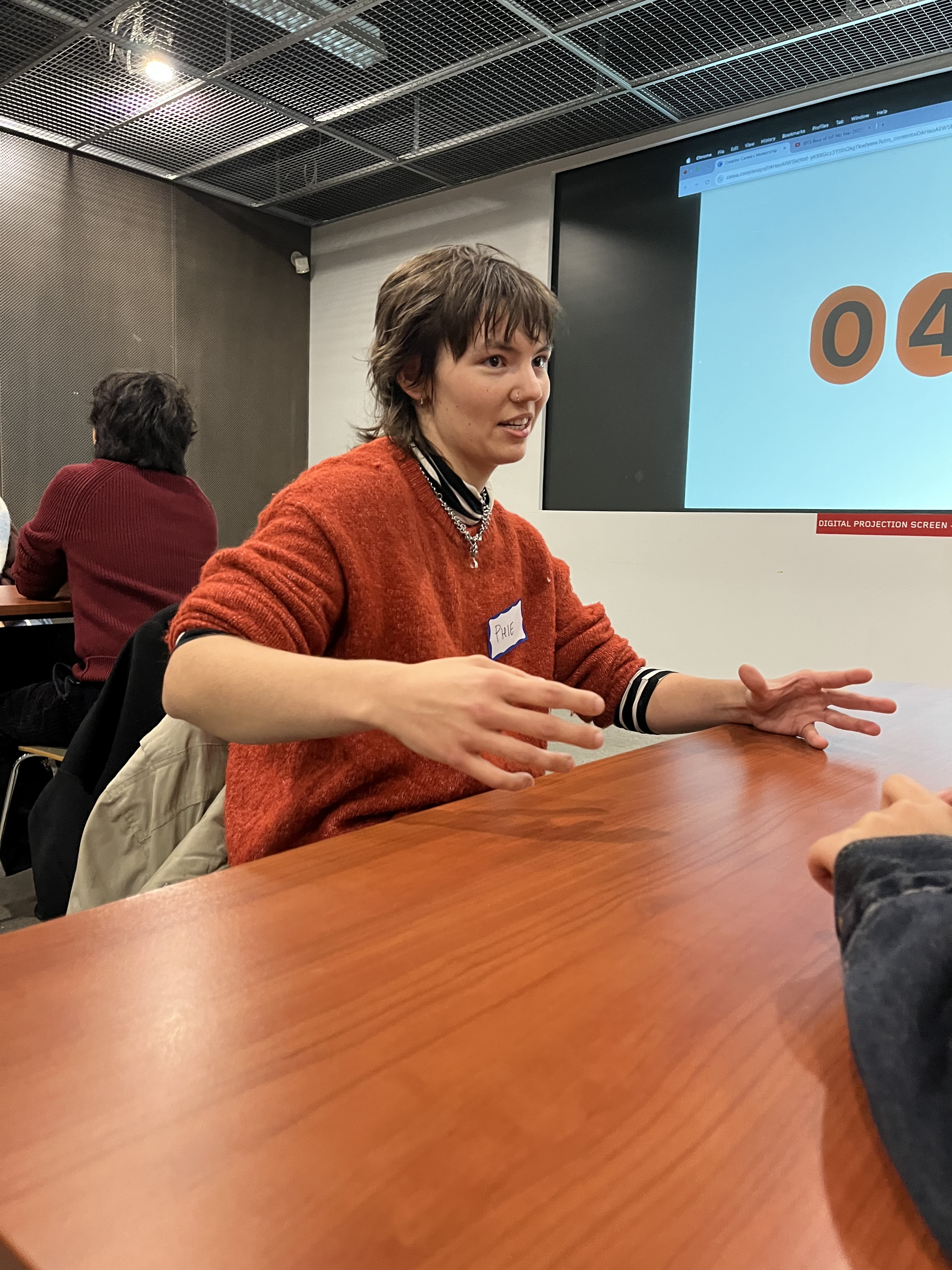
Phie Fisher concurred. A 2025 graduate of the School of Art, she said a good piece of advice she received was, “to look at the people around you.” They could give you clues about how you do and don’t want to conduct your career and may have insights and knowledge that could help you in any number of ways.
Wildriana Paulino, a 2022 graduate of Cooper’s School of Art and a Saturday Program alumna, told students that she’s careful to maintain her own creative practice while working and uses residencies as a way to carve out time for making art.
When talking to students, Alya Ardianto, a graphic designer with Coreslide and 2025 graduate of The Cooper Union, warned students about complacency in the face of greater digitization and artificial intelligence. She emphasized the need to keep up their art practices because, as she put it, “your brain is precious. You can't let anything or anyone take that away from you.”
Following Saturday’s orientation session, mentors and mentees will be paired based on students’ interests, creative aspirations, and mentors’ professional backgrounds and areas of expertise. Participants will be notified of their pairings in December 2026, as the Fall Cycle comes to a close.
The mentorship experience will continue during the Spring 2027 cycle through monthly lunch sessions, Each gathering will provide opportunities for meaningful conversation, creative exchange, and exploration of diverse career pathways. Topics will include “My Creative Journey,” “Portfolio + Process,” and “Creative Challenges + Resilience."
Throughout the program, mentors will share portfolios and process work, offer professional insight, recommend resources, facilitate discussions, and encourage students to reflect on their goals and imagine future possibilities.