Sans Serif Typefaces and The New Typography
Monday, February 16, 2026, 12:30 - 2:30pm
Add to Calendar
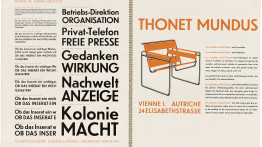
Erbar Grotesk specimen page, c. 1930
In the early 1920s, several artist-designers like El Lissitzky and Kurt Schwitters began developing theories of graphic design and letterforms that would shape the coming revolution in print. New technologies were transforming photographic reproduction and lithographic printing, but perhaps the most radical proposals were for the wholesale adoption of sans serif typefaces as a universal medium for both reading and display. However, there were very few suitable faces in the type case to meet these demands prompting a campaign to develop new and more adaptable sans serif faces. This talk as part of the Herb Lubalin Lecture Series will explore the theoretical debates that led to the creation of Futura, Erbar, Kabel, and Gill Sans.
Registration is required here.
Paul Stirton is professor emeritus of modern design history at Bard Graduate Center in New York City and the editor-in-chief of West 86th: A Journal of Decorative Arts, Design History, and Material Culture. Educated at the universities of Edinburgh and London (Courtauld Institute), he received his Ph.D from the University of Glasgow. He has published widely in the areas of British and Central European design including “Is Mr. Ruskin Living too Long?”: Selected Writings of E.W. Godwin (2005), Britain and Hungary: Contacts in Architecture and Design (2001), and the Blue Guide to Provence and the Cote d’Azur. He was curator of the exhibition Jan Tschichold and the New Typography in the Spring of 2019, and author of the book with the same title (Yale, 2019). His most recent publication is NKF: Piet Zwart's Avant Garde Catalog for Standard Cables, 1927-28 (Letterform Archive, 2024).