New Public Forum: Every photograph is of the sun
Thursday, April 16, 2026, 7 - 9pm
Add to Calendar
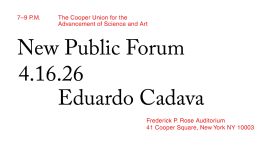
As part of the student-led New Public Forum series, Eduardo Cadavao, Philip Mayhew Professor of English at Princeton University, delivers the talk, "Every photograph is of the sun’: Derrida’s Athens, Still Remains." The presentation will be organized around Derrida’s Athens, Still Remains, his most extended reflection on photography. Taking its point of departure from a series of 34 photographs of Athens taken by the French photographer Jean-François Bonhomme during the course of fifteen years, the book raises a whole set of philosophical questions about the nature of photography but also about light, representation, truth, time, death, mourning, subjectivity, identity, archives, singularity and repetition, memory and forgetting, presence and absence, and the fugitive character of cities. As such, the book is also a training manual on how to read—and not just photographs. Written in the form of a series of stills—to recreate the experience of looking at a series of photographs-in-prose—the book also enacts, in the movement of its sentences and paragraphs, what it wishes to convey. It therefore gives us an opportunity to think about what it means to imagine a language or form that can match what we wish to explore—whether it be a book, a sentence, a set of questions, or even the past, the present, or the future. Attendees are invited to read the text beforehand here.
Eduardo Cadava is the Philip Mayhew Professor of English, and an associate member of the Department of Comparative Literature, the Department of Spanish and Portuguese, the School of Architecture, the Seeger Center for Hellenic Studies, and the Princeton Institute for International and Regional Studies. He is the author of multiple books including Words of Light: Theses on the Photography of History and has co-curated installations and exhibitions at the Storefront for Art and Architecture and the Princeton University Art Museum among others.
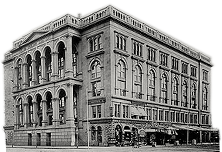
New Public Forum is a series of student-led lectures and demonstrations held at The Cooper Union for the Advancement of Science and Art, aimed at instituting public dialogue between various fields as they evolve and adapt to a changing world. With actions and words, we attempt to rattle or dismount the stability of entrenched systems and constructs, speculating on evolving approaches to creative and technical disciplines. The series will highlight critical practices that synthesize historical and current developments with an emphasis on speculation over retrospective preoccupation. The program constitutes a public forum for exchange, towards new critical approaches across fields and geographies.
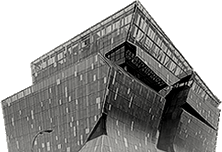
Located in the Frederick P. Rose Auditorium, at 41 Cooper Square (on Third Avenue between 6th and 7th Streets)