May Day and the Commons
Thursday, April 30, 2026, 6:30 - 8pm
Add to Calendar
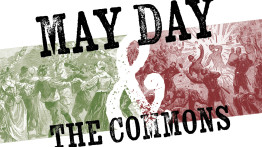
Our May Day began in America. From the May pole dance with indigenous folk at Merry Mount, Massachusetts, in 1627, to Chicago’s police riots in 1886 at Haymarket Square against advocates of the 8-hour day, May Day has given us both green and red themes to celebrate. Suppose we paused to think of each of these stories as history’s seeds that have yet to reach their maturity? Conquest and settlement were accomplished with means of mechanization. On May Day, whether as a story of Puritanical expropriation from earthly subsistence or as a story of gilded age exploitation of immigrant wage-slaves, we may easily find contemporary themes related to the extractions and extinctions of our own time. May Day celebrates the green and red struggle of workers across the planet who cry for health and wealth, common wealth.
This Cooper Union Faculty of Humanities and Social Sciences event is part of the Philip F. Brueck Lecture series.
Registration on EventBrite is required. However, an EventBrite ticket does not guarantee entry as this is a first-come-first-served free event.
Peter Linebaugh was born in Washington, D.C. in 1942, the year the Nazis launched the V-2 rocket. He became an anti-fascist, and grew up in London, Cattaraugus, Muskogee, Karachi, and New York. He became a historian under the eloquent peacenik and labor historian, E.P. Thompson. He has written books such as The London Hanged: Crime and Civil Society in the Eighteenth Century, The Magna Carta Manifesto: Liberties and Commons for All. Berkeley, and Red Hot Globe Round Burning: A Tale at the Crossroads of Commons and Closure, of Love and Terror, of Race and Class, and of Kate and Ned Despard.
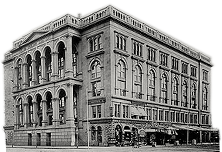
Located in The Great Hall, in the Foundation Building, 7 East 7th Street, between Third and Fourth Avenues