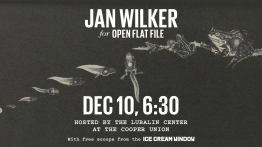
A lecture by designer Jan Wilker about Karl Gerstner’s Think Program and morphological boxes. This is part of The Lubalin Center's Open Flat File lecture series. Ten designers, artists, and researchers were invited to select a single object from Herb Lubalin Center's archive to respond to. Lecturers have designed a commemorative poster that will distributed for free at the event.
Doors open at 6:00 PM. Talk starts at 6:30 PM and will be followed by a reception with free scoops from The Ice Cream Window.
Register here. This event will be in-person in the Rose Auditorium at The Cooper Union and live-streamed on YouTube.
Registration on Eventbrite is required. However, an in-person Eventbrite ticket does not guarantee entry as this is a first-come-first-served free event.
About the speaker Wilker grew up in Ulm, Germany. He moved to New York in late 2000 to start karlssonwilker, a design studio, together with Icelander Hjalti Karlsson. Jan has taught at Cooper Union, SVA, and Parsons. He frequently lectures and holds sought-after design workshops around the world. Their work has appeared in more than one design publication, and they have received less than a thousand awards. They continue to work with an eclectic list of clients, including A, the B, C, D, E, the F Club, G, H mag, I, J International, and K.
About the series This event is part of Open Flat File, a free 10-part lecture series held on the occasion of the 40th anniversary of the Herb Lubalin Study Center. Each lecturer was invited to select a single object from the collection to respond to through a free public talk and to design a poster about the object. The Open Flat File series will be staged during the 2026–2027 academic year.
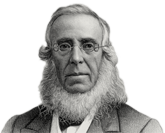
Founded by inventor, industrialist and philanthropist Peter Cooper in 1859, The Cooper Union for the Advancement of Science and Art offers education in art, architecture and engineering, as well as courses in the humanities and social sciences.
From its beginnings, Cooper Union was a unique institution, dedicated to founder Peter Cooper's proposition that education is the key not only to personal prosperity but to civic virtue and harmony.