History/Theory Panel | Fascism / Antifascism
Tuesday, October 20, 2026, 6:30 - 8:30pm
Add to Calendar

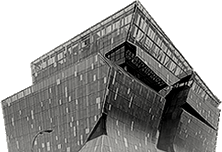
Photo by Ryan Murphy.
This event will be conducted in-person in the Frederick P. Rose Auditorium and through Zoom.
For in-person attendance, please register in advance here.
For Zoom attendance, please register in advance here.
The history of modern architecture includes troubling and well-documented entanglements between architecture and fascism. Less well-known, but perhaps even more important today, are examples of antifascist design and organizing. In a time of rising authoritarianism, what can we learn from the histories of fascism and antifascism?
The term “fascism” originated in Italy in 1919 before spreading across Europe, naming a range of populist political movements that exalted ethno-nationalism, militarism, centralized autocratic rule, and the rejection of liberal democracy. Since its birth, fascism has invited resistance efforts, both peaceful and armed, organized and informal. This panel will explore architecture’s roles in the dynamics of fascism and antifascism, particularly as it takes form in cultural centers, housing, spaces of detention, and memorials.
Join us for an urgent conversation about the historical links between architecture, fascism, and anti-fascism, and what the past can teach us about acting in the present moment.
Panelists:
María González Pendás is assistant professor at Cornell University and author of the forthcoming book Holy Modern: Technocracy, Theocracy and the Architectures of Hispanic Fascism.
Sarah Lopez is associate professor at the University of Pennsylvania and author of The Remittance Landscape: The Spaces of Migration in Rural Mexico and Urban USA.
Daniel Jonas Roche is news editor of The Architect’s Newspaper and co-author with Andrew Santa Lucia and Lane Rick of Antifascist Architecture.
This event is free and open to the public. Registration is required.
Located in the Frederick P. Rose Auditorium, at 41 Cooper Square (on Third Avenue between 6th and 7th Streets)