Geometric Letters and Architecture: From Antiquity to Enric Miralles and Beyond
Monday, March 30, 2026, 12:30 - 2:30pm
Add to Calendar
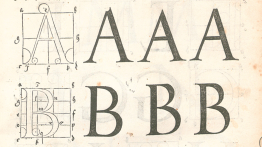
Renaissance and Modernist approaches to letter design share a common reliance on geometry as a mediating structure between writing and architecture, though they deploy it with very different intentions. In this talk as part of the Herb Lubalin Lecture Series Manuel Sesma revisits Renaissance letter construction manuals and Modernist typographic and architectural models and examines how geometry evolved from an idealizing analytical tool into a constructive language for shaping the modern world. These historical frameworks are distilled in the architectural lettering of Enric Miralles (1955–2000), whose drawings dissolve the distinction between writing, technical lettering, and architectural form. By examining Miralles’s plans and their later typographic interpretations, the lecture reopens the question of lettering as an integral component of architectural design.
Registration for the free online program is required here.
Manuel Sesma is a teacher, researcher, editor, and translator specializing in typography. His professional journey began as a photographer and graphic designer, eventually transitioning into academia. For over a decade, he has co-directed Tipo e Editorial, a publishing project dedicated to books on Latino typography. He has taught at various higher education institutions in Spain. Sesma, who received a Ph.D. in fine arts from the University of Barcelona, is a professor in the Design Degree program at the Complutense University of Madrid (UCM), where he serves as director of the Department of Design and Image.