The Diane Lewis Student Lecture Series | Michael Murphy, Billie Tsien, and Spencer Bailey: Our World in Ten Buildings — Archetypes of Form and Practice
Tuesday, April 21, 2026, 6:30 - 8:30pm
Add to Calendar
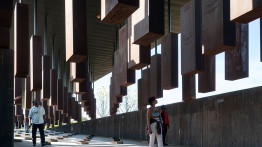
National Memorial for Peace and Justice. Photo courtesy of Iwan Baan.
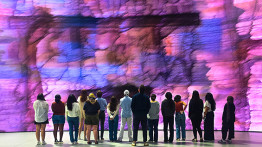
Georgia Tech AI Architecture Studio. Image courtesy of Ethan Rainbolt and Samuel Stubblefield.

Barbados Ocean Innovation Hub. Image courtesy of Iwan Baan.
This event will be screened in the Frederick P. Rose Auditorium and through Zoom.
For in-person attendance, please register in advance here.
For Zoom attendance, please register in advance here.
The Irwin S. Chanin School of Architecture at The Cooper Union welcomes architects Michael P. Murphy and Billie Tsien for a conversation on how the forms and frameworks of architecture shape the ways we live, gather, and care for one another. Moderated by Spencer Bailey, co-founder of The Slowdown and host of the Time Sensitive podcast, the discussion will explore how practices can become more responsive, more exploratory, and more engaged with the realities of cultural production today; architecture as an agent for change; and the complex relationships between memory and the built environment. A Q&A led by Cooper Union student Yudi Luo will follow the conversation.
Michael P. Murphy is an architect, educator, and writer, and the founder and president of AMMA, a design and development collaborative focused on the ways space shapes our minds, bodies, and communities. He is also a co-founder of MASS Design Group, where he led projects including the Butaro Hospital and the National Memorial for Peace and Justice, and currently serves as the Thomas W. Ventulett III Distinguished Chair of Architectural Design at the Georgia Institute of Technology.
Billie Tsien is a New York–based architect, founding partner of Studio Tsien and Tod Williams Billie Tsien Architects (TWBTA). Her work is rooted in collaboration and is known for its warmth, optimism, material sensitivity, and clarity. TWBTA's projects include the Obama Presidential Center in Chicago and the Barnes Foundation in Philadelphia, among many others across cultural and civic institutions.
This talk aligns with the release of Michael Murphy’s new book, Our World in Ten Buildings: How Architecture Defines Who We Are and How We Live, which draws from a set of architectural archetypes to show how design shapes how we think, connect, and live—and how architecture can more actively serve the public good. Hardcover copies will be available for purchase and signature following the event.
Spencer Bailey is the co-founder and editor-in-chief of the New York–based media company The Slowdown and host of the Time Sensitive podcast. He is also the editor-at-large of book publisher Phaidon. A writer, editor, and journalist, he has written at length about architecture, art, culture, and design, and contributed to publications such as Town & Country, The New York Times Magazine, Bloomberg Businessweek, and Fortune. From 2013 to 2018, Bailey was the editor-in-chief of Surface magazine.
This event is free and open to the public. Registration is required.
Located in the Frederick P. Rose Auditorium, at 41 Cooper Square (on Third Avenue between 6th and 7th Streets)