Current Work: Toward Circular Construction, with Felix Heisel
Thursday, May 14, 2026, 6:30 - 8:30pm
Add to Calendar

Circular Construction Lab | Catherine Commons Deconstruction Project, Ithaca, New York, 2021. Image credit: Jason Koski, UREL
This event will be presented in-person in the Frederick P. Rose Auditorium.
For in-person attendance, please procure tickets in advance here.
As dismissal of embodied carbon—emissions generated during the manufacturing, transportation, and installation of building materials—continues to exacerbate the climate crisis, how can architecture rethink construction sustainably?
A design research program dedicated to advancing the construction industry from linear material consumption to a circular economy, the Circular Construction Lab (CCL) was founded by Felix Heisel in 2020 at Cornell University’s College of Architecture, Art, and Planning. For CCL, circular construction involves activating the built environment as it currently exists for reuse and reconfiguration while designing and constructing buildings that can act as material depots for future assemblies. At this lecture, Heisel will expand on circular construction and the reuse imperative, from CCL’s policy white paper on deconstruction for New York State to his work on residential prototypes designed for future disassembly across Europe.
Recent projects include:
- Catherine Commons Deconstruction Project Led by CCL, this study systematically deconstructed a residential building in Ithaca, New York, to compare its material recovery rates and reuse pathways to conventional demolition methods, which contributed to circular construction policy development in New York State
- Circulating Matters An installation comprising staircase prototypes that directly reused materials from the Catherine Commons Deconstruction Project to demonstrate the principles of material reuse and circular construction
- Urban Mining and Recycling (UMAR) Unit A residential structure developed by Werner Sobek, Dirk E. Hebel, and Felix Heisel with Empa Dübendorf, whose design enable future disassembly and material reuse.
Felix Heisel is an assistant professor and director of the Circular Construction Lab at Cornell’s College of Architecture, Art, and Planning. His research, which has received numerous recognitions, including the German Green Solutions Award in 2020, explores the transformation of the built environment into a material depot for continuous reuse and reconfiguration. A licensed architect in Germany, Heisel is a partner at 2hs Architekten und Ingenieur PartGmbB, a practice focused on developing circular construction prototypes. Heisel studied architecture at the Berlin University of the Arts and has taught at the Future Cities Laboratory in Singapore, ETH Zürich, and Harvard GSD, among other institutions.
This event will be moderated by Gizem Karagoz. Karagoz is the assistant vice president of green economy at the New York City Economic Development Corporation. She leads a portfolio of projects to derisk circular construction practices, low-carbon building materials, and emerging climate technologies. Karagoz holds a master’s of architecture and a master’s of science in urban planning from Columbia University GSAPP.
A circular construction and reuse trade fair featuring New York–based organizations and vendors will precede the lecture. More information about the trade fair participants will be released closer to the event.
Support
This program is made possible by the members and supporters of The Architectural League of New York. Additional support is provided by the New York City Department of Cultural Affairs in partnership with the City Council, and by the New York State Council on the Arts with the support of the Office of the Governor and the New York State Legislature.
The event is co-presented by The Irwin S. Chanin School of Architecture of The Cooper Union.
This event is open to the public. Registration is required.
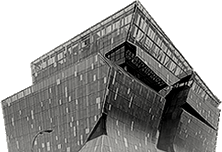
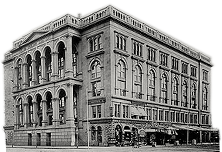
Located in the Frederick P. Rose Auditorium, at 41 Cooper Square (on Third Avenue between 6th and 7th Streets)