Apple: The First 50 Years
Tuesday, March 24, 2026, 7 - 8:30pm
Add to Calendar

On April 1, 1976, two scruffy twentysomethings, both named Steve, founded a startup in a garage. Their goal: to bring the revolutionary power of computers to everyone. And over the next five decades, that startup, Apple, has reshaped our lives by marrying advanced technology with design and introducing what are now common breakthroughs like the mouse, WiFi, and touchscreen phones and tablets.
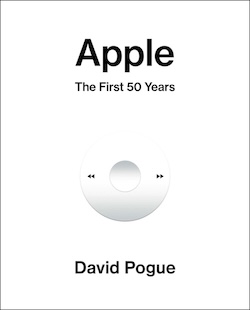 This year marks Apple’s 50th anniversary. CBS Sunday Morning correspondent David Pogue tells the story of this iconic company gleaned from 150 interviews that he conducted with the legendary figures who shaped Apple. All are featured in his new book, Apple: The First 50 Years. For The Cooper Union’s 2026 John Jay Iselin Memorial Lecture, Pogue will be joined by tech journalists, Lauren Goode of Wired and Joanna Stern, author of I Am Not a Robot, for a conversation about Apple’s global impact and the challenges Apple may face as it enters its second half century.
Rizzoli Bookstore will be on site to sell copies of Apple: The First 50 Years and Pogue will be available to sign books purchased on site following the discussion. This special event is being programmed as part of Cooper Union’s inauguration celebrations for its 14th president, Steve McLaughlin.
Registration on Eventbrite is required. However, an Eventbrite ticket does not guarantee entry as this is a first-come-first-served free event.
David Pogue is a seven-time Emmy Award winner for his stories on CBS Sunday Morning, a five-time TED speaker, host of 20 NOVA specials on PBS, and a New York Times bestselling author. He’s written about Apple for his entire career, including 13 years as a Macworld columnist, 13 more as tech columnist for The New York Times, and 20 years as the #1 bestselling author of books about Macs and iPhones.
 Lauren Goode is a senior correspondent at Wired who has covered technology for 15 years. These days she writes about artificial intelligence, semiconductors, Silicon Valley culture, and the intersection of technology and humanity. Prior to Wired she was a senior editor and video journalist at publications such as The Verge, Recode, and The Wall Street Journal.

Joanna Stern is an Emmy Award-winning technology journalist and author of the upcoming I Am Not a Robot: My Year Using AI To Do (Almost) Everything. She spent 12 years at The Wall Street Journal, where her personal technology columns and video series made her one of the most-watched voices in consumer tech. She now runs her own media company, producing videos and newsletters that help people navigate the tech reshaping daily life.
The John Jay Iselin Memorial Lecture honors the 10th President of The Cooper Union, Jay Iselin, who served from 1987 to 2000. As General Manager and then President of Channel 13, Iselin was largely responsible for making public television a vital force in broadcast journalism, originating such programs as “Nature” and “The MacNeil/Lehrer NewsHour.” Past Iselin lecturers have included White House photographer Pete Souza, Pulitzer Prize winning journalist Ed Yong, and historian Erica Armstrong Dunbar.
Located in The Great Hall, in the Foundation Building, 7 East 7th Street, between Third and Fourth Avenues