Paddy Yang EE’27 and Prof. Abigail Raz Publish Research on Graph Exploration Games in Ars Combinatoria
POSTED ON: April 9, 2026
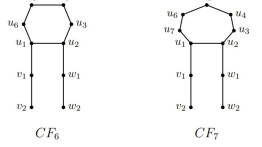
Figure 1. Small examples of cuttlesh graphs.
Electrical engineering junior Paddy Yang and Professor of Mathematics Abigail Raz have published a research paper on “A Path Variant of the Explorer-Director Game on Graphs” in the Ars Combinatoria journal (Vol. 166, 27-25, March 2026).
Read more about their research here.
The Explorer-Director game, first introduced by Nedev and Muthukrishnan (2008), simulates a Mobile Agent exploring a ring network with an inconsistent global sense of direction. Two players, the Explorer and the Director, jointly control a token’s movement on the vertices of a graph G with initial location v. Each turn, the Explorer calls any valid distance, d, aiming to maximize the number of vertices the token visits, and the Director moves the token to any vertex distance d away aiming to minimize the number of visited vertices. The game ends when no new vertices can be visited, assuming optimal play, and we denote the total number of visited vertices by fd(G, v). Here we study a variant where, if the token is on vertex u, the Explorer is allowed to select any valid path length, ℓ, and the Director now moves the token to any vertex v such that G contains a uv path of length ℓ. The corresponding parameter is fp(G, v). In this paper, we explore how far apart fd(G, v) and fp(G, v) can be, proving that for any n there are graphs G and H with fp(G, v) − fd(G, v) > n and fd(H, v) − fp(H, v) > n.