Meet David Kim
POSTED ON: September 8, 2025
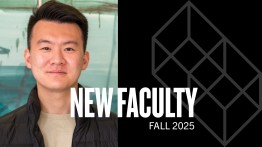
This fall the Albert Nerken School of Engineering is excited to welcome David Kim in the Department of Civil Engineering. Kim, who received his Ph.D. from Yale University, was most recently a postdoctoral fellow at Massachusetts Institute of Technology. His research areas are in electrochemical methods for water and wastewater treatment, and he has published his findings in numerous journals, including in Environmental Science & Technology.
Tell us about your research interests.
Sustaining a clean water supply has become one of the most pressing challenges of our time, with mounting stresses on our existing treatment systems due to industrialization and climate change. My research centers on the development of novel water purification technologies that can boost the resiliency of our current water infrastructure and networks. I am particularly interested in electrochemical devices that utilize electricity to destroy persistent pollutants and recover valuable resources from various streams, including seawater and wastewater effluents. Several research directions include:
- Synthesizing electrode interfaces that can selectively detect and remove priority targets from our water sources (e.g., heavy metals, nutrients).
- Designing cell modules and configurations for remote water quality monitoring and/or resource recovery applications.
- Overcoming the operational challenges associated with their use in real water matrices and other environmental factors. My overall mission is to explore innovative methods for water treatment to enable circular economies and further promote a more sustainable built environment.
Some more information about my research can be found online here.
What brought you to The Cooper Union?
The Cooper Union is committed to preparing and inspiring future engineers to address the complex societal and environmental challenges of our ever-changing world. The institution’s mission aims to provide rigorous and comprehensive technical training, while cultivating a deep sense of ethical responsibility. I joined Cooper because these are all values I strongly believe in, and I am determined to build upon this holistic approach towards engineering education. I look forward to joining the vibrant community here and working together to address real-world challenges within the heart of New York City and beyond.
What aspects of teaching are you most excited about in the coming academic year at Cooper?
I am most excited to share my experiences and passion for water treatment and environmental engineering with my students. My teaching philosophy emphasizes being adaptable and available for my students and mentees, and I am committed to fostering an active and collaborative learning environment. Together, we will explore and develop novel solutions to current challenges in civil engineering, including in water treatment processes and resources management. Through hands-on, laboratory-based learning, we will bridge theoretical foundations with real-world experimental outcomes. As we uncover these answers, I look forward to advising and supporting my students as they prepare for the next steps in their careers.