Interdisciplinary Exhibition in the Chrysler Building
POSTED ON: June 3, 2026
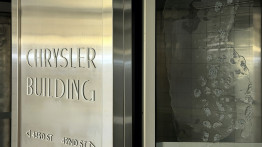


An opening reception was held on May 28 for Stalemate, a public exhibition in the iconic Chrysler Building organized by Cooper Union faculty and students from the Albert Nerken School of Engineering and the School of Art.
Installed in the lower-level arcade of the Chrysler Building, the interdisciplinary exhibition features work by Carlos Irijalba, adjunct instructor in the School of Art; Abhishek Sharma, assistant professor of chemical engineering; Stella Hyolim Lee, a rising junior in the School of Art, Muneeb Alam, a rising senior in the School of Art; Nora Haque, a rising senior studying chemical engineering; and Masuma Faruqi, a rising third-year chemical engineering student. The exhibition, which explores common queries among artists and engineers, was made possible by a 2025 Cooper Union Grant, a program that provides funding to Cooper students, faculty, and staff for projects and initiatives that advance collaborative learning, among other goals.
According to the show’s organizers, “Stalemate is an installation both stable and stagnant, vestigial and futuristic, throughout the concourse basement of the Chrysler building. These lifelike cellular allusions are effervescent and persistent at once in a primordial stalemate. The anthropic split between inanimate and animate, the chemical and biological reaction is revealed frozen in time.”
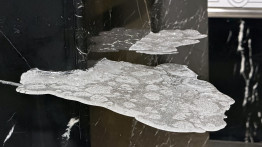
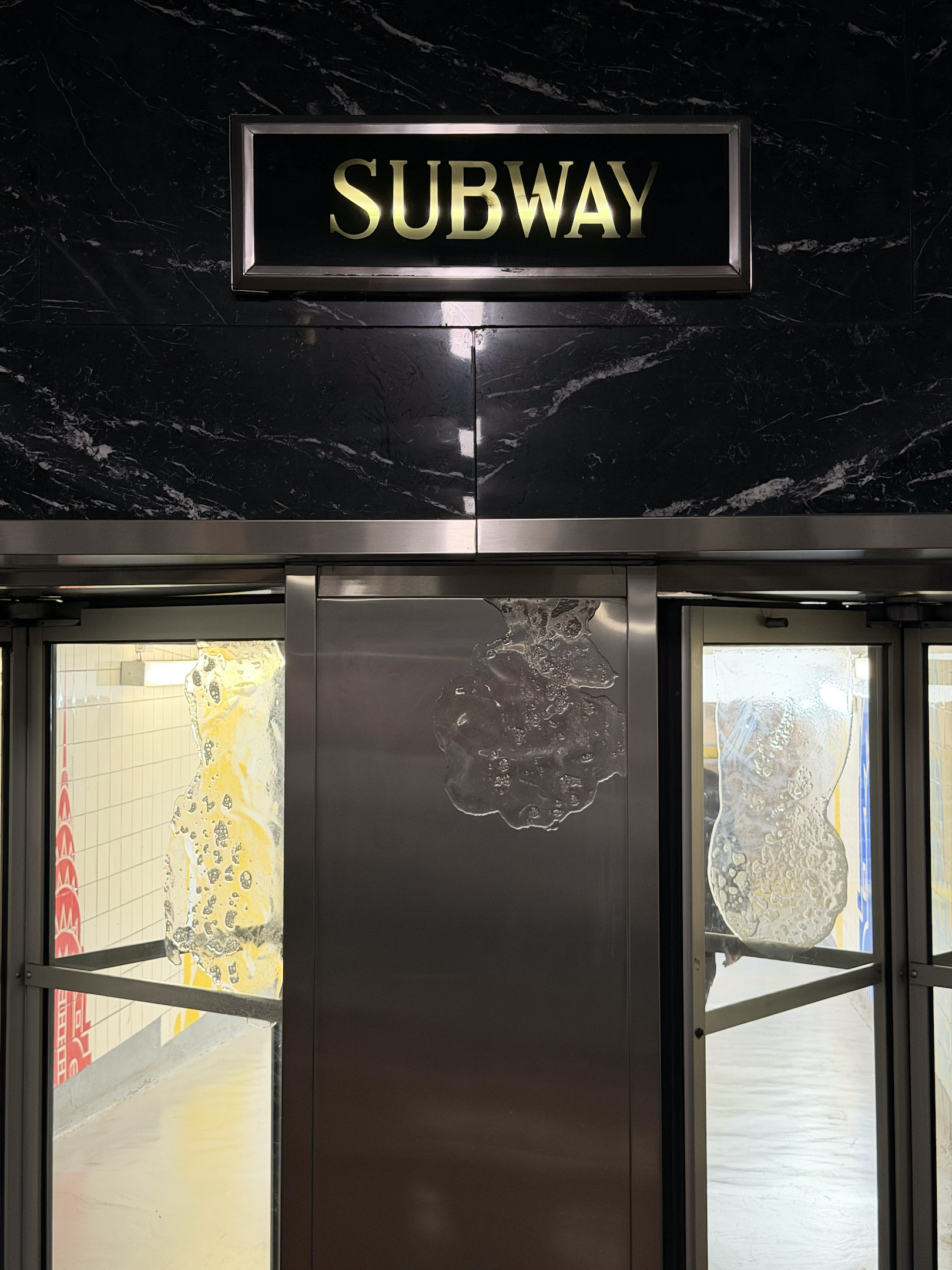 The exhibition is made up of sculptures constructed from epoxy resin, which was modified in Cooper’s chemical engineering labs to trap air and sustain bubbles. According to Sharma, “This relates to a number of chemical engineering topics—fluid mechanics, heat transfer, and chemical reaction in particular. The students were enrolled in Chemical Product Design independent studies with me to explore the aesthetic goals of the material, including transparency, bubble size distribution, and workability. We also thought more deeply about the shared metaphors between art and engineering. This is a departure from the usual chemical design problems aimed at making commercial products with practical utility.”
During the Fall 2025 semester, Irijalba invited Sharma to speak to students in a class he teaches in the School of Art titled Sculpture Open Studio: Relative States. The subsequent discussions attracted the two art students to the project, and eventually all four students were working side by side in chemical engineering labs and generating ideas at the intersection of the two disciplines. Irijalba describes “the use of foam as a symbol of ephemerality, of the passing of time. In my practice, I use geology for the opposite reason: it looks solid and crystalized but is very dynamic. It just exists at a different pace than the observer, us humans. This addresses the urgency of our actions during our short lifespan.”
Multiple scientific concepts are at play in Stalemate, including the formation of proto-cells at the early stages of life on earth and the subsequent transition from a single cell to multicellular life. “The physics that describes the formation of foams is the same that makes cells possible,” says Sharma. “The very same principles go into the design of the mRNA vaccines we all took a few years ago and are an area of research in my lab.” The work also strives to respond to the Chrysler Building architecture.
The exhibition, which runs through June 11, is open to the public Monday through Thursday, from 7 am to 7 pm and Friday, 7 am to 3 pm.