2025 Study Abroad
POSTED ON: September 25, 2025
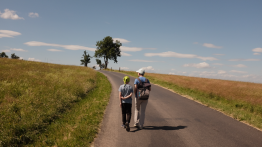
Image taken by Gi Sung CE'26.
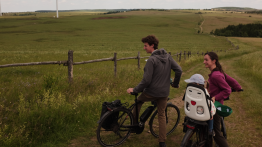
Image taken by Gi Sung CE'26.
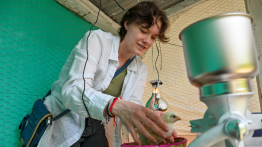
Image of Elise Danko BSE'26.
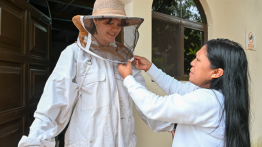
Image of Elise Danko BSE'26.
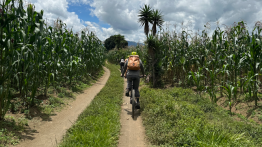
Image taken by Elise Danko BSE'26.
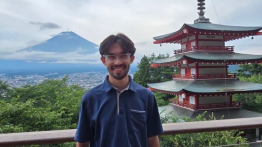
Image of Aidan Cusa EE'26 in Japan.
Image of Aidan Cusa EE'26 (right).
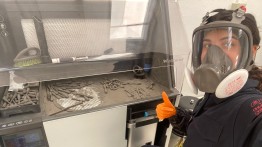
Image of Liki Hamakiotes CE'26, processing of SLS printed tensile test specimens.
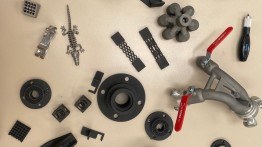
Image taken by Liki Hamakiotes CE'26, examples of SLS manufactured prints.
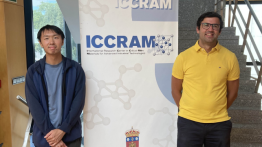
Image of Paddy Yang EE'27 (left).
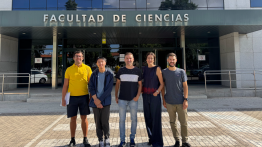
Image of Paddy Yang EE'27 (2nd left) and group.
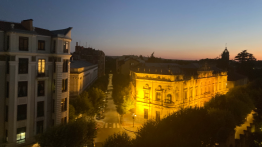
Image taken by Paddy Yang EE'27.
Each summer, the Albert Nerken School of Engineering offers a 6–8-week study abroad experience to students in their second or third year at Cooper. This summer, eight students joined programs in Germany, Guatemala, Singapore, and Spain.
The Albert Nerken School of Engineering is grateful to the E. Durbin & J. Morris Innovation Fund and Naomi Harley Professional Development Fund for underwriting the Dean’s Office Summer Abroad Cultural Immersion Fellowships.
GERMANY
Four undergraduate engineering students studied abroad this summer in Dresden and Karlsruhe, Germany.
At Technische Universität Dresden, civil engineering senior Gi Sung, mechanical engineering senior Wongee Hong, and electrical engineering senior Tiffany Shum participated in the study abroad program. TU Dresden is home to a wide range of research centers and institutes, including Health Sciences, Biomedicine, and Bioengineering; Information Technologies and Microelectronics; Smart Materials and Structures; Culture and Knowledge; and Energy and Environment.
Sung worked on a project that used AI to help monitor construction sites automatically. By training a computer vision model to detect workers, equipment, and materials, and combining it with a tool that could read delivery documents, the system generated daily site reports to make construction management faster, safer, and less dependent on manual paperwork.
“Studying abroad in Germany was a once-in-a-lifetime experience. I got to work on exciting research while exploring a new country and culture. It was the perfect mix of academics and adventure!” – Gi Sung CE’25
Wongee Hong contributed to the Janelia CellMap Segmentation Challenge by improving automated cell segmentation methods. Their research applied deep learning models such as U-Net and graph-based post-processing algorithms to segment cells from large-scale electron microscopy data. By reducing false positives and correcting patch boundary artifacts, Hong enhanced biological accuracy while strengthening skills in machine learning, computer vision, and biomedical data analysis. Beyond the lab, this experience broadened their academic perspective and reinforced their interest in pursuing advanced study in AI and biology.
At the Karlsruhe University of Applied Sciences, electrical engineering junior Palina Kuzmina took part in the study abroad program, gaining both academic and cultural experiences while living and studying in southwestern Germany.
GUATELMALA
General engineering senior, Elise Danko, spent six weeks at the Barbara Ford Peacebuilding Center in Guatemala, where Cooper students collaborate each year on engineering projects that provide sustainable income sources for women and their families.
This summer, the center’s project focused on improving the nutrition of home-raised chickens for both commercial and personal use. Since the cost of commercial chicken feed often prevents families from making a profit from their flocks, Danko worked to design and test a chicken feed formula using locally available, affordable, or easily grown ingredients.
“Being in Guatemala for six weeks was an amazing experience. There were some challenges along the way, but everyone I met and worked with was incredibly kind and welcoming. It was inspiring to work alongside so many people who were trying to make a positive impact in their community.” – Elise Danko BSE’25
SINGAPORE
Electrical engineering senior, Aidan Cusa participated the Summer Engineering Research Internship for U.S. Students (SERIUS) program at the National University of Singapore (NUS). Over the course of eight weeks at the NUS College of Design and Engineering, Cusa engaged in innovative research while immersing himself in Singapore’s vibrant culture.
“My experience in Singapore had the perfect mix of hands-on engineering work and cultural immersion. I worked on a project focused on adapting robots to operate within existing elevator systems, where I learned to navigate a fast-paced research environment while making meaningful contributions to a cross-disciplinary team. Beyond the lab, I enjoyed exploring the island, doing activities with friends, traveling to neighboring countries, and eating unforgettable meals at Singapore’s famous hawker centers.” – Aidan Cusa EE’25
SPAIN
Civil engineering senior Liki Hamakiotes and electrical engineering junior Paddy Yang participated in the study abroad program at the Universidad de Burgos.
Hamakiotes’s research focused on fracture mechanics and additive manufacturing. They prepared specimens using the Formlabs FUSE 1 SLS printer, conducted tensile testing, and performed fractographic analysis with a Leica S9i Stereozoom microscope, capturing high-resolution images for evaluation. In addition, Hamakiotes ran fatigue life simulations using FFA Crack, generating and analyzing S–N curves to assess the effects of internal defect size, shape, and location on fatigue life. This project not only deepened their understanding of advanced engineering concepts but also provided opportunities to collaborate closely with international faculty and strengthen cross-cultural communication skills in a new academic environment.
“My mindset throughout my study abroad experience was if I'm going to be outside of my comfort zone then I'm going to REALLY be outside of my comfort zone. I worked on my research project while also taking advantage of every opportunity I had to travel, explore, speak Spanish, and meet new people. It was an amazing experience that let me see so many new things, discover just how capable I am, and gain a confidence that I will carry with me for the rest of my life.” – Liki Hamakiotes CE’26
Yang worked in the ICCRAM lab (International Research Center in Critical Raw Materials) on the electronic component of an experimental setup for a redox flow battery. Their project focused on developing methods to measure the volume of an electrolyte tank, experimentally evaluating infrared and ultrasonic sensors under different parameters, and analyzing their accuracy and effectiveness. The system was built using an Arduino and Raspberry Pi 5.
“Staying at Burgos for a summer was a refreshing change of pace from the busy city life, allowing me to enjoy the charm an old city has to offer. I often spent my weekends walking around and exploring all their historical sites. Moreover, the summers are much cooler than in New York, making it a great escape from the blistering heat!” – Paddy Yang EE’27