Theoretical Computer Science

In-depth exploration of the foundations of, the limitations of, and the open questions related to theoretical computer science and computation. Topics include models of computation such as deterministic and nondeterministic automata, context free grammars, pushdown automata and Turing machines; decidability and the halting problem; time and space complexity; the P=NP? question; NP-complete problems; reductions; randomness and probabilistic algorithms. Advanced topics vary across semesters.

Prerequisite: ECE 365

Credits: 3.00

Course Code: ECE 461
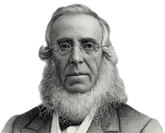
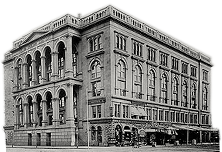
  • Founded by inventor, industrialist and philanthropist Peter Cooper in 1859, The Cooper Union for the Advancement of Science and Art offers education in art, architecture and engineering, as well as courses in the humanities and social sciences.

  • “My feelings, my desires, my hopes, embrace humanity throughout the world,” Peter Cooper proclaimed in a speech in 1853. He looked forward to a time when, “knowledge shall cover the earth as waters cover the great deep.”

  • From its beginnings, Cooper Union was a unique institution, dedicated to founder Peter Cooper's proposition that education is the key not only to personal prosperity but to civic virtue and harmony.

  • Peter Cooper wanted his graduates to acquire the technical mastery and entrepreneurial skills, enrich their intellects and spark their creativity, and develop a sense of social justice that would translate into action.