New York Times Says Professor Coco Fusco's Survey is a Must-See
POSTED ON: August 27, 2025
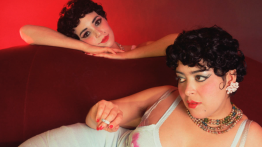
Coco Fusco, A Room of One’s Own: Women and Power in the New America (Performance Documentation), 2006-08. Image courtesy of the artist and Mendes Wood DM.
The New York Times writes that Tomorrow, I Will Become an Island, the first US survey of work by interdisciplinary artist, writer, and School of Art professor Coco Fusco is a must-see this fall. The exhibition, on view at El Museo del Barrio from September 18, 2025 through January 11, 2026, includes more than three decades of Fusco’s artistic production, including films, photographs, and more. Throughout her work, Fusco has addressed the dynamics of politics and power in relation to issues of representation, culture, and institutional critique, and she has examined issues such as human rights injustices in Cuba, the military interrogation techniques used in the war on terror, and public perceptions of newly arrived migrants in New York City.
The New York Times notes that the "artist has for 30 years been, as performer, photographer, filmmaker and writer, one of the art world’s most persistently keen and eloquent political voices, raised against repression in her home countries and elsewhere, and speaking for those who aren’t heard."
Cultured magazine also included the show in their must-see list and New York magazine featured Professor Fusco. Of the show Cultured wrote that Professor Fusco is an artist and activist who is a “landmark figure in contemporary postcolonial art” and whose “work is precise and uncompromising.”
In another New York Times piece published this month, Fusco's exhibition is also praised by art critic Holland Cotter as being simultaneously "combative, comedic, poetic." Fusco, Cotter says, is "one of our most imaginatively polemical artists."