Lucy Raven Exhibition at ICA Watershed
POSTED ON: June 30, 2026
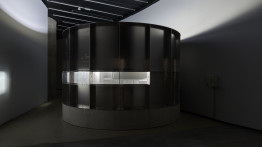
Lucy Raven, Hardpan, 2025. Installation view, Lucy Raven: Rounds, Barbican Centre, London, 2025–26. Photo by Jo Underhill. © Lucy Raven
Lucy Raven: Rounds brings together two major new works by artist Lucy Raven, associate professor in the School of Art, at the ICA Watershed in Boston, MA. The exhibition, which opened on May 21 and will be on view throughout the summer, marks the United States premieres of Hardpan, a large-scale kinetic sculpture co-commissioned with the Barbican Centre in London, and Murderers Bar (2025), a moving image installation that completes Raven’s ongoing series The Drumfire. It is also the first time Raven, whose work often investigates the evolving relationship between natural systems and human industrial and technological interventions, is showing in Boston.
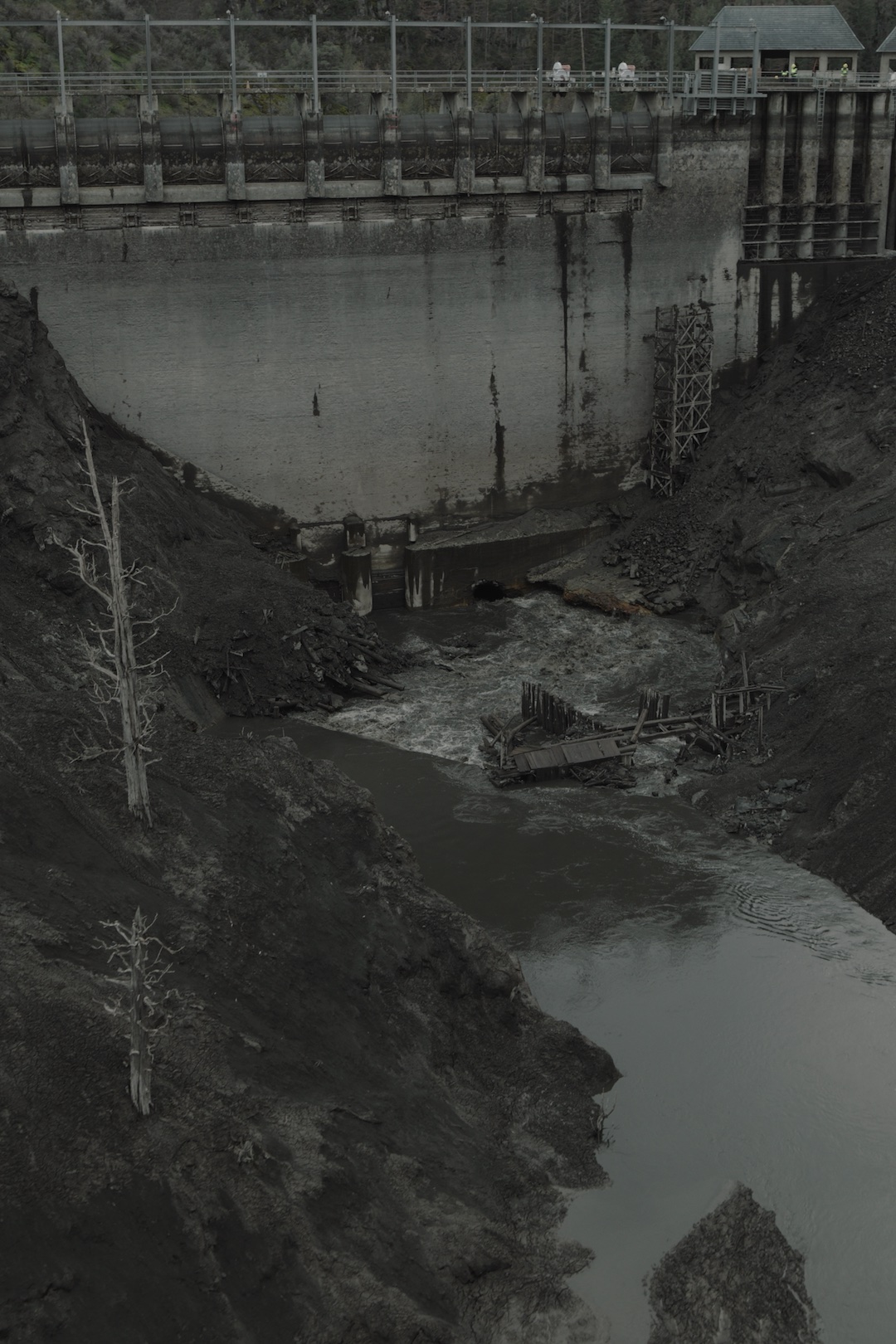
Murderers Bar documents the recent removal of a century-old concrete dam on the Klamath River in Northern California, part of the largest dam removal project in American history. Filmed over the course of the dam's dismantling, the installation follows the changing relationship among the river, the reservoir, and the surrounding landscape as water returns to its original course. The work is accompanied by a quadraphonic soundtrack composed by Raven’s longtime collaborator, composer, and percussionist Deantoni Parks.
Installed alongside the film is Hardpan, a monumental kinetic light sculpture whose moving beams of light respond to themes of industry, infrastructure, and the forces that shape the American West. Together, the two works examine how infrastructure projects alter both the physical environment, and the histories embedded within them.
The exhibition is presented at the Watershed, a former copper pipe and sheet metal factory located in a working shipyard on Boston Harbor. The industrial setting reflects Raven’s longstanding interest in the histories of labor, manufacturing, and large-scale engineering projects, while providing a setting for works that explore the politics and movement of water.