Fia Backström Exhibit at the Queens Museum
POSTED ON: September 12, 2025
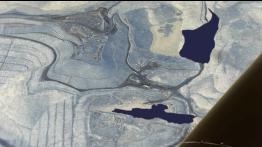
Fia Backström, still from Toxicology Report, 2025. HD Video, color, sound.
Starting September 13, 2025, the Queens Museum presents an exhibition of work by Fia Backström, associate professor of art, called The Great Society. The exhibit explores how communities take shape and survive in the face of converging environmental and extractive crises. The exhibition is based on extensive field research in West Virginia, where the artist began traveling and meeting with locals in 2017. Backström responds to the area’s photographic history, government hearings, and community embroidery practices through her own material and computational processes that include photography, videos, language, and textiles.
For Backström, West Virginia functions much like a repressed unconscious, a zone of extraction onto which projections of “backwardness” and “trash” abound. A central touchstone for the work is the Buffalo Creek mining disaster of 1972, when a coal slurry dam collapsed and killed hundreds, leaving thousands homeless and the land toxic. The mining company blamed “God’s hand,” while the community became the subject of psychiatric studies on collective trauma. Up the mountain from Buffalo Creek is Blair Mountain, where in 1921, miners marched in the largest labor uprising in American history. Beyond their heavily surveilled exteriors, the mines’ cavernous spaces of fossilized darkness conjure possibilities for resisting, concealing, and creative healing.
Days Without Lost Time Accident, a photographic series of signs outside the mines in Buffalo Creek, shows how injured workers are quantified against efficiency. The exhibition’s large-scale display mechanism, Sacrifice Zone, recalls the infrastructure of the West Virginia industrial landscape and pushes the limits of visibility with a constellation of layered, hand manipulated prints on transparent film. Backström also invited members of the Buffalo Creek community to participate in an embroidery circle as an act of bearing witness. In search of a photographic ethic, she weaves together testimonies of folk medicine practitioners, scholars on faith and dam regulation, strip mining activists, and the spirits of the mountains.
Fia Backström: The Great Society runs until January 18, 2026.