Fred Shinagel ChE’53

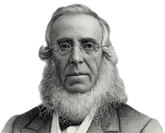
“My father was always good at gratitude.” That’s how Eva Shinagel recalls her father Fred, a 1953 Cooper graduate. Gratitude was just one reaction he might have had considering that his childhood was interrupted by a three-year journey that started in Vienna in 1938 and ended in New York City six months before Pearl Harbor. The saga, which brought the family—Shinagel, his father, who had been interned in a work camp near Perpignan, France, his mother, and brother—to Czechoslovakia, Belgium, France, and Trinidad before they made their home in Washington Heights. But when talking about his youth, Shinagel focused on their good fortune in escaping thanks to people like Hiram Bingham IV, who, as vice consul at the U.S. consulate in Marseilles and, in defiance of State Department orders, issued thousands of American entry visas to refugees trying to escape the Nazis, among them the Shinagels.
In his life as a young New Yorker, Shinagel took up photography and pursued the best educational opportunities at hand, studying at the Bronx High School of Science, then attending Cooper to study chemical engineering. Between junior and senior years, he hitchhiked across the country and fell in love with its vast landscapes so different from Europe and Washington Heights. After Cooper, he attended MIT’s Sloan School of Management to study finance and management and took his first job at Grace Chemical as a businessperson with knowledge of chemical engineering. Eventually, Shinagel moved into finance and investment banking on Wall Street and later worked as an arbitrator for the National Association of Security Dealers and a mediator for the U.S. Postal Service.
Eva recalls that when her paternal grandfather died in 1966, her father, who was raising his own family in the West Village, began studying art at the New School, inspired by artists like Richard Diebenkorn, Conrad Marca-Relli, and Barnett Newman. He was particularly drawn to Newman’s “Stations of the Cross,” 15 canvases about mortality, which were first shown the year of his father’s death.
If asked to name the style of his large landscape, figurative, and abstract collages, he’d say “hard-edge lyricism,” a reference to two strands of Abstract Expressionism, one that featured clearly defined blocks of color, the other working with softer shade and greater movement and sensuality. His daughters recall him working on canvases, which would later dominate their family’s living room walls, on the floor of their summer rental house.
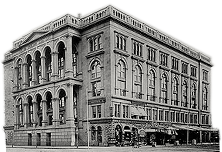
Aware of the life-changing impact of his education, Shinagel regularly talked about The Cooper Union, pointing out the Foundation Building to his young daughters during excursions to the East Village Meat Market. “It was a presence, a landmark, an element of our family’s history,” Eva says.
Fred Shinagel supported Cooper almost every year for the last 43 years and was a member of the Innovator Donor Society. When he passed away in 2023, Eva and Nina decided to create The Fred Shinagel ChE’53 Memorial Scholarship.