Dale Zand EE'45

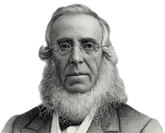
Dale Zand, a 1945 Cooper graduate who celebrated his 80th reunion in 2025, talked to us about his experiences at Cooper and how that launched his success as an expert in business management and leadership.
“When I graduated from Cooper, I thought if I was a good engineer my knowledge would be readily accepted and implemented,” he said. But gradually he discovered that the transfer of ideas depended upon many social, psychological, and political factors, a notion that became central to his research as a professor of management. That insight is at the center of Zand’s career as a distinguished leadership scholar and organizational behavior expert, who continues to write about the factors that cause information to be set aside or accepted and acted upon.
Brooklyn born and raised; he arrived at The Cooper Union as a 16-year-old in 1942. In a short two and a half years he earned his degree in electrical engineering since, just months after the bombing of Pearl Harbor, the school adopted a “war-time footing.” Classes were held every day, 12-months a year with no summer vacations or holidays other than one day for Christmas and New Year’s. As Zand, a long-time donor to Cooper, put it, “The word I would use to summarize what it was like to go to Cooper at that time was ‘intense.’”
Despite the compressed schedule, the curriculum was not abridged in any way, so attrition was high. Zand estimates that he entered with 100 other engineering students and because of failures, dropouts, transfers, and military draft, less than 20 graduated. He credits Cooper with launching his career and as part of his generous donations to the college, he has established four endowments over the years that support scholarships, a commencement prize and general operations.
At 6 am the morning after graduation in January 1945, Zand was inducted into the Navy while World War II was raging in the Pacific and Europe. He attended the Naval Advanced Electronics School in Anacostia, Washington, DC to be trained in radar, sonar, and radio communication. After Cooper, the course “was elementary for me.” When he finished, instead of sending him out on a warship, the navy decided he had greater value as an instructor at the school training additional desperately needed electronic specialists.
After his discharge in August 1946 at the end of World War II, he worked as a system planning engineer for the Potomac Electric Power Company projecting the D.C. area’s government, military, residential, and commercial growth and simulating future power equipment and network demands.
“I gradually became interested in how a business transforms engineering information into capital investment decisions.” He decided to earn an M.B.A. and later a Ph.D. at New York University’s Stern School of Business, with post-doctoral studies in group behavior and experimental social psychology. He wrote his dissertation on strategic analysis as an organization’s critical impetus for capital investment decisions. The dissertation departed from prevailing economic theory which said rank order capital projects by rate of return and implement all those that exceed the cost of capital. Economic theory, at that time, avoided the difficult details of management and strategic analysis by using a catch-all concept called opportunity cost. As he’s done throughout his career, Zand’s dissertation introduced elements of psychology, sociology, and strategy portending the wider acceptance of managerial economics and behavioral economics in economic thinking.
In the early 1970’s, Zand, by then a professor of management at Stern (he eventually became chair of the Management–Organizational Behavior Department), pioneered research in trust dynamics and managerial problem solving, with seminal papers like “Trust and Managerial Problem Solving” (1972). His groundbreaking book, The Leadership Triad: Knowledge, Trust, and Power (Oxford Univ. Press, 1997), considers the three-part framework essential to effective leadership in organizations. He argues that power, trust, and knowledge are interdependent—if one factor is diminished, misused, or absent, the flow of accurate information, appropriate goal setting, and implementation activities are disrupted and lead to poor decisions that weaken an organization. Through real-world cases, Zand demonstrates how a leader can harness dispersed knowledge, cultivate trust, and judiciously use power.
“I discovered that even after trust is built, you needed people who accepted the knowledge and had the power to implement it. Every increment in knowledge goes through this process.”
Zand has been a consultant and coach to executives in leading firms across finance, energy, chemical, and food industries. He’s served on boards, including Newfield Exploration and the National Training Laboratories, working on practical organizational challenges. He evaluated research proposals in his fields for the National Science Foundation and Ford Foundation, was chair of the Organization Development Division of the Academy of Management and was a Ford Foundation fellow in a Harvard program on the application of mathematics to business problems. He is currently at work on a book about decision behavior.
Zand, who in 2025 was inducted into the Sarah Bedell Cooper Lifetime Giving Society for donors who have given between $500,000 to $999,999, says his decision to support Cooper for more than 50 years was informed by gratitude for his education coupled with a hope that he can impact the lives of other bright students lacking the financial means to get a top-flight education. “Learning is a lifelong pursuit. I hope that what I’ve given helps others reap the benefits of learning at Cooper and encourages them to support Cooper and following generations after leaving.”