ANNMARIE ELDERING CHE'88
“I was a Ranger Rick kind of kid,” says Annmarie Eldering ChE’88, Senior Fellow at the Climate Data Collaborative. She laughs a little at the memory, but the sentiment still anchors a career that has taken her from a small town near Albany, New York to the forefront of global climate science. Long before she was designing satellite instruments or coordinating international climate data efforts, she was the child worrying about endangered species and environmental degradation, questions that would later define her life’s work.
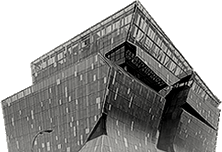
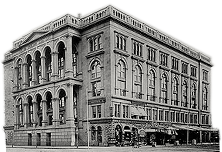
Eldering grew up in a quiet riverside town, the daughter of a civil engineer father from Brooklyn and a mother from Staten Island. The contrast between upstate quiet and the energy of visiting relatives in New York City left an impression. When it came time for college, her father—who regularly brought home The New York Times—pointed her toward engineering, even clipping an article about The Cooper Union.
During high school, she attended an event sponsored by the Society of Women Engineers. “That was really important, because I met a bunch of women my age, and I learned about the disciplines of engineering in a way that I hadn't understood. So, the idea of studying engineering in Manhattan, combined with the school’s tuition-free model, sealed the deal. “I thought, that sounds perfect,” she recalls.
At Cooper, Eldering studied chemical engineering, drawn equally to math and chemistry. The school’s hands-on approach proved formative. Rather than working solely from theory, students built instruments, conducted experiments, and learned from professors who were practicing engineers. That practical training would later complement the deeply theoretical education she received at Caltech, where she earned her PhD. “Those two ingredients,” she says, “really helped me be successful.”
It was also at Cooper that her environmental instincts came into focus. A course on air pollution taught by Professor Robert Kaplan opened up a new path. Combined with summer experiences touring industrial refineries—“terrifying and amazing,” she calls them—Eldering realized she didn’t want to spend her career inside those facilities. Instead, she became interested in understanding and mitigating their environmental impact.
After graduate school, Eldering briefly pursued academia, teaching at the University of Iowa before returning to California for a postdoctoral position at UCLA. But it was her eventual move to NASA’s Jet Propulsion Laboratory (JPL) that defined her career. Over more than two decades, she worked on pioneering efforts to measure atmospheric gases from space.
Her early work focused on the ozone, developing new ways to distinguish between harmful ground-level pollution and protective ozone in the upper atmosphere. Later, she helped tackle a far more difficult challenge: measuring carbon dioxide from space. Unlike ozone, which can spike dramatically during pollution events, carbon dioxide changes are subtle, just a few parts per million. Many thought it couldn’t be done. Eldering and her colleagues proved otherwise, building instruments sensitive enough to detect these minute shifts and track them globally.
Today, after retiring from JPL, Eldering continues her work through the Data Foundation, a nonprofit think tank focused on using data to inform public policy. There, she helps lead efforts to standardize and coordinate climate data, particularly around methane emissions, a potent greenhouse gas that offers a more immediate opportunity for climate mitigation. By bringing together scientists, governments, and private companies, she works to ensure that data is not only accurate but actionable.
Despite funding challenges and political headwinds, Eldering remains characteristically pragmatic and optimistic, at least on Mondays, she jokes. What sustains her is the work itself: solving technical problems, collaborating across borders, and continuing to push forward. For someone who once pored over the pages of Ranger Rick, the mission hasn’t changed much. Only the scale.