Jessica Dickinson
Adjunct Instructor
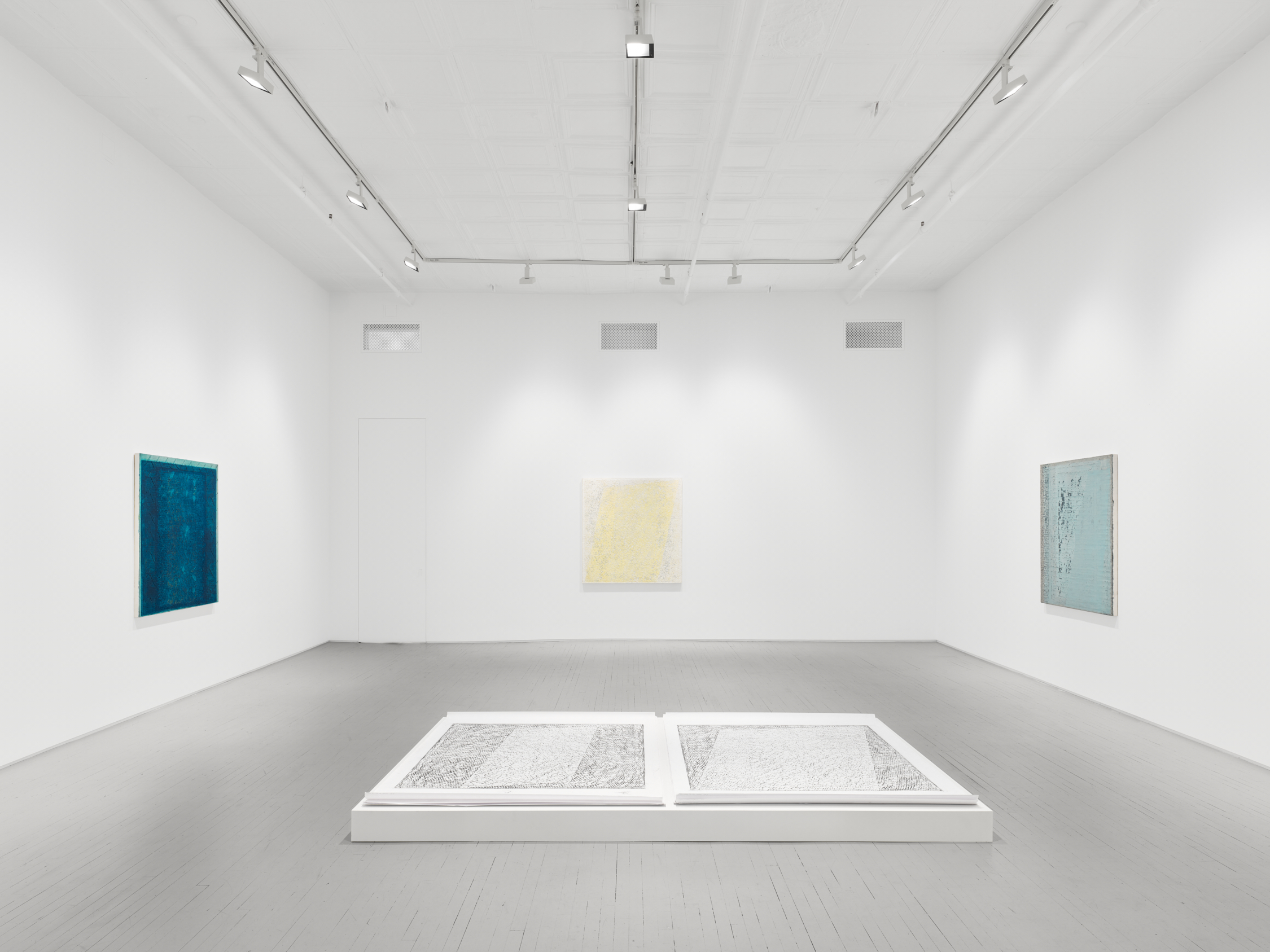
Jessica Dickinson’s practice is primarily situated in abstraction and encompasses painting, works on paper, writing, and installations. Exploring durational shifts in light, matter, consciousness, and perception, she works to create space for a slowed down encounter within our world of increasingly accelerated exchanges.
Dickinson's work is represented by James Fuentes in New York and Los Angeles. Recent solo exhibitions include James Fuentes, New York, (2024, 2021, 2017, 2015), Altman Siegel Gallery, San Francisco (2022, 2019, 2016), David Petersen Gallery, Minneapolis (2013); and Maisterravalbuena, Madrid (2012). Numerous group exhibitions include The Solomon R. Guggenheim Museum, NY; Cranbrook Art Museum, Bloomfield Hills, MI, Katzen Arts Center at American University, Washington D.C.; Gladstone Gallery, NY; The Warehouse, Dallas; Eleni Koroneou Gallery, Athens; Sikkema Jenkins, NY; and The Kitchen, NY. Dickinson's work has been reviewed and included in Artforum, Art in America, The Brooklyn Rail, and The New Yorker, among others. Dickinson's awards include Steep Rock Arts Residency (2017), an individual grant from the Belle Foundation (2013), Farpath Residency in Dijon, France (2008), Change Inc. Grant (2003) and The Marie Walsh Sharpe Art Foundation Space Program in New York (2001). Public collections include The Solomon R. Guggenheim Museum, New York and The Rachofsky Collection, Dallas.
Dickinson was born in St. Paul, MN and has lived and worked in Brooklyn since 1999. She received a BFA from the Maryland Institute College of Art and an MFA from Cranbrook Academy of Art. Dickinson has taught at Yale University School of Art, Columbia University School of Art, Maryland Institute College of Art, University of Tennessee, Knoxville, and Rhode Island School of Design.